"New Construction, New Opportunities, New Leaps" — The 2023 Yangtze River Delta Smart Construction and New Building Industrialization Coordinated Development Conference Grandly Convened
WeChat Sync · Xiaowei · 2023-08-09
“Laying a Foundation for New Construction, Promoting Collaborative Development”.To promote exchange and cooperation among smart construction pilot cities in the Yangtze River Delta region and accelerate the integrated development of smart construction and new building industrialization in the region, the 2023 Yangtze River Delta Regional Conference on the Collaborative Development of Smart Construction and New Building Industrialization was grandly held in Nanjing, Jiangsu, on July 27-28, on the occasion of the establishment of the Smart Construction Branch of the Jiangsu Association for the Promotion of Building Industry Modernization. The conference was held under the guidance of the Department of Housing and Urban-Rural Development of Jiangsu Province, the Center of Science and Technology and Industrialization Development of MOHURD, and the Building Magazine Agency of MOHURD; jointly hosted by the Jiangsu Association for the Promotion of Building Industry Modernization and the Nanjing Municipal Commission of Urban and Rural Construction; and co-organized by China Construction Technology Group Co., Ltd., China MCC22 Group Co., Ltd., China Construction Third Engineering Bureau Group Co., Ltd., China Construction Science & Industry Co., Ltd., Third Construction Co., Ltd. of China Construction Eighth Engineering Division, Zhongyifeng Construction Group Co., Ltd., Glodon Co., Ltd., and Beijing PKPM Technology Co., Ltd.
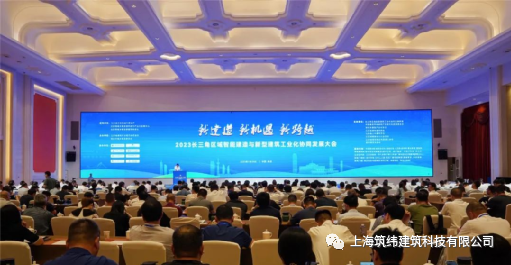
The conference, themed “New Construction, New Opportunities, New Leaps”, was attended by Wen Linfeng, President of the Building Magazine Agency of MOHURD; Ma Xinbo, Deputy Director of the Building Technology Division of the Center of Science and Technology and Industrialization Development of MOHURD; Li Zhen, Deputy Director of the Department of Housing and Urban-Rural Development of Jiangsu Province; Song Gang, Deputy Director of the Nanjing Municipal Commission of Urban and Rural Construction; as well as relevant leaders of housing and urban-rural development authorities in the Yangtze River Delta region and officials in charge of smart construction pilot cities; heads of the Yangtze River Delta Regional Alliance for the Collaborative Development of New Building Industrialization, the Building Industry Modernization Development Committee of the Architectural Society of China, the Shenzhen Building Industrialization Association, and relevant associations and societies of Jiangsu Province and Nanjing; member units of the Nanjing Leading Group for Promoting Building Industry Modernization and construction authorities of various districts and counties; and representatives of enterprises, public institutions, research institutes, and universities in the industry — more than 500 people in total. Together with experts and scholars, they explored implementation paths for smart construction and shared advanced experience in new building industrialization.
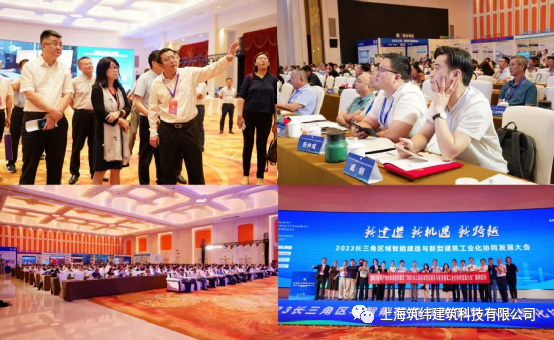
Conference venue
“New Construction”
Government-Business Synergy Builds Strength, Shared Consensus Drives Development
The opening ceremony of the conference was hosted by Chen Chen, President of the Jiangsu Association for the Promotion of Building Industry Modernization. At the opening ceremony, Wen Linfeng, President of the Building Magazine Agency of MOHURD, Li Zhen, Deputy Director of the Department of Housing and Urban-Rural Development of Jiangsu Province, and Song Gang, Deputy Director of the Nanjing Municipal Commission of Urban and Rural Construction, each delivered remarks.
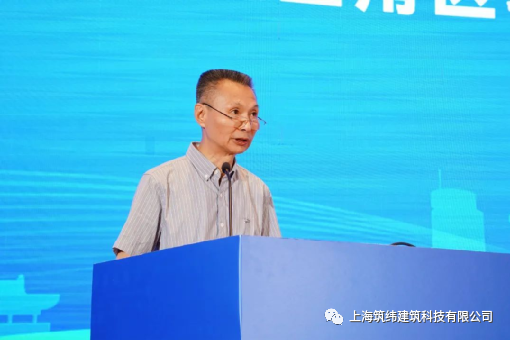
Chen Chen, President of the Jiangsu Association for the Promotion of Building Industry Modernization
Wen Linfeng, President of the Building Magazine Agency of MOHURDpointed out in her remarks that the core of developing smart construction lies in building industrialization as its foundation. Without the concept of industrialization, smart construction can hardly exert its role and advantages; smart construction must develop in synergy with building industrialization. Localities should adapt to local conditions and choose suitable roadmaps based on their socio-economic development foundations, industrial capabilities, and levels of industrial agglomeration. They should neither stand still and wait passively, nor blindly exaggerate beyond their own capabilities and thereby create new problems. Regarding the next steps in smart construction, she put forward six suggestions: first, carry out top-level institutional design to define goals, plans, and roadmaps; second, build industrial clusters and accelerate the formation of a complete industrial system; third, build a systematic technical framework to leverage integration advantages; fourth, create excellent and advanced demonstration scenarios; fifth, innovate management models, including innovating project organization methods by adopting EPC general contracting, innovating bidding models to strengthen policy guidance by replacing lowest-price bidding with quality-based pricing, and innovating supporting service systems; and sixth, step up publicity to fully promote pilot experience, innovative technologies, typical cases, and leading talents.
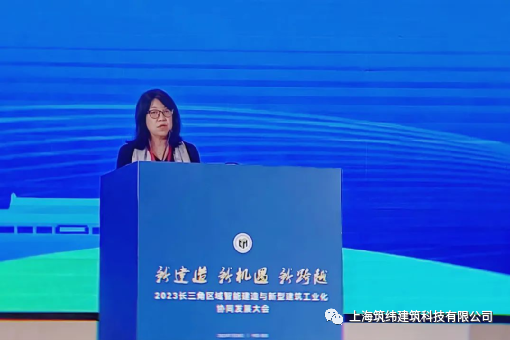
Wen Linfeng, President of the Building Magazine Agency of MOHURD
Li Zhen, Deputy Director of the Department of Housing and Urban-Rural Development of Jiangsu Provincesaid in his remarks that as a major province in the construction industry, Jiangsu has ranked first nationwide in construction industry scale for 17 consecutive years, making important contributions to the province’s housing and urban-rural development and to economic and social development. In recent years, Jiangsu has continuously accelerated the promotion of building industry modernization. Going forward, we will take the integrated development of smart construction and new building industrialization as a key measure to drive the high-quality development of Jiangsu’s construction industry. First, continue to do a good job in smart construction pilot cities, seizing the opportunity of building national smart construction pilot cities to further emancipate the mind and strive to form pilot results that are perceivable, quantifiable, and evaluable. Second, further advance demonstration and leadership, actively build smart construction industrial parks, attract upstream and downstream enterprises of the smart construction industry chain to cluster, effectively strengthen coordination among entities at each stage, and form a smart construction industrial chain cluster as soon as possible. Third, focus on cultivating leading smart construction enterprises, carry out cross-industry and cross-disciplinary joint scientific and technological research, guide capable and technologically strong enterprises to increase investment, continuously deepen technical research, and accelerate the transformation of scientific and technological achievements and their commercial application. Fourth, strengthen talent development, explore and establish mechanisms for introducing and cultivating talents in new building industrialization and smart construction, strengthen the cultivation and reserve of high-level management personnel, and build a talent pool that supports the development of smart construction.
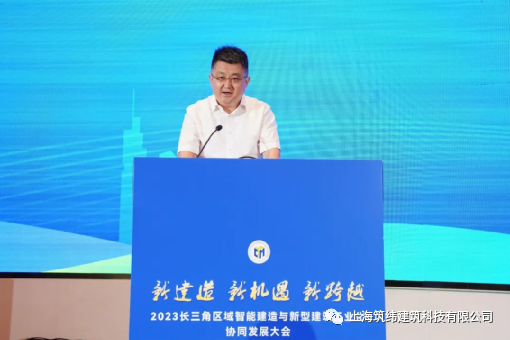
Li Zhen, Deputy Director of the Department of Housing and Urban-Rural Development of Jiangsu Province
Song Gang, Deputy Director of the Nanjing Municipal Commission of Urban and Rural Constructionsaid in his remarks that as a construction powerhouse in Jiangsu Province, the construction industry has always been a pillar industry, an advantageous industry, and an industry that enriches the people of Nanjing. In recent years, the Nanjing Municipal Party Committee and Municipal Government have attached great importance to the transformation and development of the construction industry and to the development of Nanjing as a smart construction pilot city. In May this year, the Nanjing Municipal Government issued the Implementation Opinions on Promoting the Collaborative Development of Smart Construction and New Building Industrialization, proposing to seize the opportunity of building a national smart construction pilot city to advance the industrialization, digitalization, and intelligent upgrading of construction, to explore the establishment of a citywide policy system and regulatory model for the collaborative development of smart construction and new building industrialization, and to comprehensively advance building industry modernization. At present, Nanjing’s smart construction pilot work has just begun, and many policies and measures still need to be studied and explored. He hoped that this conference would serve as an opportunity to set off a new upsurge in Nanjing’s promotion of smart construction.
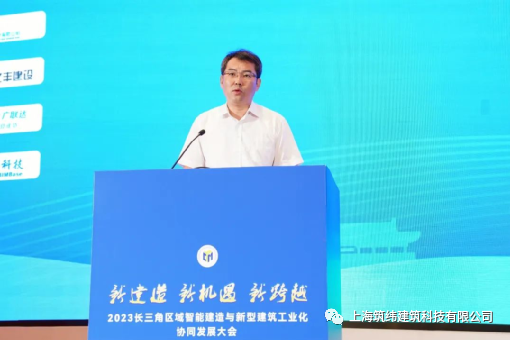
Song Gang, Deputy Director of the Nanjing Municipal Commission of Urban and Rural Construction
“New Opportunities”
Innovation-Driven Development Embraces Opportunities, Regional Synergy Facilitates Integration
As a highlight of the conference, the launch ceremony of the Yangtze River Delta Regional Joint Declaration on the Collaborative Development of New Building Industrialization attracted wide attention. The Yangtze River Delta Regional Alliance for the Collaborative Development of New Building Industrialization and relevant industry associations and societies reached the consensus of “Laying a Foundation for New Construction, Promoting Collaborative Development” and issued a joint declaration at the conference: first, uphold the integration of the “Four Modernizations” and accelerate transformation and upgrading; second, implement innovation-driven development and promote smart construction; third, advocate the “craftsman” spirit and improve building quality; fourth, commit to industrial integration and build an industrial landscape; fifth, promote industry-education integration and accelerate talent cultivation; and sixth, uphold win-win cooperation and promote collaborative development. The declaration calls for joint efforts to promote the high-quality development of smart construction and new building industrialization in the Yangtze River Delta region and to build a shining “Built by China” brand for the region. The joint declaration launch ceremony was initiated together by Xue Weichen, Chairman of the Expert Committee of the Alliance and Professor of Tongji University; Han Jianzhong, Vice President and Secretary-General of the Jiangsu Association for the Promotion of Building Industry Modernization; Chen Yifan, Deputy Secretary-General of the Shanghai Construction Association; Yuan Jing, Executive Vice President and Secretary-General of the Zhejiang Green Building and Building Industrialization Industry Association; Ye Changqing, Vice President of the Anhui Building Energy Conservation and Science & Technology Association; Zhang Lu, Deputy Secretary-General of the Jiangsu Green Building Association; Lu Hongbiao, Deputy Secretary-General of the Jiangsu Society of Civil Engineering and Architecture; Xu Jiabin, Executive President of the Jiangsu Building Steel Structure and Concrete Association; Liu Yuhong, Executive Vice Chairman and Secretary-General of the Jiangsu Engineering Survey and Design Industry Association; and Song Hailong, Deputy Secretary-General of the Nanjing Construction Industry Association.
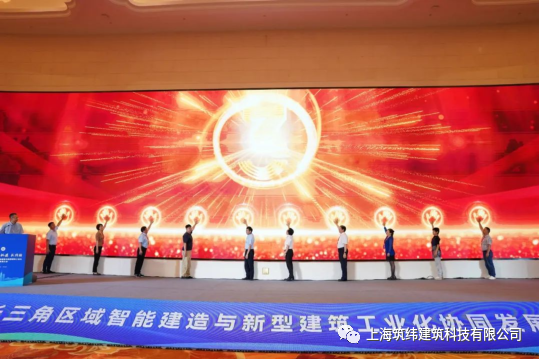
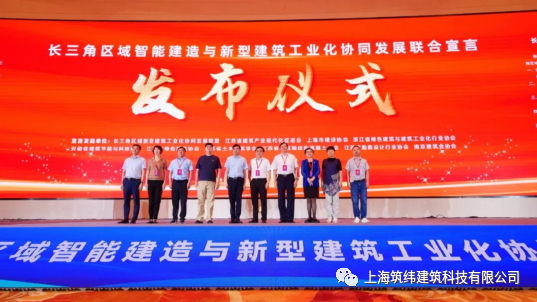
Launch Ceremony of the Yangtze River Delta Regional Joint Declaration on the Collaborative Development of Smart Construction and New Building Industrialization
During the conference, the Yangtze River Delta Regional Smart Construction Pilot Cities Work Exchange Meeting was also held. More than 30 participants attended the meeting, including officials in charge from relevant industry associations in the Yangtze River Delta region and from the 5 smart construction pilot cities, heads of key enterprises, and experts and scholars. The meeting was hosted by Xu Hongfang, Second-Class Researcher of the Nanjing Municipal Commission of Urban and Rural Construction. Song Gang, Deputy Director of the Commission, delivered remarks on behalf of the pilot cities. Wen Linfeng, President of the Building Magazine Agency of MOHURD; Chen Chen, President of the Jiangsu Association for the Promotion of Building Industry Modernization; Fu Canhua, Full-time Vice President and Secretary-General of the Shenzhen Building Industrialization Association; Xue Weichen, Chairman of the Expert Committee of the Alliance and Professor of Tongji University; and Li Qiming, Secretary-General of the Smart Construction Branch of the Association and Professor of Southeast University, each shared their views from different perspectives. At the meeting, Nanjing, Suzhou, Hefei, Jiaxing, and Wenzhou exchanged experience on the progress of their local smart construction work. Through in-depth exchanges, the meeting further clarified the implementation paths and lessons for the collaborative development of smart construction and new building industrialization. Participants said they would take this exchange meeting as an opportunity to integrate quality resources of the regional industrial chain, establish a government-industry-academia-research collaborative promotion mechanism, strive to form replicable and reference-worthy pilot experience, and effectively advance smart construction pilot work in the region.
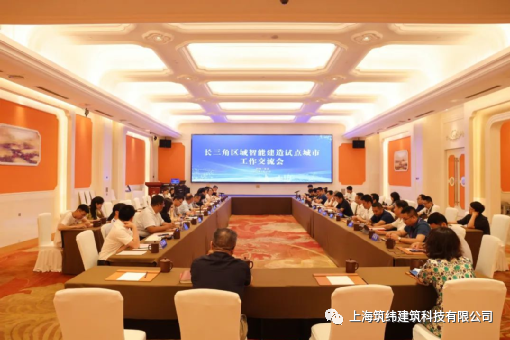
Scene of the Yangtze River Delta Regional Smart Construction Pilot Cities Work Exchange Meeting
“New Leaps”
Consolidating Foundations to Strengthen the Base, Demonstration and Leadership Opening a New Chapter
In the context of the new era, smart construction is the inevitable choice for the building industry to move to a higher level of development. A high-end exhibition was held alongside the conference, jointly presented by 9 organizations: China Construction Technology Group Co., Ltd., China MCC22 Group Co., Ltd., China Construction Third Engineering Bureau Group Co., Ltd., China Construction Science & Industry Co., Ltd., Third Construction Co., Ltd. of China Construction Eighth Engineering Division, Zhongyifeng Construction Group Co., Ltd., Glodon Co., Ltd., Beijing PKPM Technology Co., Ltd., and Nantong Lianlong Prefabricated Building Technology Co., Ltd. The exhibition showcased demonstration results and application scenarios of smart construction in various fields, resonating with the attending leaders and delegates.
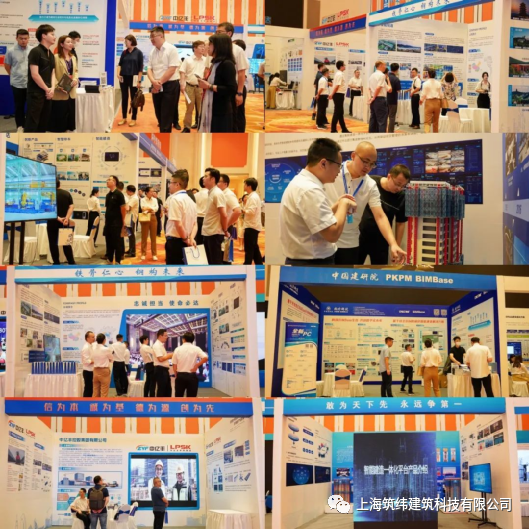
The keynote session of the conference was hosted by Wei Bojun, Executive Vice President of the Jiangsu Association for the Promotion of Building Industry Modernization. Ye Ming, Secretary-General of the Building Industry Modernization Development Committee of the Architectural Society of China, first delivered the keynote report “Integration of the Three Modernizations to Drive High-Quality Development of the Building Industry”. Ye Ming pointed out that industrialization, digitalization, and green development are inseparable, interdependent, and integrated. For the “Three Modernizations” to develop and integrate: industrialization is the core foundation of the construction method, digitalization is the means of construction and empowerment, and green development is the greening of the construction process and the goal of development. The “integration of the Three Modernizations” is the core of achieving high-quality development of the building industry.
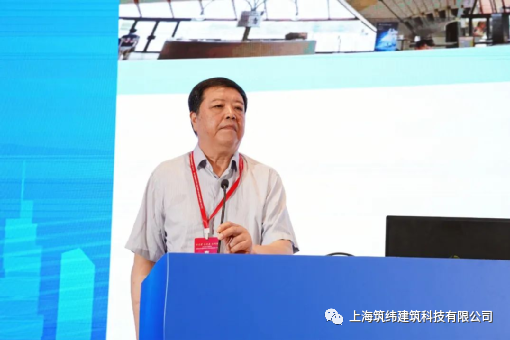
Ye Ming, Secretary-General of the Building Industry Modernization Development Committee of the Architectural Society of China
Xu Hongfang, Second-Class Researcher of the Nanjing Municipal Commission of Urban and Rural Construction, delivered a keynote speech titled “Implementation Plan for Nanjing as a Smart Construction Pilot City”. He gave a detailed introduction to the background, main content, and next steps of the Implementation Plan: first, intensify the promotion of new building industrialization, advance prefabricated building and smart construction simultaneously, strengthen source control, and refine relevant incentive policies; second, advance technological R&D and achievement transformation, strengthen talent cultivation, and improve the development of the smart construction standards system; third, uphold demonstration and leadership, cultivate leading enterprises, build pilot projects, and form perceivable implementation results.
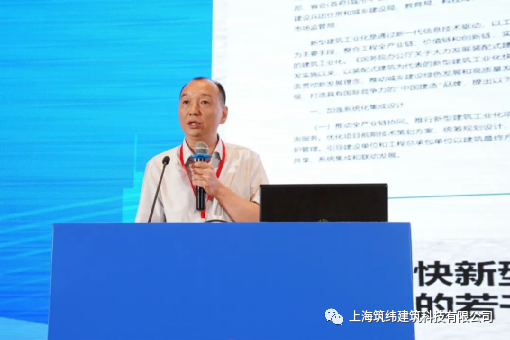
Xu Hongfang, Second-Class Researcher of the Nanjing Municipal Commission of Urban and Rural Construction
Li Qiming, Professor and Doctoral Supervisor at Southeast University, gave a keynote lecture on “Technical System and Implementation Path of Smart Construction”. Based on an exposition of the five major development goals of smart construction in Jiangsu Province, Professor Li proposed the main implementation paths for smart construction: first, establish and improve the smart construction standards system; second, achieve key breakthroughs in critical fields of smart construction; third, expand smart construction application scenarios; fourth, build a green application system for smart construction; fifth, cultivate leading smart construction enterprises; and sixth, accelerate “intelligent transformation and digital conversion” in the construction industry.
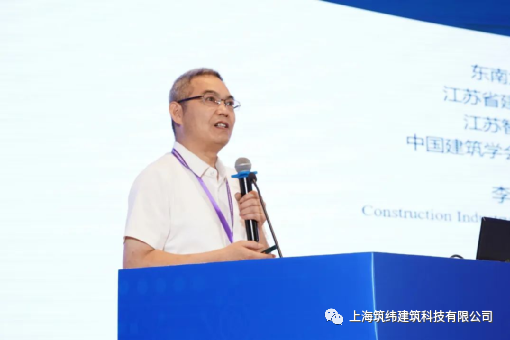
Li Qiming, Professor and Doctoral Supervisor, Southeast University
In the session on construction robot applications, Ma Xinbo, Deputy Director of the Building Technology Division of the Center of Science and Technology and Industrialization Development of MOHURD, delivered a keynote speech on “Development of and Reflections on Construction Robots in China”. He introduced the current status of robot promotion and application from two perspectives — the development of the robot industry and the R&D of construction robots — and offered reflections and suggestions on the work already underway: first, research and formulate a standards system and carry out top-level design; second, promote iterative upgrades through demonstration applications and gradually roll out wider adoption; third, promote industrial integration, increase R&D efforts, and cultivate interdisciplinary talents; and fourth, strengthen policy support and industrial guidance, connect industry-academia-research-application links, accelerate the industrialization of achievements, and explore service models.
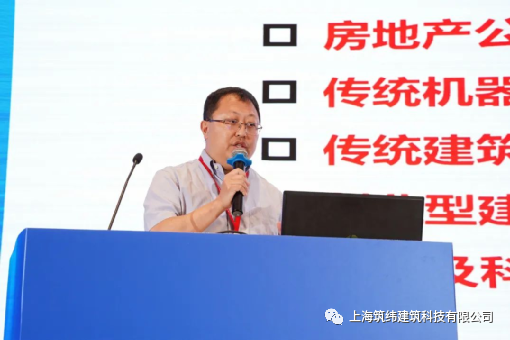
Ma Xinbo, Deputy Director of the Building Technology Division, Center of Science and Technology and Industrialization Development of MOHURD
In the session on cutting-edge smart construction technologies and integrated solutions, Tian Chunyu, Deputy Chief Engineer of China Construction Technology Group Co., Ltd., introduced the company’s experience in exploring smart construction practices and the future development trends of smart construction technology.
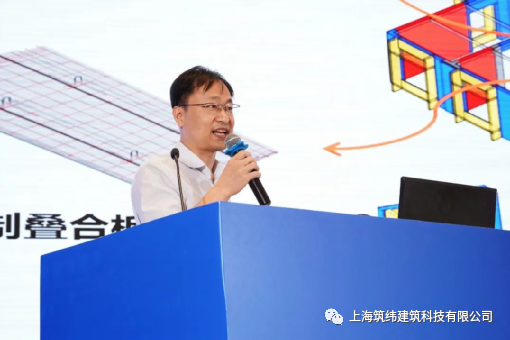
Tian Chunyu, Deputy Chief Engineer, China Construction Technology Group Co., Ltd.
The afternoon keynote session was hosted by Fan Hua, Dean of the Jiangsu Jianlian Building Industry Modernization Research Institute. Zhang Hua, Senior Consultant of Arcplus Group, first delivered a keynote speech titled “Concepts and Development Paths of New Building Industrialization: A Case Study of Building Envelopes”. He proposed that the envelope is the core of a building, highlighted the three major pain points of building envelopes and external insulation, and suggested that, guided by the concept of new building industrialization, efforts should focus on building envelopes to achieve the iteration of building components and integrated technological innovation.
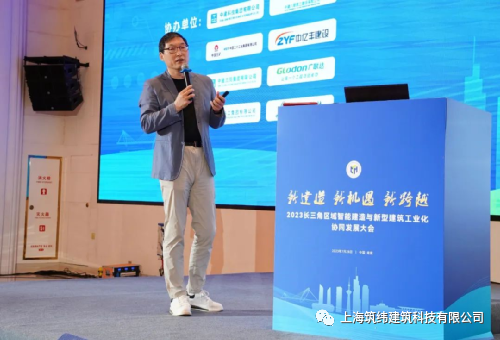
Zhang Hua, Senior Consultant, Arcplus Group
In the session on the building industry internet, Liu Gang, Vice President of Glodon Co., Ltd., delivered a keynote report on “Application and Development of Smart Construction Based on Systematic Digitalization”. He elaborated on the main challenges and solutions in smart construction applications and proposed focusing on project tasks and performance indicators to truly realize the value of smart construction.
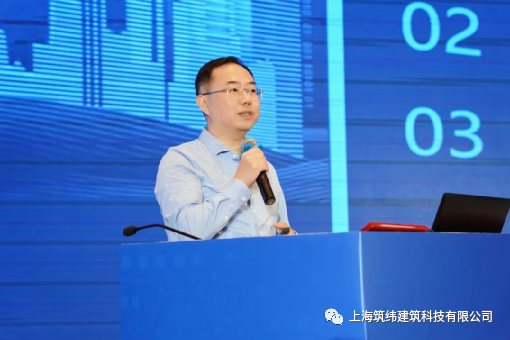
Liu Gang, Vice President, Glodon Co., Ltd.
Pan Han, Deputy General Manager of China Construction Third Engineering Bureau Science and Innovation Development Co., Ltd., delivered a keynote speech on “Exploration of How the Building Machine Empowers Smart Construction”. As a typical representative of on-site industrialized construction, he introduced the specific practices of the building machine empowering smart construction.
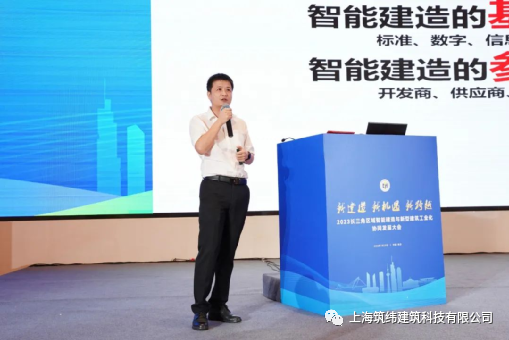
Pan Han, Deputy General Manager, China Construction Third Engineering Bureau Science and Innovation Development Co., Ltd.
Wang Congjun, Chief Expert of Zhongyifeng Digital Technology Group, shared “Data-Driven Smart Construction System and Application Practices”, introducing the data-driven smart construction system and application scenarios, and sharing Zhongyifeng’s smart construction practices through specific projects.
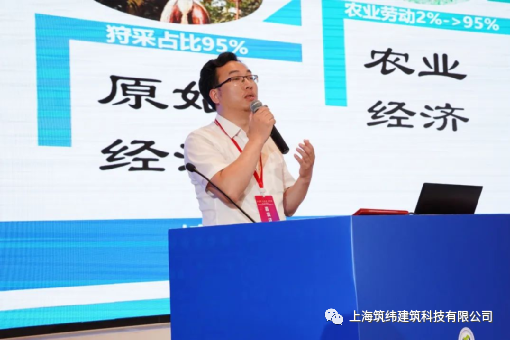
Wang Congjun, Chief Expert, Zhongyifeng Digital Technology Group
Zhao Baojun, General Manager of China Construction Hailong Technology Co., Ltd., shared “Practice of Modular Affordable Housing EPC Projects”. He elaborated on the concrete modular integrated building technology system and the project cases in which it has been applied.
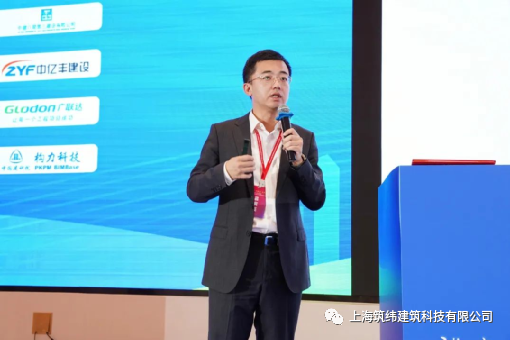
Zhao Baojun, General Manager, China Construction Hailong Technology Co., Ltd.
Gu Lei, Chief Structural Engineer of China Construction Science & Industry Co., Ltd., delivered a speech on “Key Technologies and Practices of Smart Construction for Steel Structure Buildings”, sharing the key technologies and application results of smart construction for steel structures at the company.
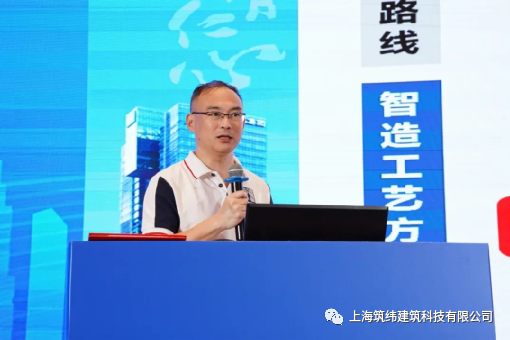
Gu Lei, Chief Structural Engineer, China Construction Science & Industry Co., Ltd.
Zhang Ziyan, Chief Engineer of CIMC Building Technology Co., Ltd., delivered a keynote speech on “CIMC’s Solution for Digital Smart Construction of Industrialized Buildings”, introducing CIMC’s solutions for industrialized buildings and digital smart construction.
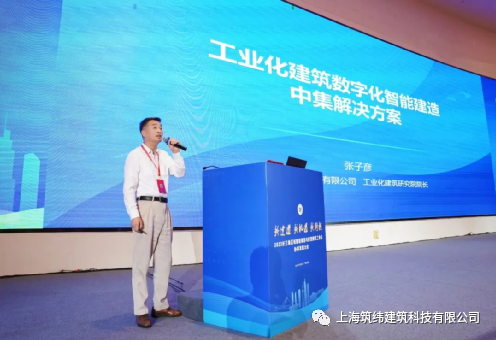
Zhang Ziyan, Chief Engineer, CIMC Building Technology Co., Ltd.
In the session on prefabricated interior fit-out, Liu Yunlong, Vice President of Heneng Renju Technology Group, shared “Building and Practice of Heneng’s Prefabricated Interior Fit-out Industrial Internet Platform”, demonstrating the development and application of the platform through actual project cases.
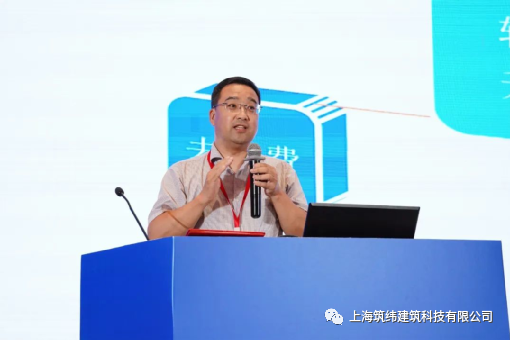
Liu Yunlong, Vice President, Heneng Renju Technology Group
Ren Yu, Chief Engineer of Fujian Construction Engineering Prefabricated Building Research Institute, shared “Innovation and Practice of Modular Prefabricated Floor Systems”. By analyzing the current status of prefabricated floor systems at home and abroad, he introduced in detail the research foundation of prefabricated floors, the innovations of the integrated beam-slab precast floor system, and its cost-reducing and efficiency-enhancing engineering applications.
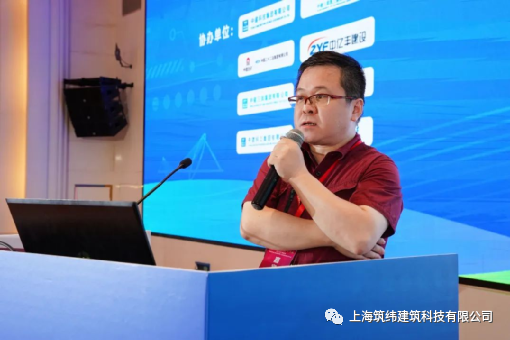
Ren Yu, Chief Engineer, Fujian Construction Engineering Prefabricated Building Research Institute
As part of the conference, the award ceremony left a deep impression on participants. Awards were presented for the 2023 “Zhongjiang Cup” Yangtze River Delta Regional Prefabricated Building Vocational Skills Finals and the 2022 “Zhongnan Cup” Jiangsu Provincial Prefabricated Building Vocational Skills Finals, together with certificates of honor for the 2022 Jiangsu Provincial Building Industry Modernization Outstanding Contribution Units, Pioneer Figures, and winners of the Excellent Innovation Award, both organizations and individuals.
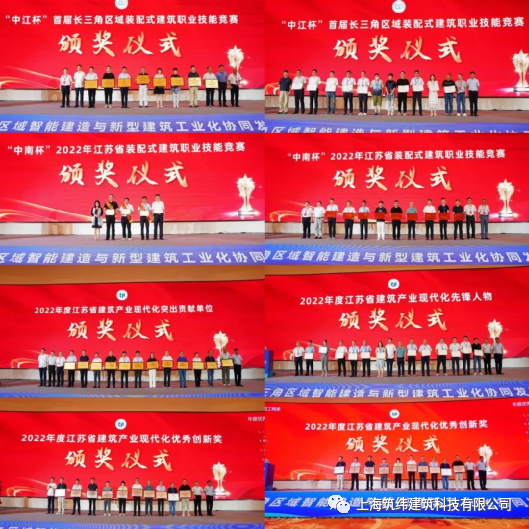
Some award winners on stage receiving their awards
This conference thoroughly implemented the “Guiding Opinions on Promoting the Collaborative Development of Smart Construction and Building Industrialization” (Jian Shi [2020] No. 60) and the “Several Opinions on Accelerating the Development of New Building Industrialization” (Jian Biao Gui [2020] No. 8) issued by MOHURD, as well as the “Implementation Plan for Promoting the Development of Smart Construction in Jiangsu Province (Trial)” (Su Jian Jian Guan [ 2022 ] No. 259) issued by the Department of Housing and Urban-Rural Development of Jiangsu Province, with the aim of promoting the collaborative development of smart construction and new building industrialization in the Yangtze River Delta region. The conference played an active role in promoting the deep integration of the regional building industry chain and strengthening cooperation and exchange among smart construction pilot and demonstration cities, and injected new vitality into the integrated development of new building industrialization in the Yangtze River Delta region.
END
The views expressed are the author's own Copyright © Zhuwei Architectural Technology
Reproduction without authorization is prohibited
Please credit the source when reposting: Zhuwei Architectural Technology
Zhuwei Architectural Technology is a new-type technical services company specializing in integrated design optimization, BIM consulting and prefabricated construction design consulting. Our team brings together senior engineers from leading design institutes, former executives of real-estate companies, BIM engineers and prefabrication engineers, delivering integrated design optimization, refined drawing review, BIM consulting with MEP detailing, and prefabricated design services.
Design optimization consulting: Positioned as an extension and complement to the design management of real-estate developers, we focus on consulting and optimization for civil buildings. Across the whole process — or at key stages required by the client — we control the economy, rationality and safety of the design, eliminating unnecessary cost while measurably improving drawing quality, achieving "lower cost, higher efficiency".
BIM consulting: Through digital construction technology we help designers reduce errors and improve quality in the design phase, help contractors save cost and plan high-quality MEP installation in the construction phase, and extend BIM models into facility management for the operation phase — in collaboration with mainstream software vendors.
Prefabricated design consulting: Whole-process design on BIM platforms, using Revit and Tekla for PC detailing. Component geometry and reinforcement are linked parametrically — what you see is what you get. We deliver Industry 4.0-ready drawings with cut-length data for every rebar, and IoT-enabled support for production, storage, transport and installation of PC components.
Our expert team comes from leading design institutes, with deep technical grounding and extensive experience in dual-track design and optimization; its technical capability and control are industry-leading.
—— This article is auto-synced from the WeChat Official Account “Zhuwei Architectural Technology”. Read the original ——