Research Report on BIM + Smart Construction Development in Jiangsu's Construction Industry!
WeChat Sync · Xiaowei · 2024-06-24
The following article is sourced from Beiming Youyu BIM Smart Manufacturing
In 2023, the Department of Housing and Urban-Rural Development of Jiangsu Province issued the Implementation Plan for Promoting the Development of Smart Construction in Jiangsu Province (Trial), setting out three phased targets for 2025, 2030, and 2035. Localities have steadily advanced implementation in accordance with the requirements of the plan, with the pilot smart construction cities of Nanjing and Suzhou in particular taking the lead as pioneers. To truly 'dissect a sparrow and identify typical cases,' to uncover the problems facing enterprise development and to summarize the experience created at the grassroots level, the Jiangsu Construction Industry Association established the Jiangsu Construction Industry BIM + Smart Construction Development Research Group, which carried out its research through a combination of symposiums, on-site enterprise visits, and questionnaire surveys, conducting on-site visits to four prefecture-level cities - Yangzhou, Nantong, Changzhou, and Suzhou - holding symposiums with 41 above-scale construction enterprises, and receiving 194 valid online questionnaire responses, which provided detailed data for this study. Synthesizing, analyzing, and summarizing the various inputs, the research group produced this survey report.—
1 —Current Status and Analysis
Through the application of BIM + smart construction technologies, the modern corporate management philosophy of construction enterprises has been further enhanced. Standardized, process-oriented, and digital enterprise management has strengthened market development and the replicability of benchmark projects. Management information that has been scientifically analyzed and processed provides data support for enterprises' market and business decisions. Moreover, these decisions are made according to established procedures, effectively implementing the principles of pooling collective wisdom, openness and transparency, and mutual oversight, thereby significantly improving the efficiency and accuracy of enterprises' market and business decision-making.
▌1. Implementation of BIM + Smart Construction
By establishing enterprise-level BIM management standards and systems, the integrated development model covering research, design, manufacturing, procurement, and construction is vigorously promoted. Full-time and part-time BIM personnel are appointed, and BIM training and project BIM technology applications are carried out across disciplines such as surveying, design, construction, O&M, and system development (see Figure 1)
Figure 1 Directions for Integrated BIM Application
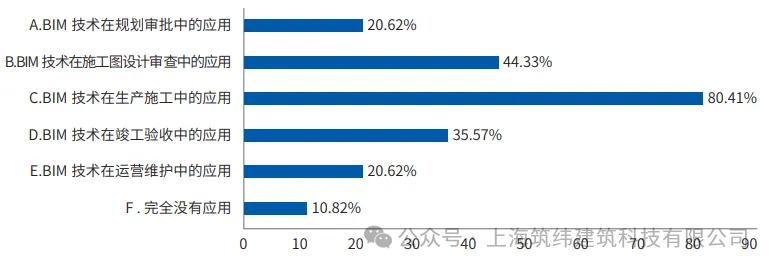
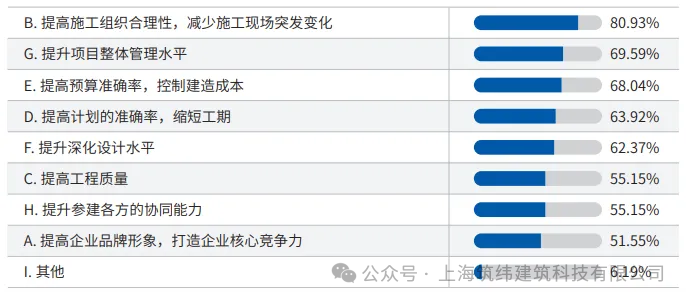
Design PhaseApplying BIM technology to gradually standardize and normalize processes. Drawing reviews identify errors, omissions, clashes, and deficiencies in the drawings as well as conflicts between disciplines in advance, reducing on-site changes during construction, lowering construction costs, and improving project construction quality and efficiency. Some enterprises leverage the advantages of their in-house design institutes to pilot BIM-based multidisciplinary collaboration on EPC projects.Bidding PhaseConstruction contractors engage BIM technology early, presenting applications in scheme optimization, site layout, labor and material input estimation, and construction simulation to boost technical bid scores, enhance competitiveness, and increase winning rates.Construction PhaseBIM-based visual technical briefings standardize construction site layout and methods. Centered on the five key elements of 'manpower, machinery, materials, methods, and environment,' work quantities are calculated, BIM detailed design is performed for key and difficult points, and visual construction schemes are compared and selected. Through simulated construction rehearsals, potential problems are identified and resolved in advance. Virtual modeling of the types and specifications of standardized precast components enriches the standardized precast BIM family library, effectively improving the modeling efficiency of prefabricated building components. Multiple participants communicate and collaborate effectively based on the BIM model, and valuable information is provided through data analysis and mining. The integrated application of BIM technology and platform software also raises the level of technical, quality, safety, cost, and schedule management, helping projects achieve first-time excellence (see Figures 2 and 3)
Figure 2 Coverage of BIM Application Points in the Construction Phase
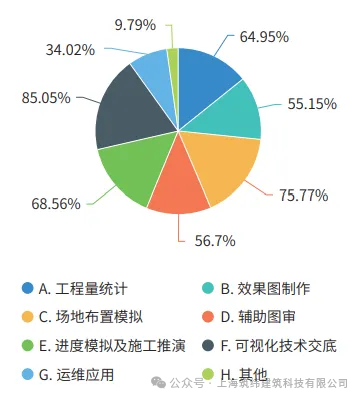
Figure 3 Distribution of BIM Application Outcomes in the Construction Phase
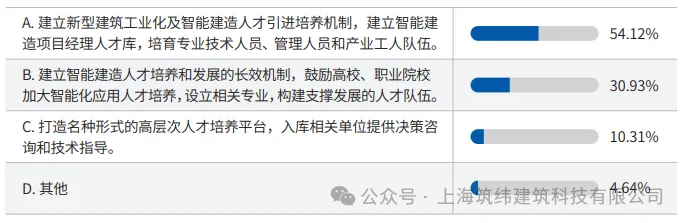
O&M PhaseSelecting healthcare and large public building projects to pilot BIM-based smart O&M, and applying BIM + IoT + BA technologies to achieve intelligent management and control of digital assets. Through the BIM O&M platform, comprehensive operational management is realized for building equipment, security, operations, and energy consumption. With green buildings and a people-oriented approach as goals, the whole-life-cycle BIM informatization concept and methods are introduced to achieve refined building management and control, thereby meeting enterprises' goals of cost reduction, efficiency improvement, and green energy conservation.Currently, smart construction site applications have basically achieved full coverage across the province, introducing smart devices and sensors to achieve real-time monitoring and data collection of the construction process and equipment operating status, promptly identifying problems and taking measures so that construction management becomes perceivable, predictable, and decision-ready. Integrated systems include the project access control subsystem, vehicle entry management subsystem, wireless Wi-Fi education system, hard-hat absence detection system, deep foundation pit stress-strain monitoring system, high formwork support monitoring system, unloading platform monitoring and alarm system, mass concrete temperature control monitoring system, portable perimeter protection system, automatic material receiving system, area personnel positioning management system, movable protective guardrail alarm system, sewage discharge monitoring system, infrared intrusion alarm system, toxic and harmful gas monitoring system, smoke detection alarm system, specimen curing monitoring and reminder system, all-in-one card management system, and smart material acceptance system. Automatic data collection, analysis, and early warning based on intelligent devices have raised the project's level of smart management.Enterprises emphasize the integration of BIM technology with new technological means such as 5G, artificial intelligence, the Internet of Things, big data, and cloud computing. According to the survey data, 61.34% of enterprises have begun using construction robots and intelligent equipment; among them, 68.56% apply smart measuring devices such as smart straightedges, smart rebound hammers, smart rebar detectors, and smart distance meters; 58.76% use intelligent engineering machinery and equipment through leasing or retrofitting; and 42.27% use construction robots such as welding robots, rebar cutting robots, panel installation robots, and as-built measurement robots through in-house development or direct purchase.The intelligent production of components and parts is scientifically managed and controlled through smart factory management platforms to improve production efficiency, enhance component quality, optimize inventory and yard allocation, and reduce costs.71.13% of the surveyed enterprises generally believe that the focus of practice lies in building a BIM-based standardized component and part library, forming multi-party interoperable data standards, meeting the coordination across the design selection, production and transportation, and construction installation of components and parts, and realizing modular, quantified production of building components and parts based on BIM design (see Figure 4)
Figure 4 Key Practices in the Intelligent Production of Components and Parts
▌2. Innovative Applications of BIM + Smart ConstructionSome enterprises use BIM technology to build calculation models for whole-life-cycle building carbon footprints from an LCA perspective; by establishing the B-UCM (BIM-UseCase Management) system, they practice multi-dimensional digital management concepts, summarize and standardize typical BIM application case workflows with a standardization mindset, and, through building standards systems and libraries, form replicable and scalable execution guides, connecting the whole-project-cycle data flow chain and making full use of information assets to construct a smart construction technology system of 'one platform, six advancements,' and have developed project-level smart construction operation and management platforms that achieve optimal allocation of the six smart construction resource elements.One enterprise independently developed a BIM-based safety education platform and an online DIY platform for construction briefing videos, including 3D animated short videos for safety and technical quality training; developed 3D formwork configuration software for aluminum formwork design; developed automatic generation of bridge demolition schemes based on case-based reasoning; developed AI-based dynamic assessment technology for green O&M of public buildings; and developed a BeiDou positioning + BIM construction digital twin system that completes digital collection of quality, safety, and progress throughout construction to assist on-site management in reverse. It also independently used the domestic software BIMBase to attempt BIM forward design in certain disciplines, and leveraged the MIDAS CIM design platform to carry out BIM forward design for bridges. Some enterprises, based on the Internet of Things and artificial intelligence technologies, have developed intelligent operating robots such as automatic rebar processing, unmanned paving and compaction, drone and robot patrol, automatic water grinding machines, layout marking robots, high-precision concrete leveling robots, upper-limb assistive exoskeletons, troweling robots, spraying robots, ALC wall panel installation robots, and interior wall sanding robots, and have conducted research on intelligent quality inspection systems for precast concrete structures, developing smart inspection equipment such as binocular laser rangefinders and precast component roughness testers.In addition to enterprise R&D, some enterprises are also attempting to introduce intelligent construction machinery and equipment. One construction enterprise project introduced a 5G tower crane intelligent control and dispatching system, enabling operators to perform assisted operations from the office, improving tower crane operating efficiency while reducing the probability of safety accidents. By actively exploring green construction methods for the new era, enterprises have taken the lead in applying photovoltaic power generation to temporary construction works and developed an automated dust-suppression and noise-reduction canopy system. They built a convergence platform whose functional modules cover structural performance, engineering environment, hydrogeology, engineering energy consumption, and many other aspects, realizing the informatization, datafication, and visualization of carbon emissions. Through demonstration applications, it covers comprehensive service applications for enterprise carbon accounting and carbon-reduction management, becoming an internal carbon-emission management tool and providing an intelligent tool for management analysis and decision-making. They adopted a BIM-based AI low-carbon O&M system to make the building itself and its O&M management efficient, intelligent, and low-carbon, with a design target of becoming one of the first near-zero-carbon healthy buildings in China to receive dual Platinum certifications under both LEED and WELL. The intelligent production workshop for components and parts achieved multi-system data integration through a self-built industrial internet platform, and production lines for steel structures, concrete, and more realized real-time data connectivity inside and outside the workshop and intelligent automatic control, implementing the 'smart construction equipment + industrial workers' business model, creating a human-machine collaborative labor subcontracting model and new scenarios of human-machine co-construction.—
2 —Difficulties and Challenges
Policies and systems still need improvement.Most project owners and design firms either have no demand for BIM+ technologies or hold limited awareness of them, making it difficult to implement these technologies by relying solely on construction contractors. Implementing BIM + smart construction requires purchasing advanced software and hardware equipment and conducting systematic training and updates; bearing all of this investment solely by construction contractors is a heavy burden. It is necessary to improve the joint promotion responsibility system for BIM + smart construction among the five main responsible parties - construction, design, survey, supervision, and contracting - and to strengthen policy guidance, support, and incentives.The standards system is not yet sound.BIM + smart construction requires collaboration across all links of the construction industry, but the current degree of collaboration along the industrial chain is low. Information silos exist across industries and enterprises, data exchange and sharing are difficult, and full effectiveness cannot be achieved. Projects within enterprises are also highly customized, so results obtained from specific projects are hard to apply directly to others, making promotion difficult. The smooth flow and efficient use of information require further improvement of the relevant BIM + smart construction standards system.The market size has somewhat contracted.Implementing BIM + smart construction requires above-scale engineering projects as application vehicles, but the economic downturn and shrinking market size have intensified survival pressure on some enterprises, making it difficult for them to invest heavily in developing BIM + smart construction technologies. Some enterprises have dismantled or merged their BIM centers, shifting from in-house teams to cooperation with third parties. Some enterprises exhibit 'inertia' and lack the motivation to apply new technologies.Product development has not yet formed an ecosystem.BIM + smart construction involves technologies across multiple fields. Domestic enterprises face the challenges of technology R&D and innovation, foreign BIM software is insufficiently localized, and the domestic software system is not yet mature - all important factors constraining the development of BIM technology. Within the industry, safety management data-reporting platforms also do not share data with one another, so the same data must be reported repeatedly multiple times, increasing users' resistance. The various intelligent system modules also lack unified integration. Meanwhile, smart platforms contain large amounts of construction management data and personnel identity information, so ensuring data security protection is also a major challenge.Talent resources are generally scarce.High-end, well-rounded talent is in short supply. BIM + smart construction requires professionals with interdisciplinary backgrounds, such as architectural engineers, IT engineers, and data analysts, but compound talents are relatively scarce in the current market, making it difficult for enterprises to quickly assemble implementation teams.Concepts and awareness urgently need renewal.A few enterprises remain accustomed to traditional construction methods and management models and are still mentally constrained when it comes to promoting and applying the concepts and technologies of BIM + smart construction. Enterprise leaders, especially top executives, have insufficient understanding of BIM technology and smart construction and lack clear plans for the planning and implementation direction of BIM + smart construction. Concepts and awareness urgently need to change.—
3 —Countermeasures and Recommendations
Strengthen policy incentives and give play to the guiding role of the industry.Encourage enterprises to adopt BIM + smart construction technologies, provide incentives such as financial support and tax preferences, and reasonably reduce enterprises' implementation costs. Government or state-funded above-scale projects should demonstrate the necessity of fully adopting BIM + smart construction during the bidding phase. Strengthen top-level design and process supervision, and implement the primary responsibility for BIM + smart construction application at every level. Safeguard the promotion prospects of BIM + smart construction practitioners, and allow BIM + smart construction award certificates within the designated list to count as achievements for professional title promotion.Strengthen top-level design and improve the construction of the standards system.Accelerate the construction of a BIM + smart construction standardization system and the research and formulation of standards. Drawing on the experience of promoting smart construction sites, gradually clarify the specifications and standards for deliverable acceptance, and make the application of BIM + smart construction one of the criteria for engineering excellence selection. As the source of demand, the project owner's need for BIM+ technologies is the most important guiding direction; it is more reasonable for the project owner to initiate and begin 'BIM+' digital integrated design from the design end, gradually advancing BIM forward design to achieve application throughout planning approval, scheme design, construction drawing review, production and construction, completion acceptance, and operation and maintenance. BIM models should be included as essential materials in the completion archives, serving as the foundation for urban CIM. Engineering general contracting and whole-process engineering consulting are current development trends in the construction industry. In the development of smart construction, engineering general contracting enterprises can lead the integration of the entire industrial organization, break down barriers along the industrial chain, overcome the fragmentation among the various links of engineering construction, ensure a high degree of organization in construction, and maximize resource optimization and overall benefits along the industrial chain. Special guidance and support funds should be established, oriented toward results, to provide key support to construction, survey, design, contracting, supervision, software development, and intelligent equipment R&D enterprises. A batch of internet development enterprises familiar with the business, production, and management processes of the construction industry should be supported to serve the 'smart transformation and digital upgrading' of the construction industry. Based on the construction industrial chain, further improve the range of types of intelligent component-and-part production enterprises. Enterprises should be encouraged to establish high-tech companies, lead the development of smart construction through innovation, actively participate in digital city construction, and build a comprehensive digital ecosystem.Step up promotion and set good benchmark demonstrations to lead the way.Strengthen the publicity and promotion of BIM + smart construction technologies, use model examples to lead the way, build demonstration projects and success cases, showcase their application effects and advantages, and form a positive demonstration and driving effect within the industry. Industry associations can organize capable enterprises to form an 'enterprise technology alliance,' achieving resource sharing such as BIM family libraries and reducing duplicate investment. Promote and publicize the application of new technologies around the theme of reducing the work intensity of construction industry personnel and improving work efficiency. Improve the supervision, assessment, and performance evaluation mechanisms for smart construction, regularly publicize enterprises that perform well in assessments, and strengthen the leading effect of benchmark demonstrations.Persist in scientific and technological innovation and advance product and technology R&D.The development of BIM software should move toward centralization and intelligence, reducing the learning cost of the various BIM software products on the market and improving the interoperability of the software. Safety platforms, smart construction sites, and project management software should be integrated to reduce the burden of duplicate reporting on enterprises. Key technological capabilities such as engineering big-data analysis and engineering application software development should be enhanced to comprehensively improve independent informatization innovation capacity. The pace of testing, feedback, and iterative upgrading of intelligent equipment such as construction robots should be accelerated to enhance products' operating performance and efficiency and boost their market competitiveness. The construction of industrial internet public service platforms should be accelerated, clarifying the respective functions of public service platforms and enterprise-level platforms and further standardizing enterprise behavior. Priority should be given to developing labor, quality, and safety management to enable competent authorities, project owners, supervision units, and construction contractors to conduct remote real-time supervision and dynamic early warning of construction quality and safety. Enterprise-level platforms should focus on developing contract, cost, and financial management to help enterprises improve their management capability and refinement.Standardize market behavior and promote the healthy development of the industry.In the bidding phase, BIM + smart construction requirements should be incorporated into tender requirements, and BIM + smart construction costs should be listed separately as non-competitive costs with dedicated funds used for dedicated purposes. A credit-scoring bonus mechanism for BIM + smart construction awards should be established in the bidding process, and dedicated BIM review experts should be added to the bid evaluation expert panel. The construction industry is highly cost-sensitive, so the market prices for BIM + smart construction should be standardized, the transformation of results and their commercial market application accelerated, and R&D costs reasonably amortized. A reasonable benefit-distribution mechanism should be established to stimulate the intrinsic motivation for market competition through standardized market behavior and promote the healthy development of the industry.Hold competitions and training to build a team of professional talent.Give play to the organizational, coordination, and talent-resource advantages of industry associations, continue to hold BIM + smart construction competitions and training, invite experts to go deep into the front line to impart experience and provide application guidance, and, through observation and exchange, open up a situation in which associations, universities, institutions, and enterprises jointly cultivate talent teams. BIM + smart construction is a multidisciplinary, compound field that requires mastery of traditional construction industry knowledge as well as the integration of innovative technologies such as artificial intelligence, the Internet of Things, communications, cloud computing, big data, and industrial manufacturing. The systems for cultivating and introducing relevant professional talent should be improved to attract more compound professionals to devote themselves to the field of BIM + smart construction.Enhance exchange and learning to raise the industry's development level.BIM + smart construction in Jiangsu's construction industry is still in a stage of rapid development, in which BIM technology is relatively mature and has achieved significant economic and social benefits in some enterprises. The key technologies and products of smart construction are still at a critical stage of iterative upgrading, and the degree of integration of management systems is relatively low. It is necessary to enhance cross-industry exchange and learning, draw on the development experience of the manufacturing and digital technology industries, jointly tackle key scientific and technological problems, accelerate technological, operational, and management upgrades, and raise the industry's BIM + smart construction development level in multiple respects.
END
The views expressed are the author's own Copyright © Zhuwei Architectural Technology
Reproduction without authorization is prohibited
Please credit the source when reposting: Zhuwei Architectural Technology
Zhuwei Architectural Technology is a new-type technical services company specializing in integrated design optimization, BIM consulting and prefabricated construction design consulting. Our team brings together senior engineers from leading design institutes, former executives of real-estate companies, BIM engineers and prefabrication engineers, delivering integrated design optimization, refined drawing review, BIM consulting with MEP detailing, and prefabricated design services.
Design optimization consulting: Positioned as an extension and complement to the design management of real-estate developers, we focus on consulting and optimization for civil buildings. Across the whole process — or at key stages required by the client — we control the economy, rationality and safety of the design, eliminating unnecessary cost while measurably improving drawing quality, achieving "lower cost, higher efficiency".
BIM consulting: Through digital construction technology we help designers reduce errors and improve quality in the design phase, help contractors save cost and plan high-quality MEP installation in the construction phase, and extend BIM models into facility management for the operation phase — in collaboration with mainstream software vendors.
Prefabricated design consulting: Whole-process design on BIM platforms, using Revit and Tekla for PC detailing. Component geometry and reinforcement are linked parametrically — what you see is what you get. We deliver Industry 4.0-ready drawings with cut-length data for every rebar, and IoT-enabled support for production, storage, transport and installation of PC components.
Our expert team comes from leading design institutes, with deep technical grounding and extensive experience in dual-track design and optimization; its technical capability and control are industry-leading.
—— This article is auto-synced from the WeChat Official Account “Zhuwei Architectural Technology”. Read the original ——