Major News! Guangzhou Issues a Document to Advance Modular Construction: 20 Measures Plus Clear Quantitative Requirements, Accelerating the Upgrading of the Construction Industry
WeChat Sync · Xiaowei · 2026-05-15
This article is reposted from the WeChat official account "Industrial Construction", for learning and exchange purposes only. All rights belong to the original authors.
Recently, the Guangzhou Housing and Urban-Rural Development Bureau officially issued the Several Measures on Accelerating the Development of Modular Construction (hereinafter referred to as the Measures), introducing 20 specific initiatives aimed at energizing the construction market, cultivating the modular construction industry and improving building quality, and at driving the high-quality transformation of Guangzhou's construction industry toward greening, intelligentization and industrialization. This marks the formal entry of Guangzhou's prefabricated buildings into the “Modular 2.0 era”.
Centered on six dimensions — industrial support, application scenarios, policy support, quality supervision, talent cultivation and atmosphere building — the Measures set out quantitative standards and refine supporting policies. Combined with local practice cases in Guangzhou, they chart a clear path for the development of modular construction, balancing policy rigor with practical guidance.
I. Solidifying the Industrial Foundation and Consolidating Development Support
Focusing on the cultivation of the entire modular construction industry chain, the Measures strengthen safeguards in five areas — science and technology, finance, industrial parks, platforms and standards — to “build the framework and strengthen the momentum” for industrial development.
• Empowerment through Technological Innovation: Enterprises and universities in Guangzhou are supported in establishing national- and provincial/ministerial-level technological innovation platforms to tackle core technologies; enterprises are encouraged to take part in the selection of first-set major equipment, first-version software and first-batch materials, and new products may, after demonstration, be applied first in pilot projects, facilitating the transformation of technological achievements.
• Safeguarding through Finance and Taxation: Government–enterprise financing matchmaking platforms will be established, and tax preferences for high-tech enterprises and specialized, refined, distinctive and innovative (SRDI) enterprises will be implemented; funds of all types will be guided to invest in relevant enterprises, and modular manufacturing enterprises whose output scale meets the targets will be given fiscal subsidies or rewards.
• Cluster Development in Industrial Parks: The “one policy per enterprise” and “one plan per park” approaches will be promoted, land use and tax preferences will be implemented, and the cost of project implementation will be reduced; leading enterprises will be attracted to build full-lifecycle smart construction industrial parks integrating R&D, design, production, testing and O&M. At present, districts such as Nansha and Huangpu have already deployed relevant industrial carriers.
• Synergy among Platforms: The establishment of a smart construction industrial internet platform covering the entire industry chain will be supported, promoting collaboration among upstream and downstream enterprises in production capacity, funding and intellectual property, and removing industry bottlenecks.
• Improving the Standards System: Leading enterprises and industry associations will be supported in leading or participating in the preparation of national, industry and local standards; the implementation of standard atlases and technical specifications will be accelerated, and a systematic and well-matched standards system will be built to regulate industrial development.
II. Expanding Application Scenarios and Setting Quantitative Requirements
By combining “mandatory” and “incentive” approaches, the Measures expand the scale of modular construction applications and drive the technology to deliver real results. Integrated with Guangzhou's key work such as old-district redevelopment and affordable housing construction, they create diversified application scenarios.
• Clear Quantitative Indicators: From 2026, the modular proportion of newly built resettlement housing and supporting public buildings shall be no less than 15% (rising year by year), and the modular proportion of land parcels for newly built commercial housing shall be no less than 10%; modular construction shall be adopted as a priority for affordable housing, dormitories, and “demolish and rebuild on the original site” projects for dangerous and dilapidated houses. The “Hongqiao · Xiaoshiji” dangerous and dilapidated house renovation project in Yuexiu District has taken the lead in applying modular technology, becoming the first pilot of its kind in the country.
• Strengthening Coordinated Safeguards: Modular application requirements will be incorporated into joint project review, and recognized projects may be deemed to meet the prefabrication rate requirements for prefabricated buildings. As Guangzhou's first modular apartment-style residential project, the Huashan Pinghe Garden project in Huadu District has successfully completed the hoisting of its first module, demonstrating the application advantages of modular technology.
• Incentives through Preferential Resource Allocation: Administrative districts that meet application targets and rank at the top may receive preferential allocation of special-purpose bonds and construction land quotas; urban village redevelopment projects that meet application targets may enjoy incentives on comprehensive construction management fees.
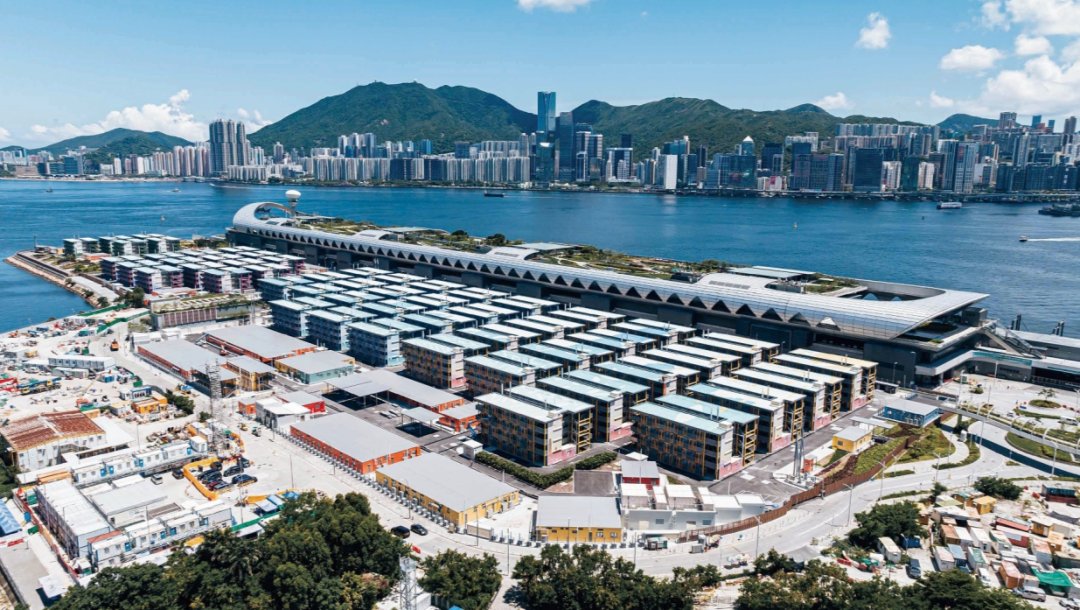
• Deepening Cooperation in the Greater Bay Area: Talent exchange and mutual recognition of standards will be promoted in the Guangdong–Hong Kong–Macao Greater Bay Area; districts such as Nansha and Huangpu will be supported in building industrial chain collaboration bases; and modular products will be helped to obtain relevant certifications in Hong Kong and Macao so as to expand markets at home and abroad. Enterprises such as China Construction Technology have already deployed modular “lighthouse factories” in Nansha, helping the industry “go global”.
III. Increasing Policy Support and Optimizing the Development Environment
A range of incentive policies covering tendering and procurement, floor area ratio and approval processes will be introduced to reduce enterprise costs, improve the efficiency of project implementation, and deliver policy benefits directly to market entities.
• Innovative Tendering Models: Tendering under the EPC (engineering, procurement and construction) model and whole-process engineering consulting will be encouraged, and modular core competencies will be included in tender evaluation; centralized volume-based procurement will be supported to leverage economies of scale and reduce the costs of molds, components and the like.
• Floor Area Ratio Incentives: For modular projects funded by social investment, the relevant buildings may enjoy a 6% floor area ratio bonus (excluded from the floor area ratio calculation), and the bonus area may be registered for real estate ownership in the normal way.
• Streamlined Approval Processes: Modular projects will be given priority for inclusion among municipal key projects and will enjoy a green channel for approvals; investment management and budget estimate management processes will be optimized and project adjustment procedures simplified, accelerating project implementation.
• Preference in Award Selections: In the selection of quality engineering awards and outstanding survey and design awards at provincial level and above, modular projects will be recommended first under equal conditions; at the municipal level, the application of modular construction will be treated as an important indicator in evaluations.
IV. Improving the Supervision System and Ensuring Engineering Quality
A governance framework of “whole-process supervision + credit constraints” will be built to hold the bottom line on quality and safety and to drive the high-quality development of modular construction.
• Whole-Process Traceability: Relying on an informatized supervision platform covering all stages of design, production, construction and acceptance; projects will be promoted for inclusion in inherent defects insurance (IDI) for construction quality, with relevant information connected to the CIM platform to achieve digital delivery and ensure that quality is traceable.
• Building the Credit System: The credit information of market entities will be incorporated into industry management, and industry associations will be supported in carrying out credit evaluations, building a comprehensive governance framework that combines government supervision, industry self-discipline and public oversight.
V. Cultivating Professional Talent and Strengthening Intellectual Support
Focusing on “attracting, cultivating, retaining and utilizing talent”, the Measures build a professional and skilled workforce to provide intellectual support for industrial development.
• Cultivation of Professional Talent: Universities and vocational schools will be supported in offering relevant majors, high-level talent will be recruited, postdoctoral workstations and innovation practice bases will be established, industry–education integration will be deepened, training bases will be jointly built, and a database of modular construction experts will be created.
• Safeguards for Industrial Workers: Skills training will be provided for industrial workers, smart construction industrial colleges will be jointly established, a skill-differentiated compensation mechanism will be put in place, and the professional title evaluation system will be improved, offering talent comprehensive support in housing, social insurance and children's school enrollment.
VI. Fostering a Favorable Atmosphere and Promoting Popularization
Industry exchange will be promoted through supply-and-demand matchmaking meetings, exhibitions, forums and site observation activities; enterprises will be guided to take part in building demonstration platforms, raising public awareness and acceptance of modular construction and fostering a favorable development atmosphere of “government guidance, enterprise leadership and public participation”.
Policy Interpretation and Practical Significance
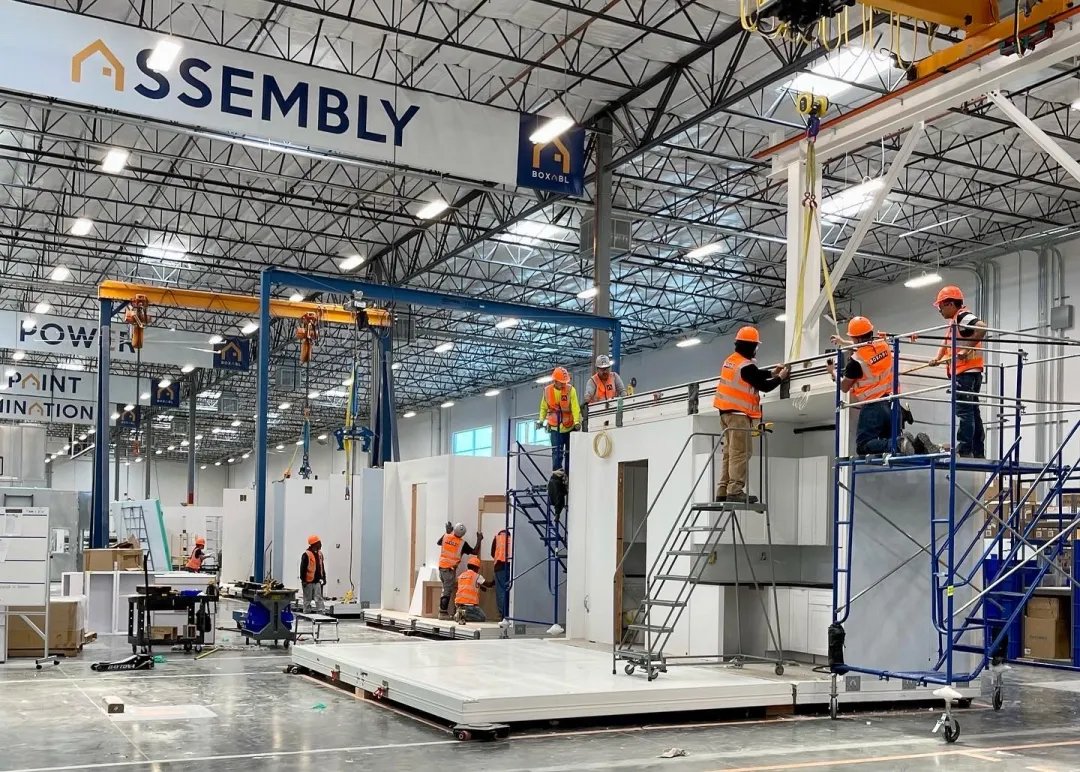
The issuance of the Measures is not only an important step for Guangzhou in driving the transformation and upgrading of its construction industry, but also a significant weathervane for the development of modular construction nationwide. Through the model of “factory prefabrication and on-site assembly”, modular construction can shorten the construction period by 20-40%, reduce labor by 70% and cut construction waste by 80%, while standardized production lowers mold amortization costs, helping prefabricated buildings reach a cost tipping point.
Drawing on the experience of several pilot projects already implemented in Guangzhou, the 20 initiatives in the Measures both address current industry pain points by solving enterprises' difficulties in financing, standards and application, and take a long-term view by laying out key work such as Greater Bay Area collaboration and talent cultivation. They will help Guangzhou build a leading hub for the modular construction industry and drive the construction industry's transformation toward an intelligent and industrialized model of “building houses the way cars are made”.
Comments and Discussion
You are welcome to share your views and practical experience in the comments section:
1. Has your company already entered the modular construction business? What opportunities and challenges does it face?
2. In light of the needs of Guangzhou's old-district redevelopment and affordable housing construction, what key issues do you think modular construction must break through in its application?
3. What practical suggestions do you have on policy measures such as floor area ratio incentives and tax support?
We will select the best comments for discussion with industry peers, helping to drive the high-quality development of Guangzhou's modular construction industry!
END
The views expressed are the author's own Copyright © Zhuwei Architectural Technology
Reproduction without authorization is prohibited
Please credit the source when reposting: Zhuwei Architectural Technology
Zhuwei Architectural Technology is a new-type technical services company specializing in integrated design optimization, BIM consulting and prefabricated construction design consulting. Our team brings together senior engineers from leading design institutes, former executives of real-estate companies, BIM engineers and prefabrication engineers, delivering integrated design optimization, refined drawing review, BIM consulting with MEP detailing, and prefabricated design services.
Design optimization consulting: Positioned as an extension and complement to the design management of real-estate developers, we focus on consulting and optimization for civil buildings. Across the whole process — or at key stages required by the client — we control the economy, rationality and safety of the design, eliminating unnecessary cost while measurably improving drawing quality, achieving "lower cost, higher efficiency".
BIM consulting: Through digital construction technology we help designers reduce errors and improve quality in the design phase, help contractors save cost and plan high-quality MEP installation in the construction phase, and extend BIM models into facility management for the operation phase — in collaboration with mainstream software vendors.
Prefabricated design consulting: Whole-process design on BIM platforms, using Revit and Tekla for PC detailing. Component geometry and reinforcement are linked parametrically — what you see is what you get. We deliver Industry 4.0-ready drawings with cut-length data for every rebar, and IoT-enabled support for production, storage, transport and installation of PC components.
Our expert team comes from leading design institutes, with deep technical grounding and extensive experience in dual-track design and optimization; its technical capability and control are industry-leading.
—— This article is auto-synced from the WeChat Official Account “Zhuwei Architectural Technology”. Read the original ——