AI-Generated Images, Videos, and 3D Models: After Two Years of Waiting, This AI Tool from the Hunan Provincial Architectural Design Institute Turns Out to Be Far from Simple...
WeChat Sync · Xiaowei · 2025-09-05
Hello, this is BIMBOX.
Today we're going to talk about a product that at first glance looks like an AI image-generation tool for the construction industry, but on closer inspection it is far more than that. Its Chinese name isTuling, and its English name isAidMaster.
We actually learned about this product quite early. Back in 2023, we visited Hunan Provincial Architectural Design Institute Group Co., Ltd. (hereinafterthe Hunan Provincial Institute) and saw a live demo of the product. Later, when we wrote about the story of the Hunan Provincial Institute's “Three Musketeers,” we mentioned this product that had been released ahead of schedule, and ever since, friends who have been following it keep asking: How is that AI image-generation tool from the Hunan Institute doing? When will it be available?
Let me skip the suspense and give you the conclusion first: Tuling is now fully open to individual users. No software installation is required—just register and you can start using it.
A few days ago, we invited several members of the team behind this product to our Digital Progress Night Talk, and had a good conversation about the product's features, as well as why it took from its 2023 release until now to be fully opened up, and what problems were being solved along the way.
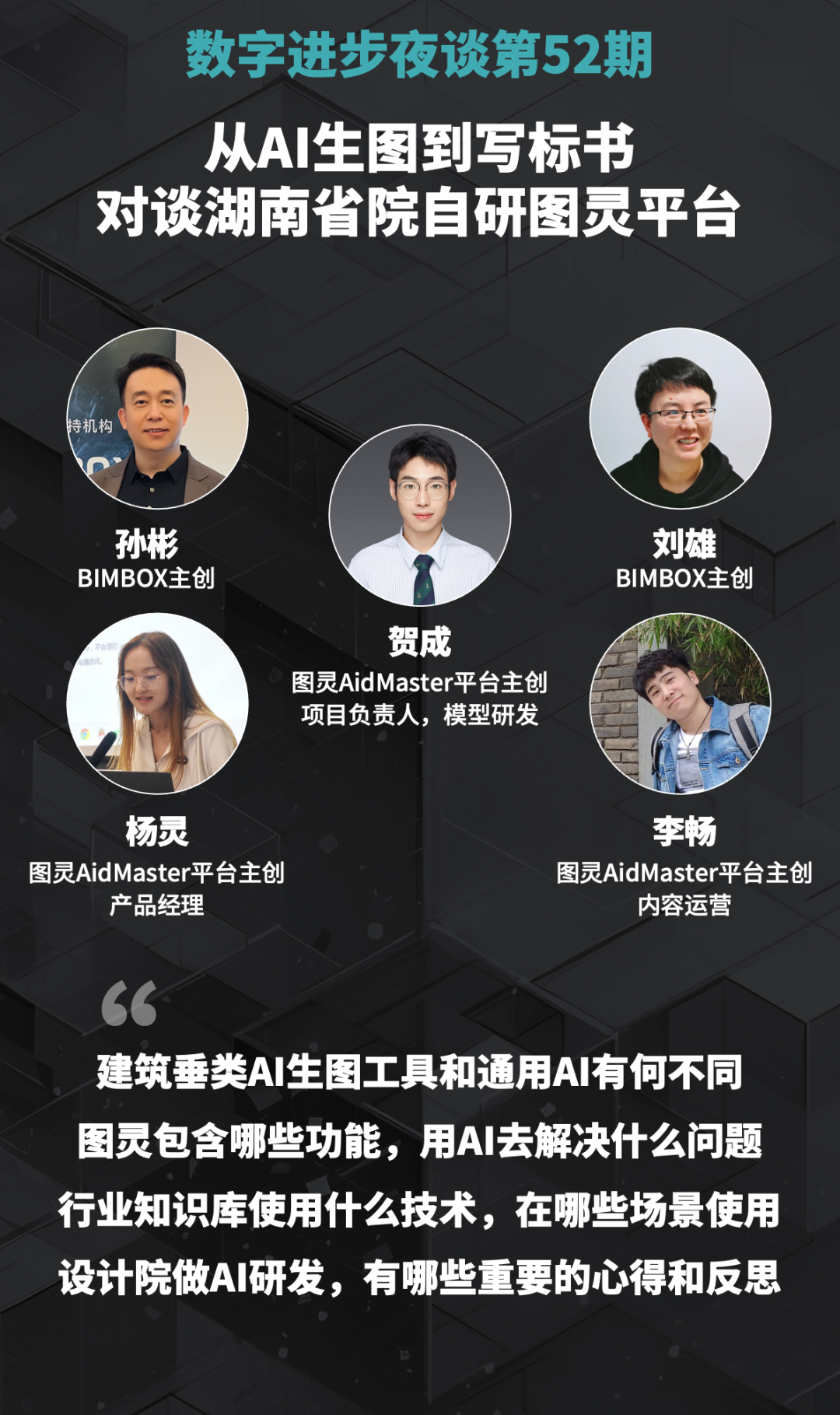
Now, based on this two-plus-hour conversation, I'll give you a complete rundown.
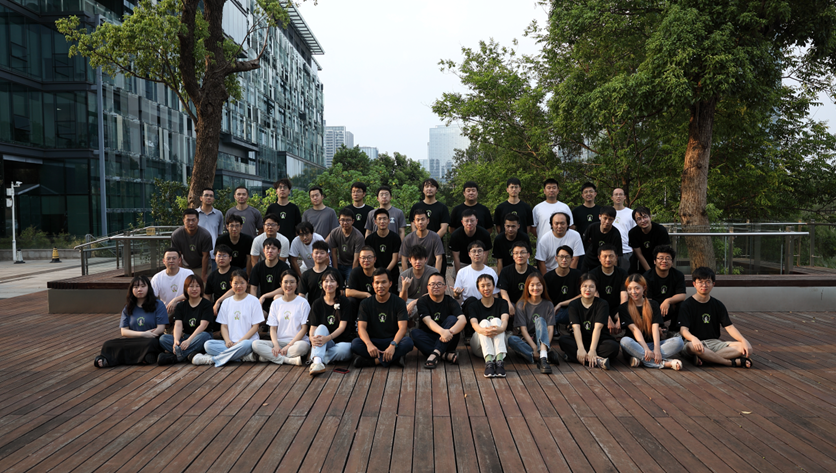
AidMaster is developed and operated by a project team of more than a dozen people, which comes from the Digital Research Institute specially established by the Hunan Provincial Institute.
There is a fascinating story behind the Digital Research Institute's rise from nothing, which we recounted in detail in our article From the Wild Early Days of BIM to the Age of Digital Order: The New Story of the Hunan Provincial Institute's “Three Musketeers”.
The Digital Research Institute has now grown to a team of 60. More than a dozen of them come from traditional architecture, structural, HVAC and other disciplines while also possessing digital development capabilities; the rest are professional computer talents such as front-end and back-end developers, UE engine specialists, and AI engineers, many of whom have work experience at major tech companies. Such a cross-disciplinary, integrated team has created an excellent R&D atmosphere.
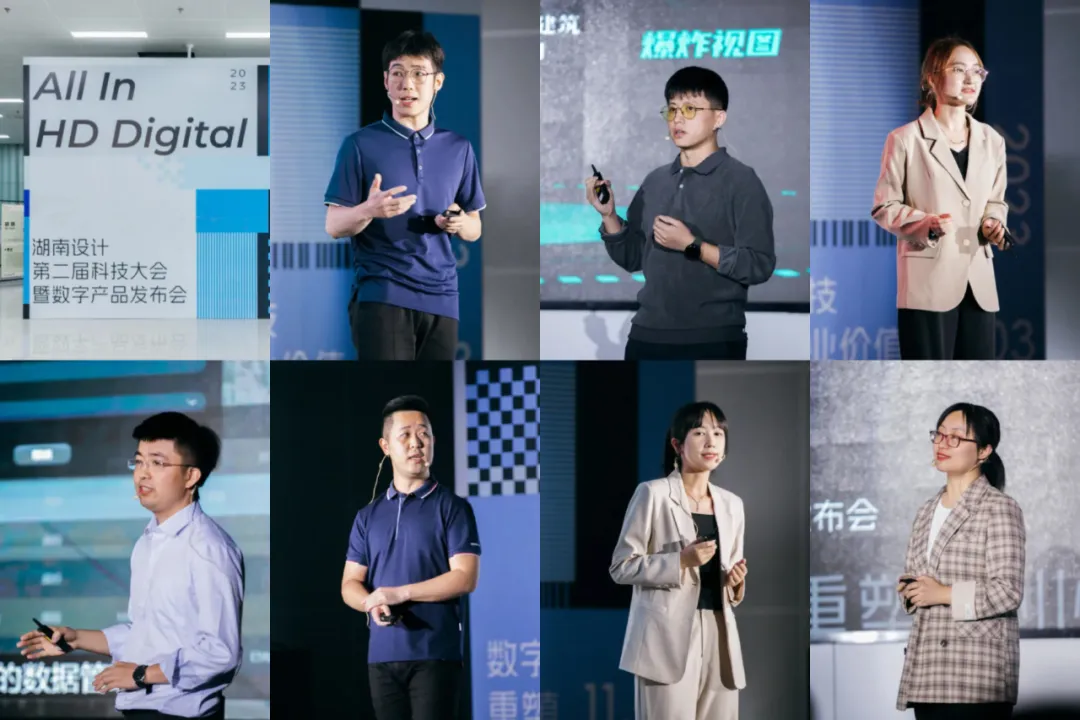
As early as the end of 2023, at the Hunan Provincial Institute's 2nd Science & Technology Conference & Digital Product Launch, the Digital Research Institute released seven products at once, including three design-efficiency tools and four O&M, monitoring and management-control platforms aimed at new business lines.
The Tuling project originated in 2023, when AI image-generation technology had just begun to emerge in the construction industry. At first, several members simply applied, tried and explored it, without a clear direction—you could even call it “just playing around.”
They found that the popular Stable Diffusion (SD) model didn't perform all that well, especially for architectural renderings, where the results were rather mediocre. So they spent quite a lot of time tweaking prompt engineering, and found the improvement was significant, particularly in helping designers generate design concept images.
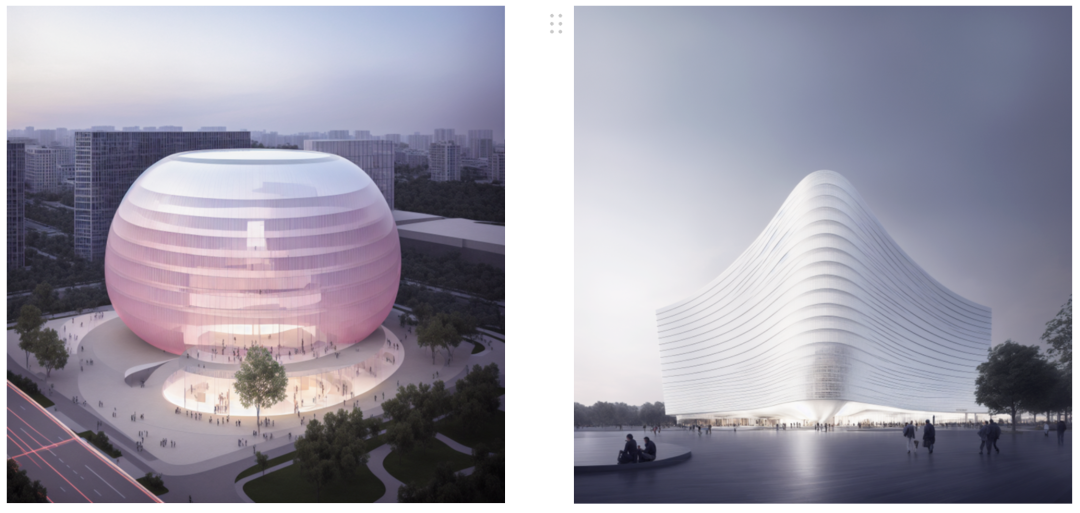
For example, when a designer wants to generate a building like a “pink bubble,” they only need to enter a few keywords, such as “pink bubble, round, glass, translucent, interesting design,” and it can generate a form that meets the requirements. Or, if a designer wants to generate a building in a “marine life” style, entering prompts like “curves, fish building,” it can also produce something fairly aligned with a professional designer's aesthetic.
Although for serious production work these are only fairly rudimentary renderings, they do convey a certain design understanding and aesthetic quality. After exploring in depth, they felt that AI image generation had the potential for further development.
After achieving some success at the application level, they made deeper technical attempts, turning some of the Hunan Provincial Institute's representative historical projects into a private dataset and training a small LoRA model.
The amount of data fed in wasn't large, and the computing power required was very low, but the results were pleasantly surprising. Once trained, the model learned the design-style features in the dataset very well, which made them even more certain that this was worth pursuing.
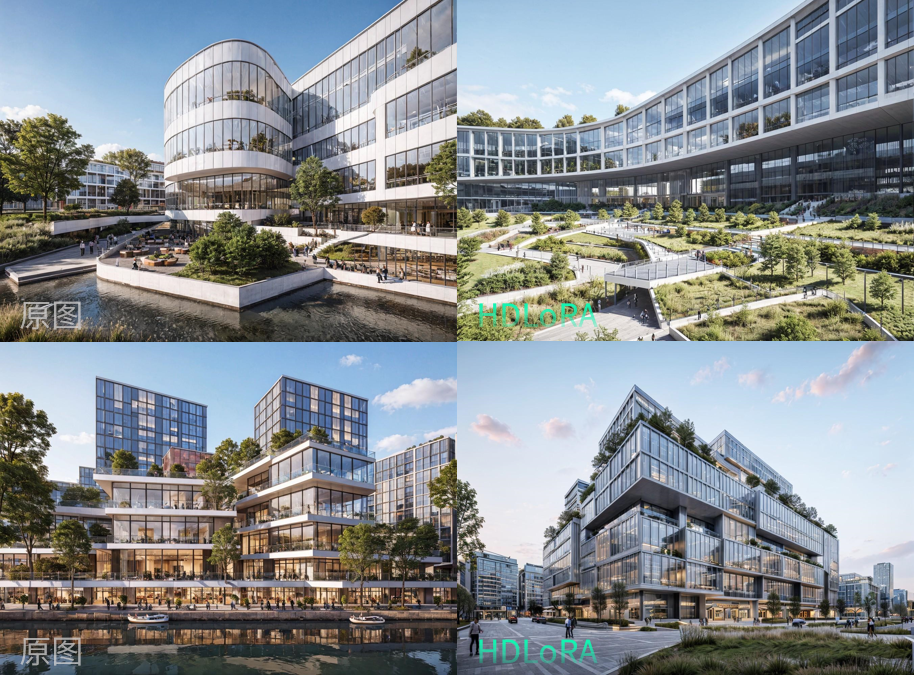
So they spent several months manually annotating and processing data, and using a much larger dataset, trained and released their first large model. Most of the data came from the Hunan Provincial Institute's own projects.
After its release, the model was widely acclaimed in the active SD community, and its weekly ranking in the entire architecture vertical shot up to third place.
Subsequently, they built a product around this model as the core, packaging their self-trained model into an application and connecting the workflow on Rhino. This way, designers could conveniently capture screenshots of the models they had built in Rhino and then call the AI model to generate images.
Through this attempt, they mastered the implementation path from the most basic AI model to packaging a product interface. The next step was to let more designers, and even some general-industry users, use it, so they came up with the idea of building a web version.
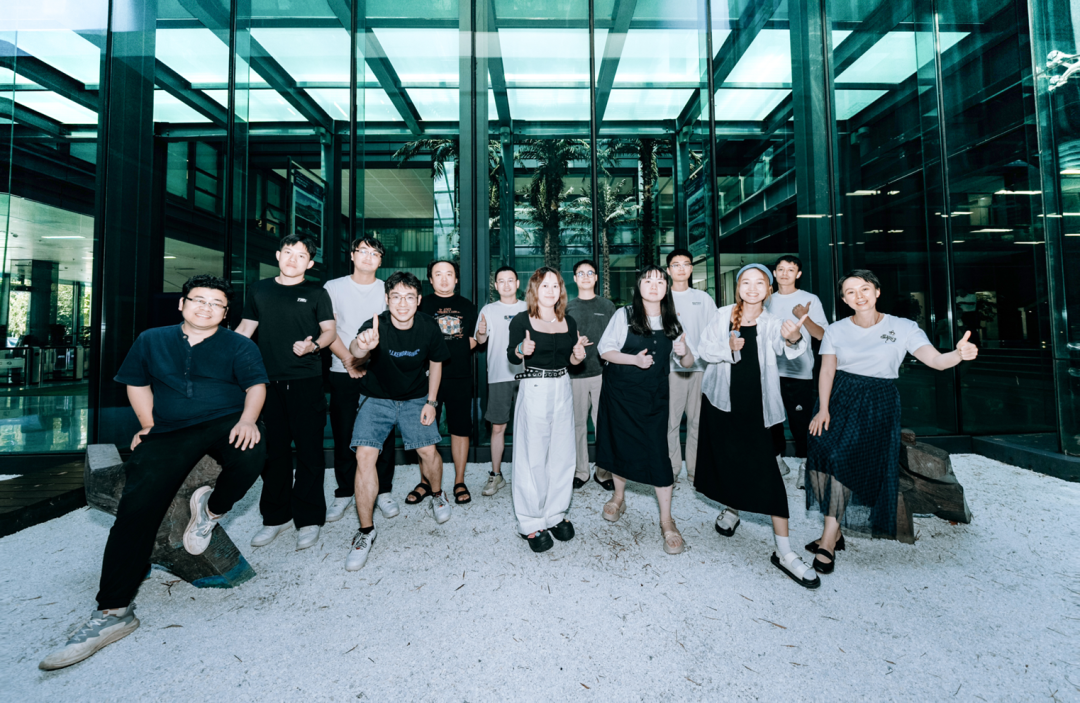
At the end of 2023, after this first-generation product was released internally, it attracted attention from designers in the industry and gained the support of the Digital Research Institute. A dedicated team was quickly formed, with members mostly born between 1995 and 2000—an overall young team—covering roles such as front-end, back-end, algorithm research, product management, and art. This enabled more professional development, pushing the project from a demo product to real-world implementation.
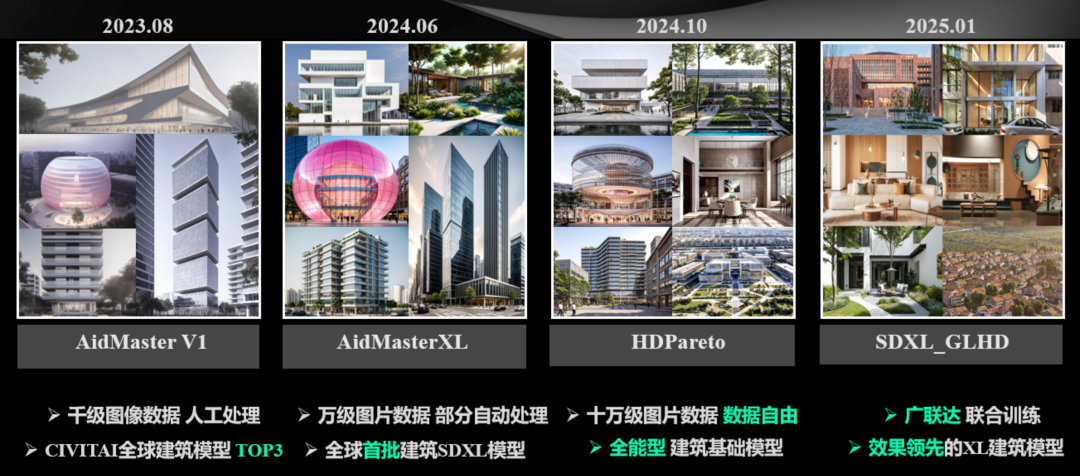
As R&D deepened, the underlying image-generation model technology advanced rapidly, with more powerful model architectures and larger parameter counts. Training a new generation of models placed higher demands on both technology and data volume. They developed automated data-processing tools to improve efficiency, and in June of the following year, as one of the first batches in the industry, they officially released a construction-industry fine-tuned model based on SDXL.
Later, Stable Diffusion ran into a commercial crisis, and the overall industry trend slowly shifted from open source to closed source. Open-source models fine-tuned for specific industries became increasingly scarce, and the time came to test each industry team's ability to train models on its own.
At that time, the data volume for the Tuling team's third-generation model had expanded to the hundred-thousand level, making manual processing impossible; they had to rely on fully automated tools they developed themselves to process image data. They also found that at this scale, it was much like the foundational-model saying “with enough power, even a brick can fly”: as long as you have a grip on the parameters and the experience, the model's performance can improve dramatically. It was already able to achieve fairly good comprehensive performance across multiple scenarios—architecture, interior, landscape, and urban planning—within a single model.
In January this year, the Tuling team released another new model based on XL and jointly trained with Glodon, with the dataset expanded to several hundred thousand entries. Leveraging Glodon's computing power and the Tuling team's training experience, its performance leads the pack whether compared with open-source models or similar architecture models. This year they also plan to train and iterate a new version based on the next-generation Flux model, using an even larger dataset, and launch it on the Tuling platform.
In 2024, AidMaster completed its packaging and released a closed beta version for internal use within the institute. At the time, nearly a thousand designers across the institute registered and used it, with very high activity levels; a large proportion of designers still use it frequently for production work to this day.
Seeing the results, the company finally released Tuling to the public internet, and so, in April 2025, Tuling was officially opened to the public. Within two or three months it had accumulated over 5,000 users and collected a lot of feedback. Compared with general-purpose large models, the images matched their design intent very well and could be placed directly into scheme-presentation documents.
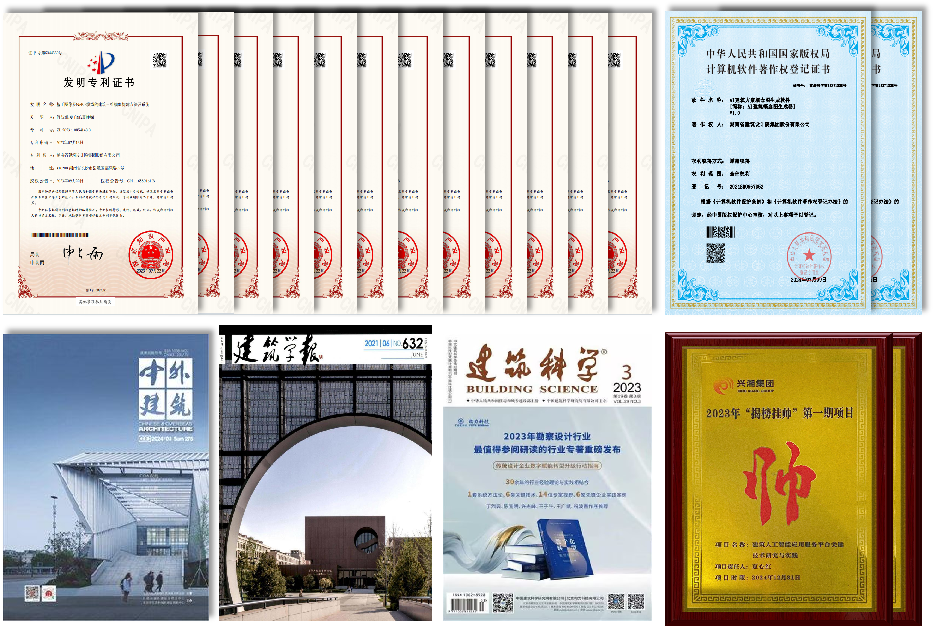
As its technology accumulated, the Tuling team has also filed a number of patents, published several software copyrights and papers, and cooperated with relevant enterprises to jointly complete national-level AI research projects.
This also answers our question: over the past two years, the Tuling team has been continuously iterating its specialized model, using hundreds of thousands of professional data entries to fine-tune the model specifically for the construction industry, opening up a gap in image quality and controllability versus general-purpose large models such as Midjourney and Stable Diffusion.
In addition, they put a lot of thought into interaction and operational workflows, absorbing and adopting many designers' needs and suggestions, and striving to let designers use it “out of the box” seamlessly and directly. After all, their main job is still creating schemes and doing design; it's unrealistic to expect them to spend a great deal of effort writing prompts and tuning parameters every time.
And so today, we can finally use this Tuling platform.
Now let's skip all the development thinking and, entirely from the perspective of an ordinary designer, take a look at what features AidMaster has.
At present, AidMaster mainly serves renderings and concept images across four disciplines—architecture, interior, landscape, and planning—solving a whole series of headaches for designers.
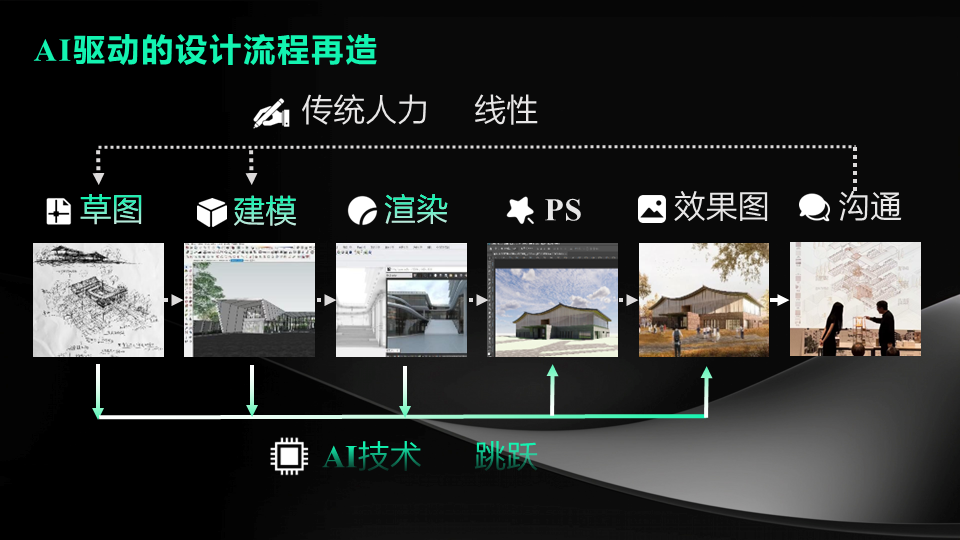
For example, in the early stages of a project you have to draw sketches, model, render and retouch images, and repeatedly go over renderings with the client—often getting sent back, which means re-modeling and re-rendering. AI can help designers skip those complicated intermediate steps and go straight to the rendering in one step, improving the efficiency of communication and delivery.
Tuling requires no software installation. Just visit the website (https://www.aidmaster.cn), log in to your account, and use it directly. On the left you can see all the tools, which mainly consist of four modules aimed at designers at different stages and with different needs.
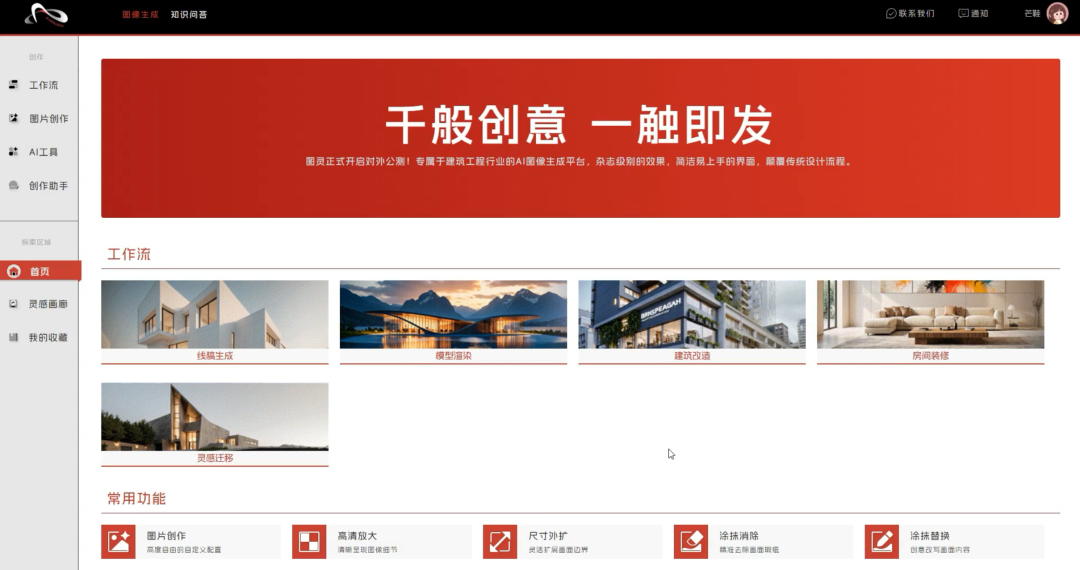
The Beginner-Friendly “Workflow” Module
This module is mainly aimed at beginners. All parameters are pre-tuned in the back end, operation is very simple, and you don't have to deal with complicated prompts. With just a little hands-on practice, designers can get fairly satisfying results in the following scenarios.
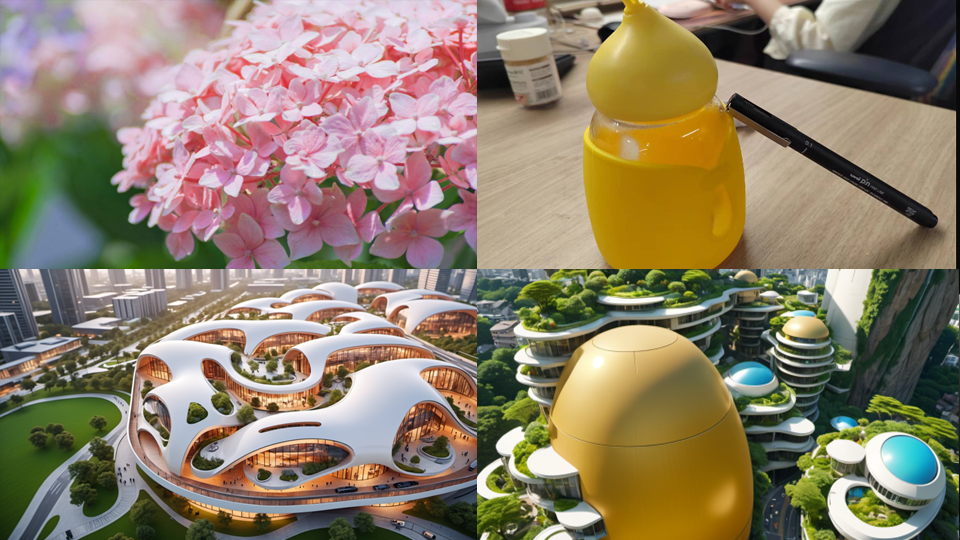
Inspiration Transfer:It can use non-architectural imagery—such as creatures from nature or everyday objects—to generate architectural schemes. Nowadays, many architectural designs draw inspiration from nature, and some clients may have their own special preferences, allowing for a large number of scheme comparisons in the early stages.
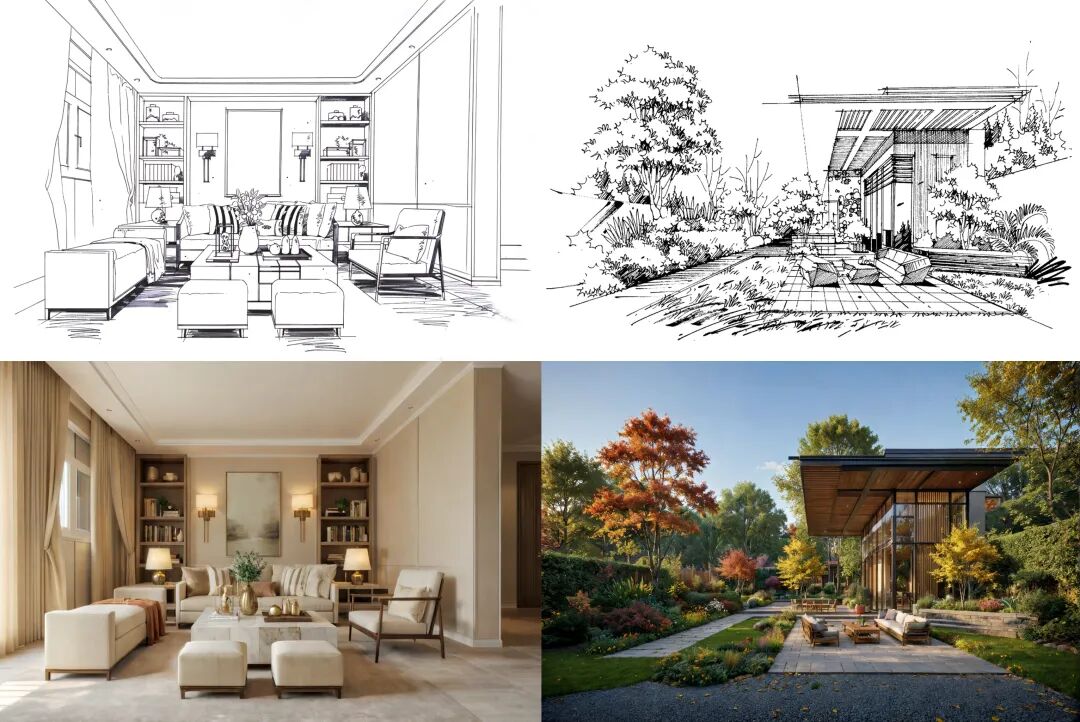
Line-Drawing Generation:Upload a hand-drawn image, and it can directly generate a set of renderings. Many designers like to sketch on paper first and then use AI image generation to achieve precise perspective, material and light-and-shadow effects; quite a few designers really love this feature.
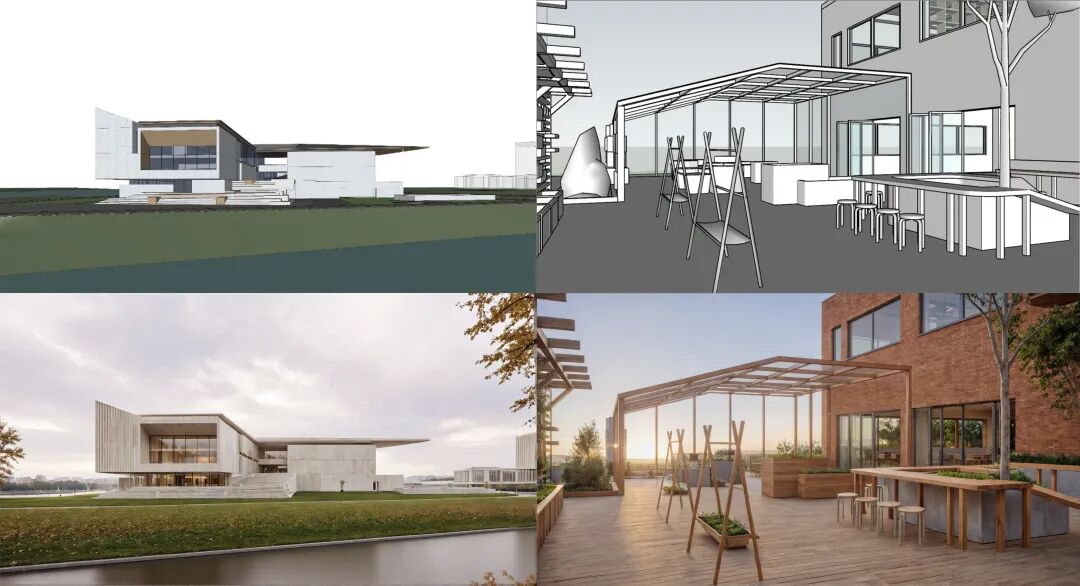
Model Rendering:Whether it's a massing model or a fairly detailed 3D model, both can be rendered directly on the platform. Because it directly uses a screenshot of the model, it doesn't matter what modeling software you use. The colors and materials in the model will influence the intent that the AI infers when generating the rendering.
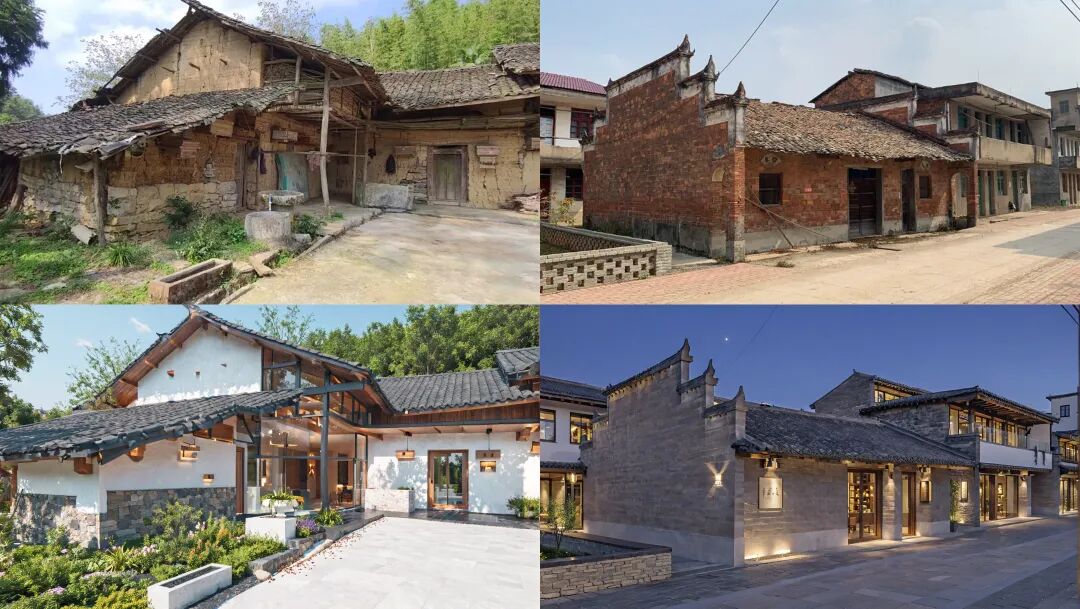
Building Renovation:It's well suited to the currently hot direction of urban renewal, and to “short, quick, and fast” projects that need rapid renovation. You only need to take a photo on site, and once you're back you can directly produce a post-renovation rendering, letting the client quickly settle on their intent—without having to first survey, then model, render and produce drawings, saving a great deal of effort.
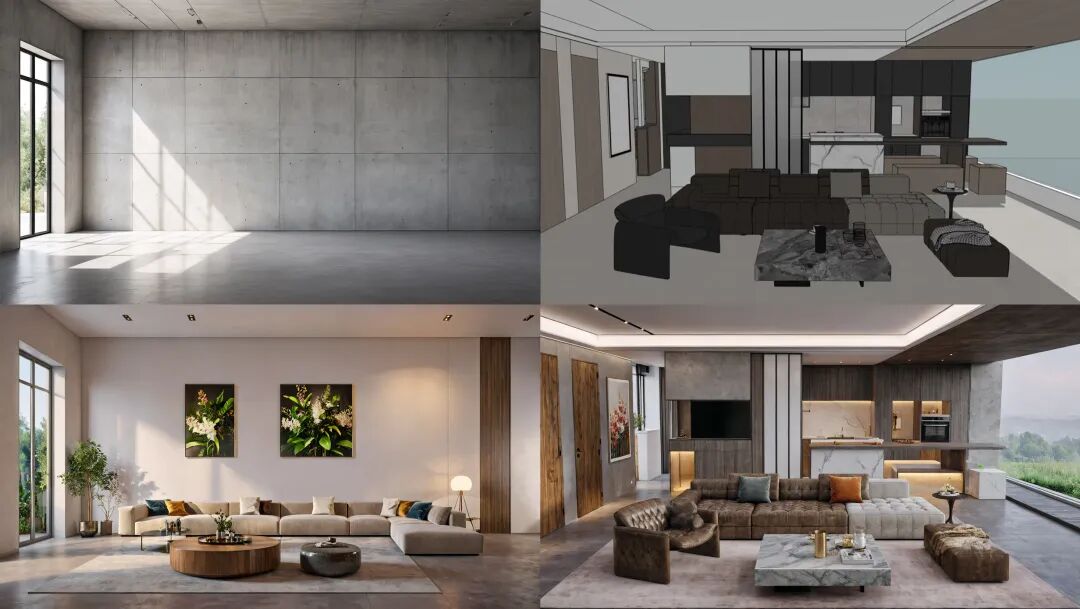
Home Renovation:This feature is used in the decoration and fit-out field. By using AI to add decorations, furniture and so on, it can show the effect of a bare-shell home after renovation, and is much loved by interior designers.
The “Image Creation” Module for Advanced Users
This module is suited to designers who aren't satisfied with the platform's preset effects and have higher requirements for image controllability; they can adjust more detailed parameters according to their own needs.
For example, you can control how the rendering is generated by adjusting the different weights of four dimensions in image control strength: line, depth, material, and original image.
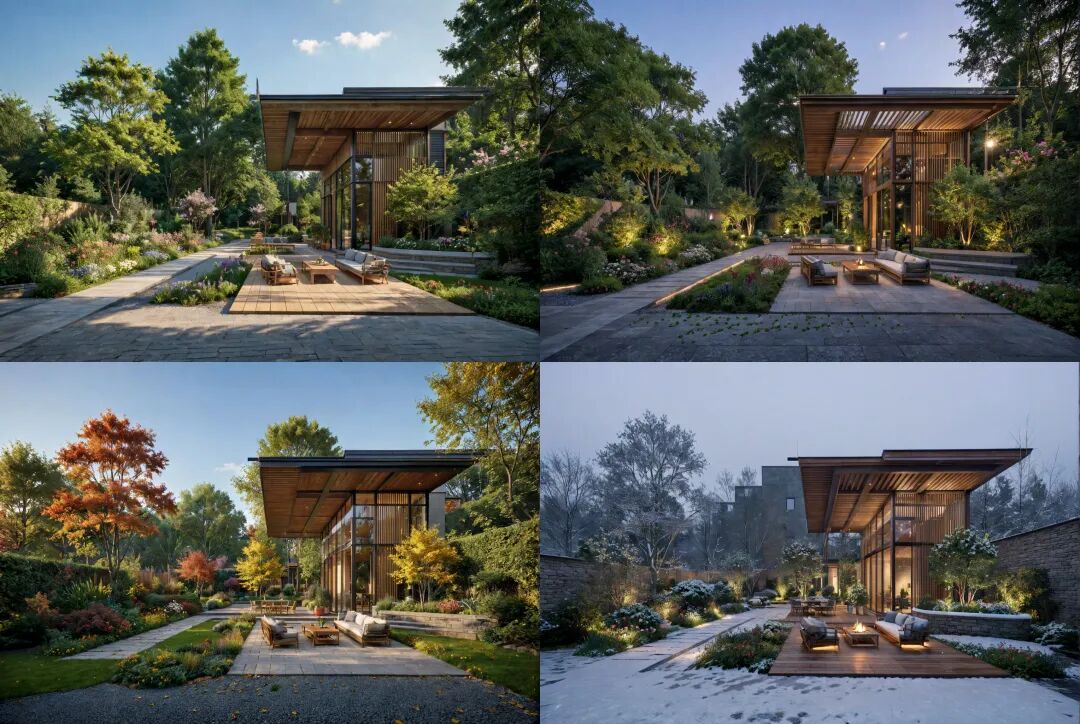
Atmosphere Change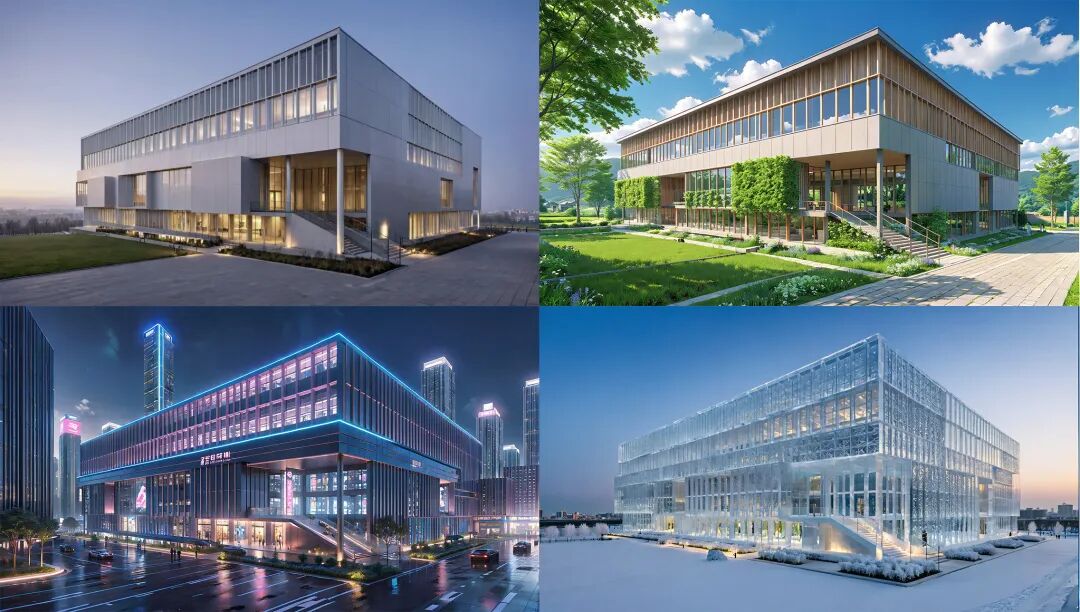 Style Transfer
The “AI Tools” Module for Post-Processing Fine-Tuning
Once designers have completed the initial generation in the previous modules, they can come to this module to make some post-processing edits.
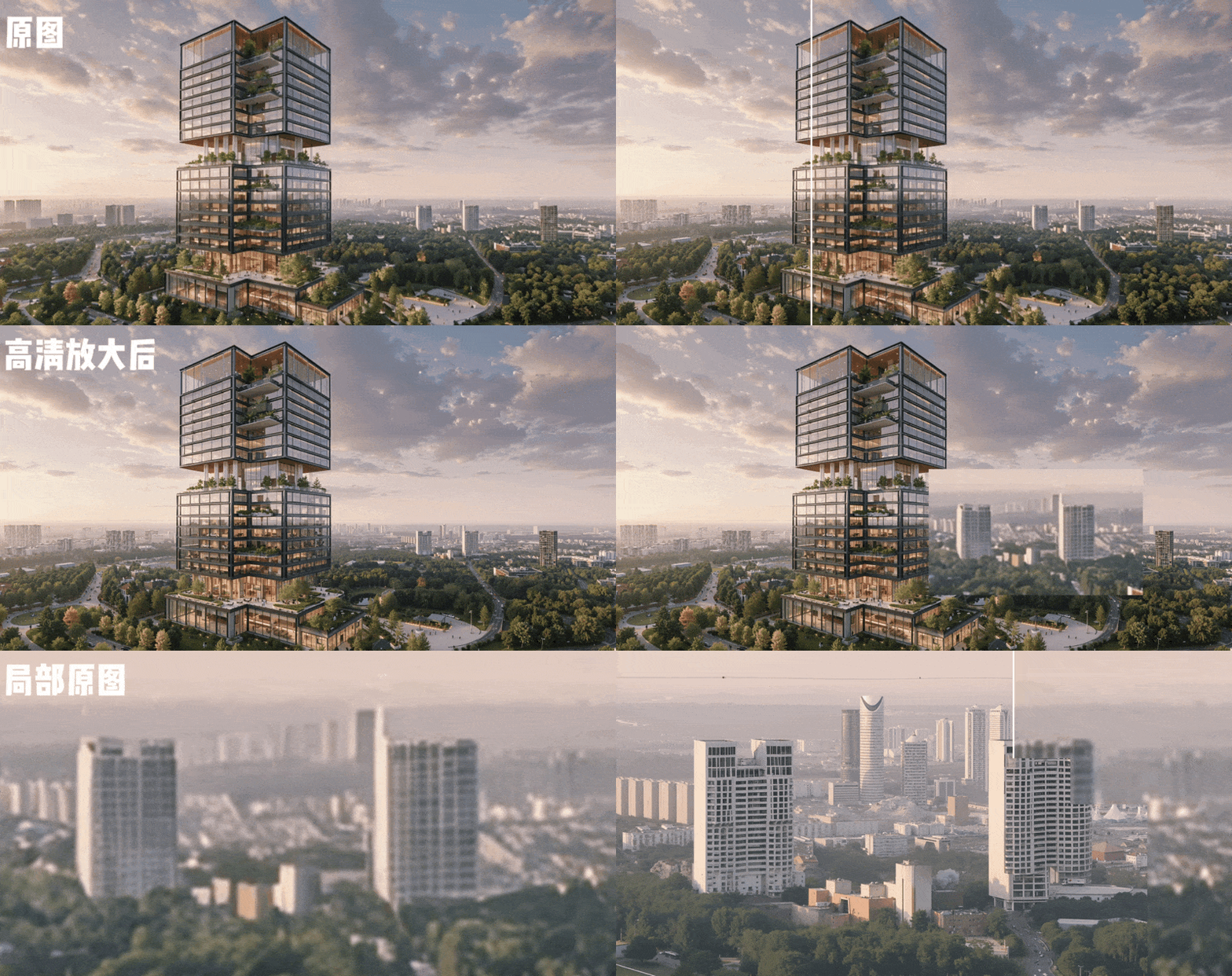
HD Upscaling:If you feel the details aren't enough after generating an image, you can continue to increase the resolution. It supports not only images generated on the Tuling platform—upload any image and it can be upscaled in HD through the AI algorithm.
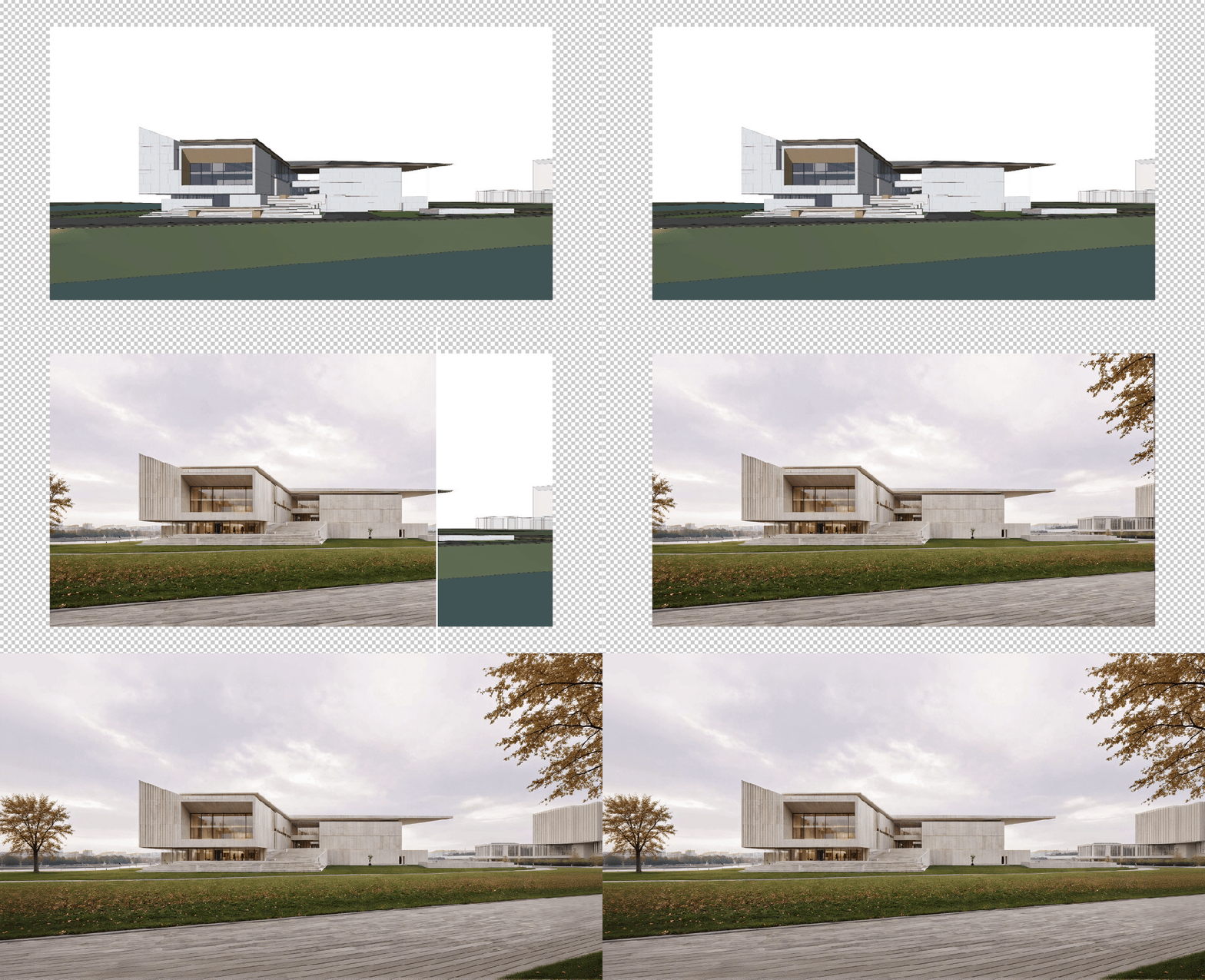
Outpainting:When you need to make posters with rather unusual dimensions and the original image's proportions aren't enough, you can use AI to expand the image horizontally or vertically, naturally adding the surrounding scenery.
Brush Erase: AI image generation sometimes produces glitches or objects the designer doesn't want, and this feature can remove them with one click.
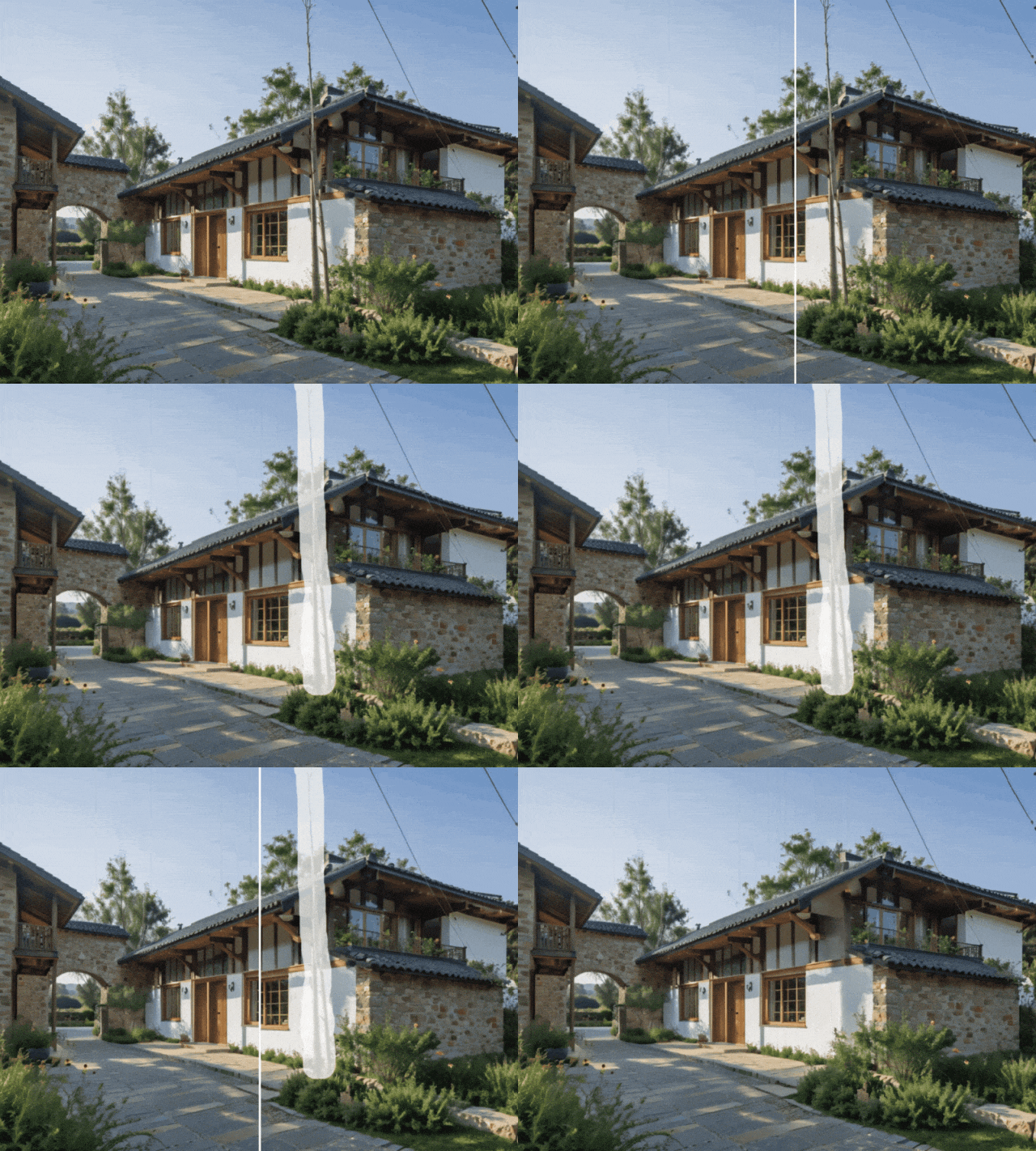
Brush Replace: It keeps the overall effect while regenerating and replacing a local area of the image. For example, enter the prompt “replace the rectangular massing with curved massing”, and the newly generated image smoothly matches the previous architectural intent and form.
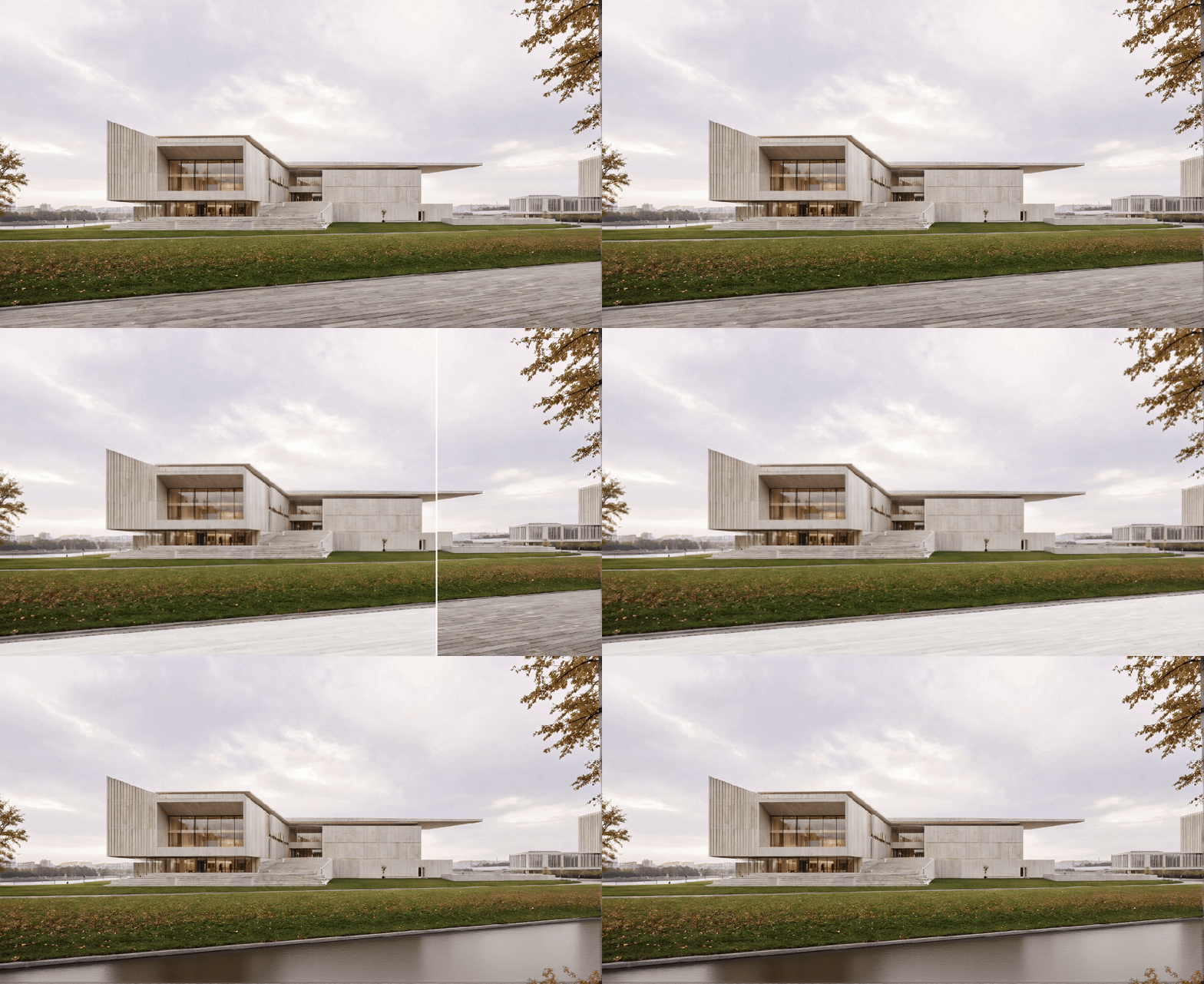
With these tools, designers can reduce the number of times they have to “draw lots and open blind boxes” with AI, avoid having to start all over just because a small part is unsatisfactory, and free themselves from the post-processing Photoshop workflow—completing all the work within a single set of tools.
The “Creation Assistant” Module for Editing Images with Natural Language
This module uses AI to achieve advanced image editing, enabling many functions that SD cannot. Instead of generating images with fragmented keywords or by controlling outlines, it lets you simply type natural language to describe your needs and generate images.
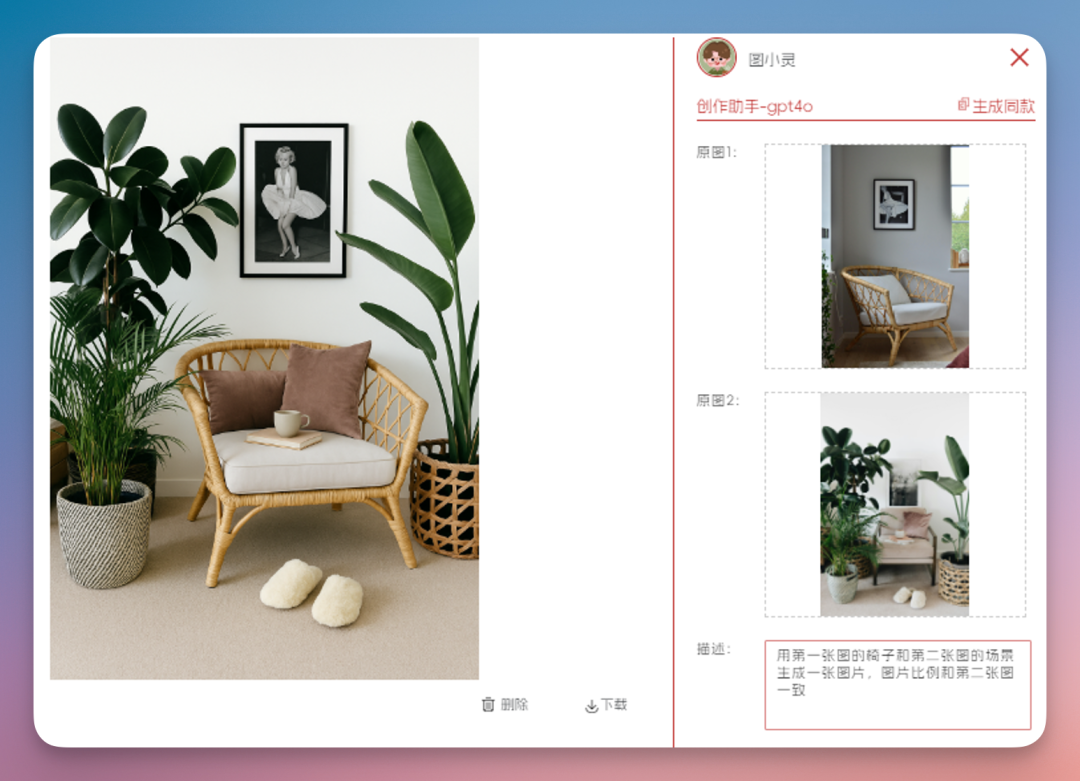
For example, upload two images and then enter “use the chair from the first image and the scene from the second image to generate a picture”, and it will transfer the chair into a new image.
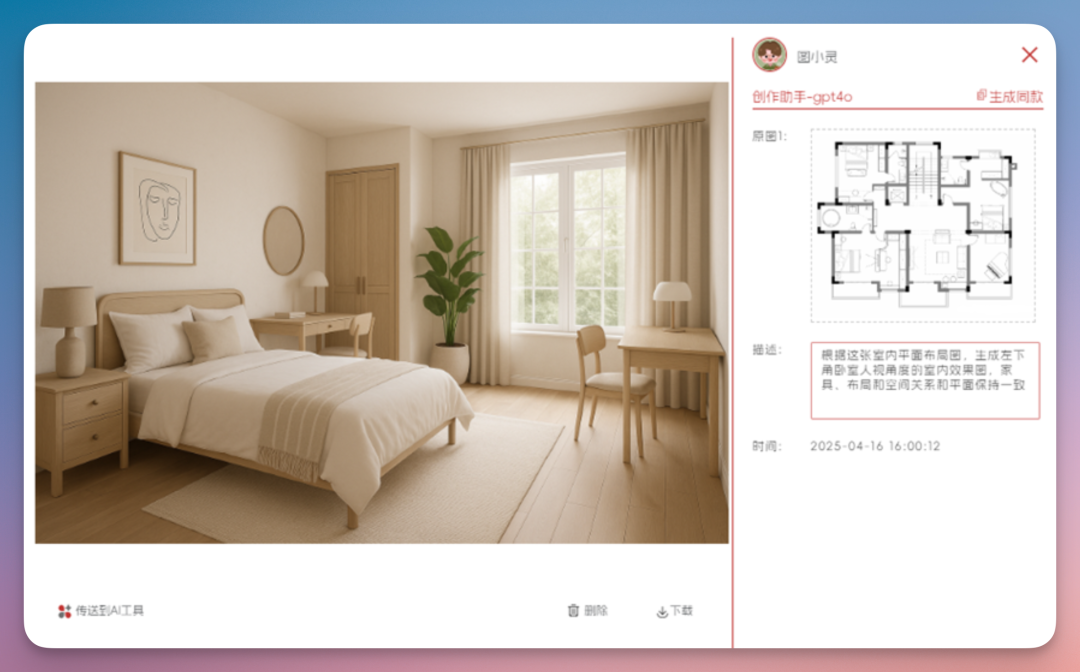
As another example, upload a floor plan and enter “generate a room rendering based on this floor plan”, and it will generate a 3D rendering with the same layout.
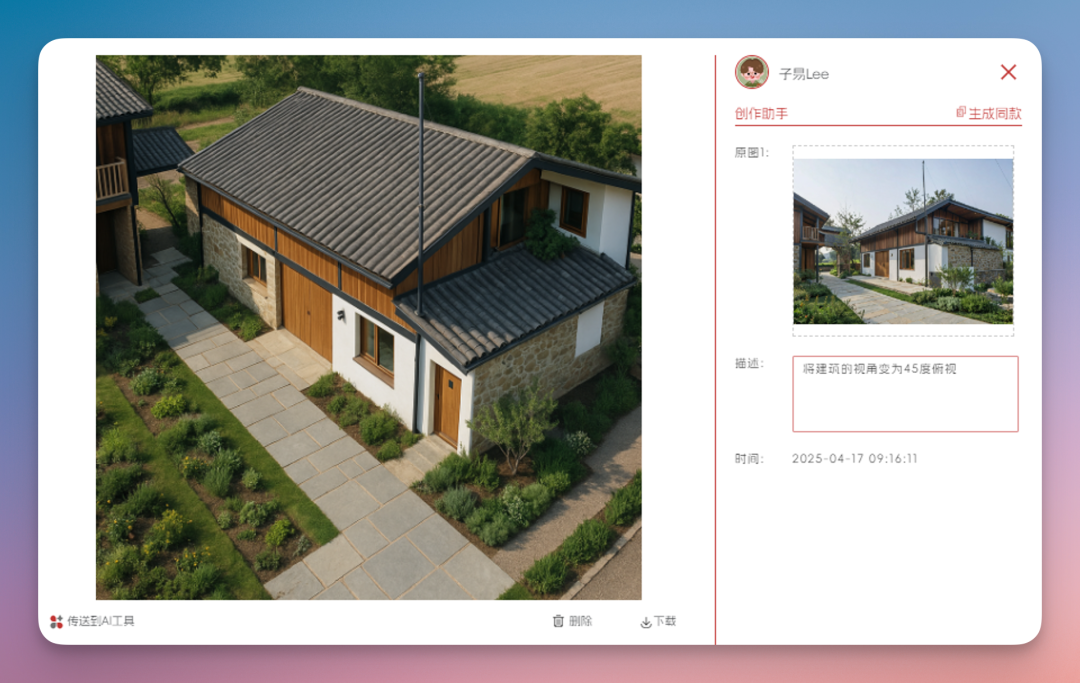
This feature can be applied to some real project needs. For example, upload an image and have the AI “change the building's viewpoint to a 45-degree top-down view”, and you can obtain a new viewpoint without a 3D model.
After Tuling opened to users across all platforms, friends from other industries have also been treating it as a natural-language image-generation tool to make avatars, comics and posters, having a great time with it.
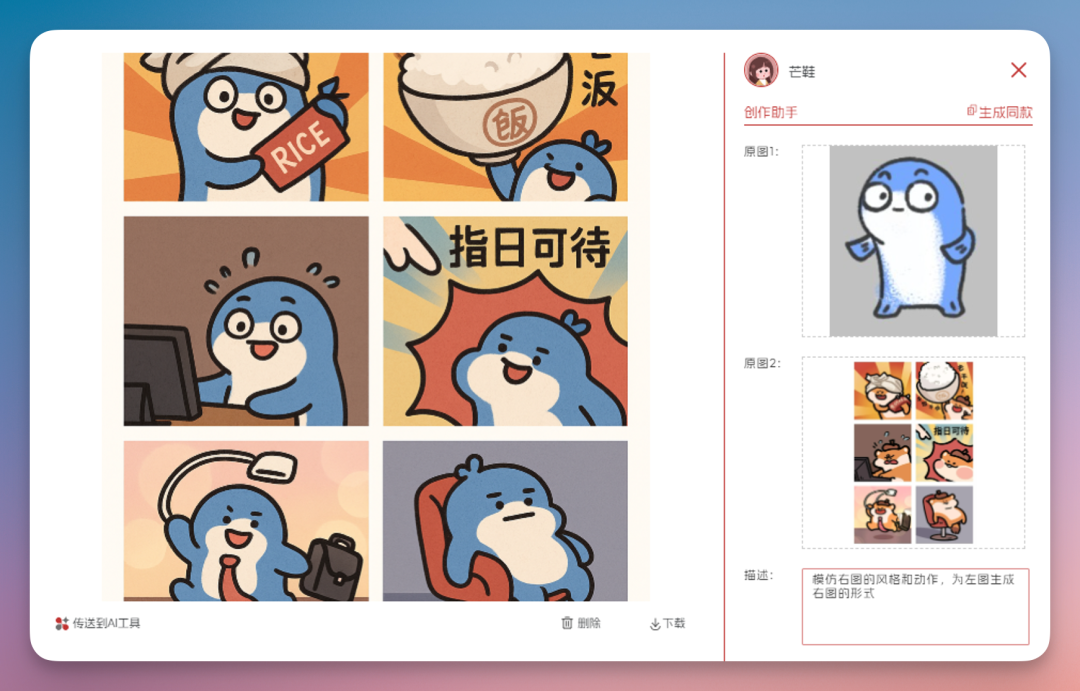
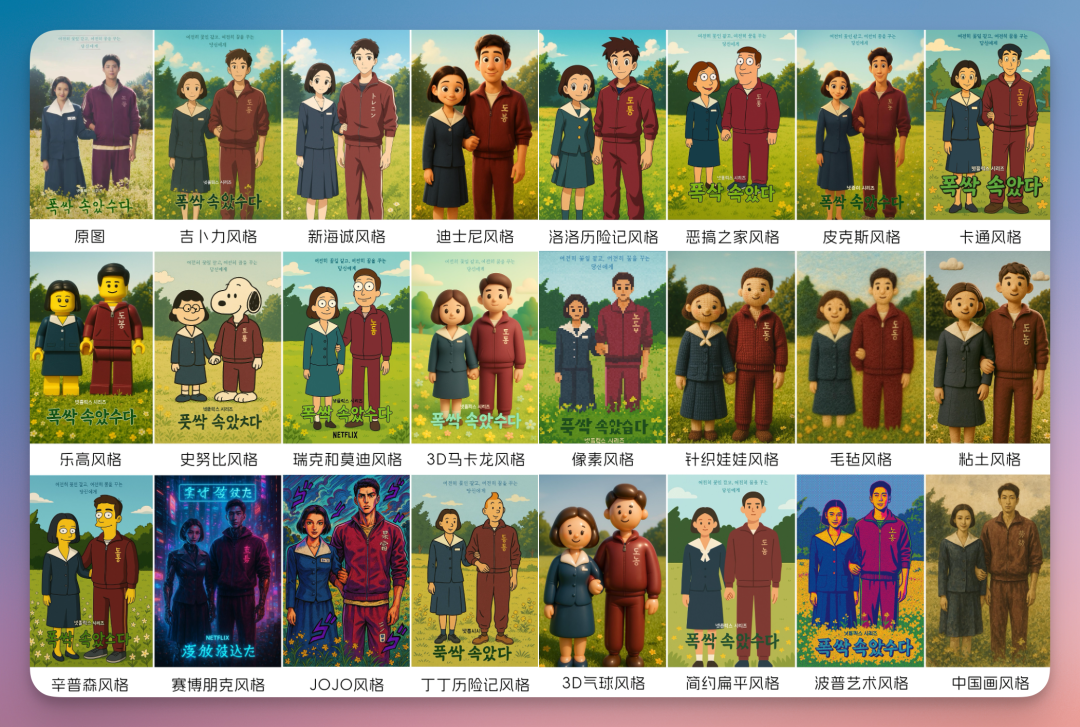
These features are actually quite simple to get hands-on with. Basically, even someone without deep knowledge of AI can start playing around within ten minutes and be doing real work within an hour or so.
The Tuling team's optimization principle is also to use intuitive interaction as much as possible, rather than making people memorize all kinds of prompts to get work done. We believe that making people adapt to AI through complex commands is something only a few geeks can master.
A good AI tool should be like this: hide its own capabilities behind the scenes, save users trouble in front-end interaction design, with clear categorization and clear goals—calling up whatever function is needed for whatever job, in and out in a flash.
Comparison of Generated Results
There are quite a few architectural image-generation tools at home and abroad these days. Now that we've seen how to use AidMaster, we still need to see how well it performs.
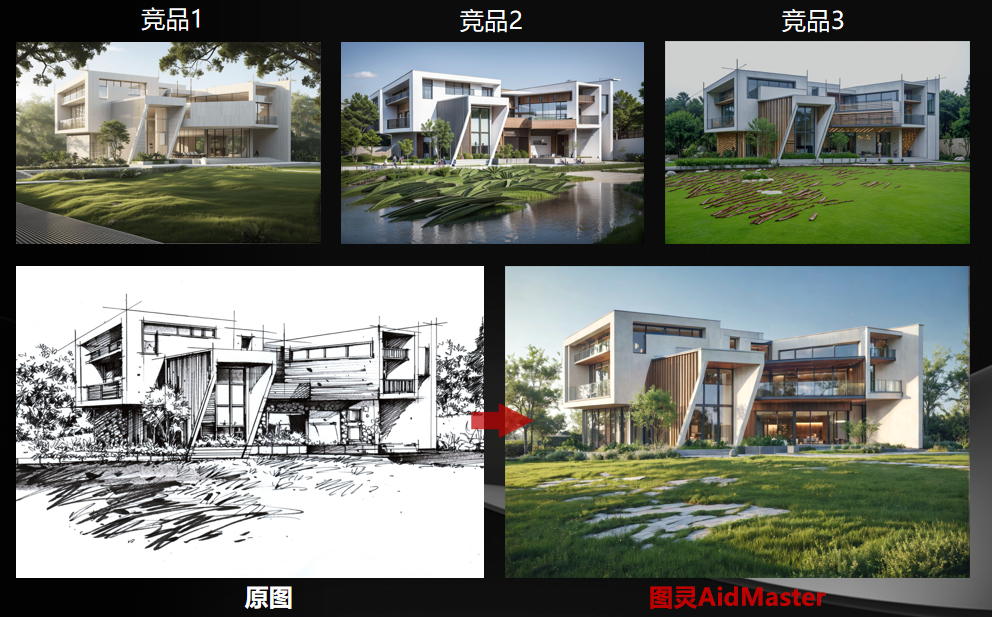
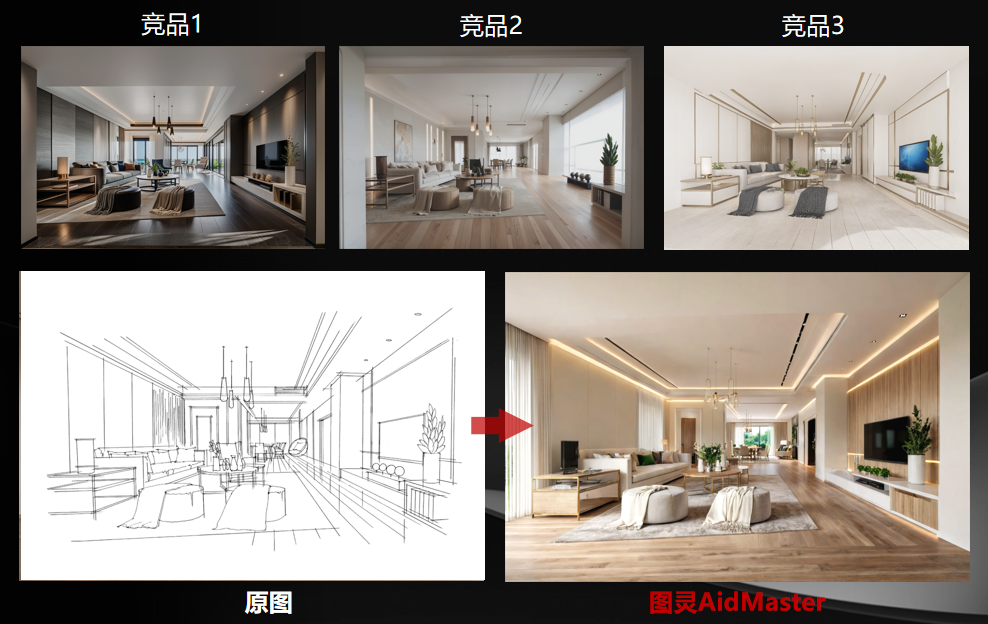
Overall, a large model trained on hundreds of thousands of professional data entries is quite stunning in terms of generation quality. Below are a few sets of detailed comparisons.
In the first set, you can see that the quality of the light and shadow, texture, and surrounding lawn is clearly higher.
The set below is interior design—a quality comparison of generating a fully fitted rendering directly from a line drawing.
Below is a comparison of landscape-design effects; the material of the floor tiles and the texture of the plants are clearly better.
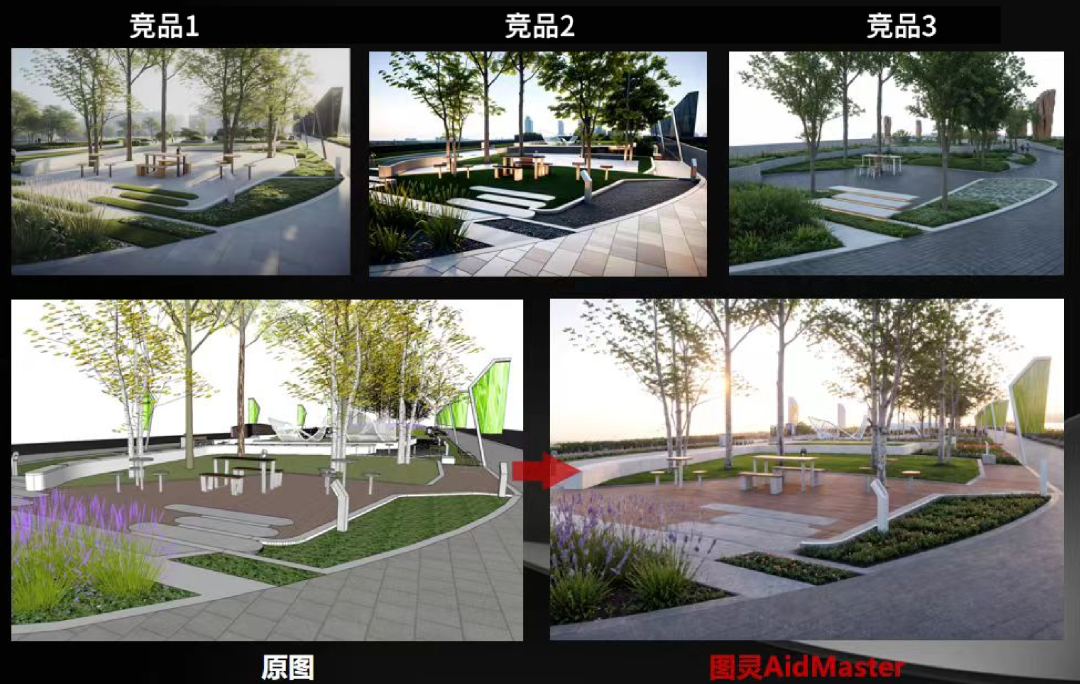
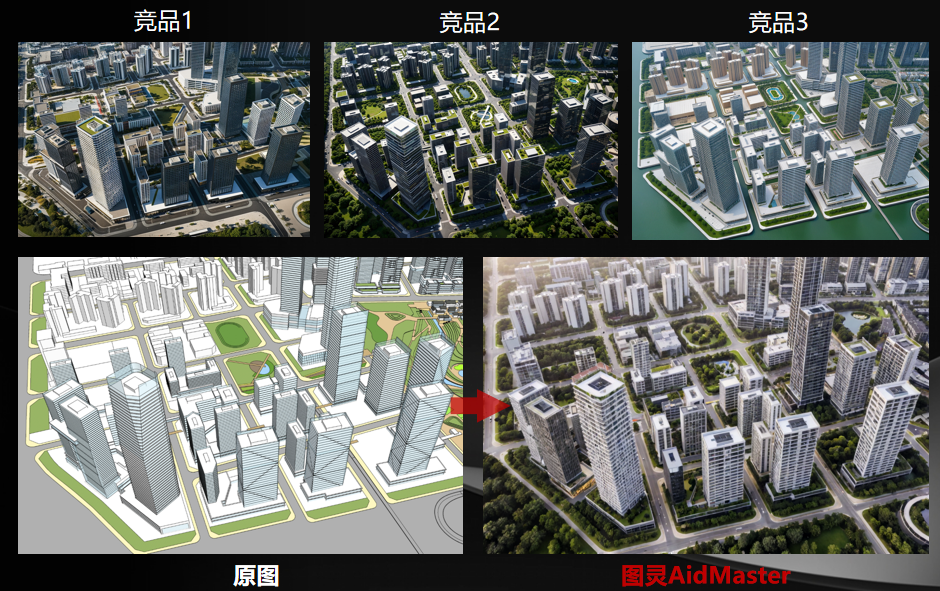
The comparison of planning-and-design renderings is also fairly obvious. Note the details: AidMaster's generation of building facades and vegetation comes very close to the results of traditional modeling and rendering.
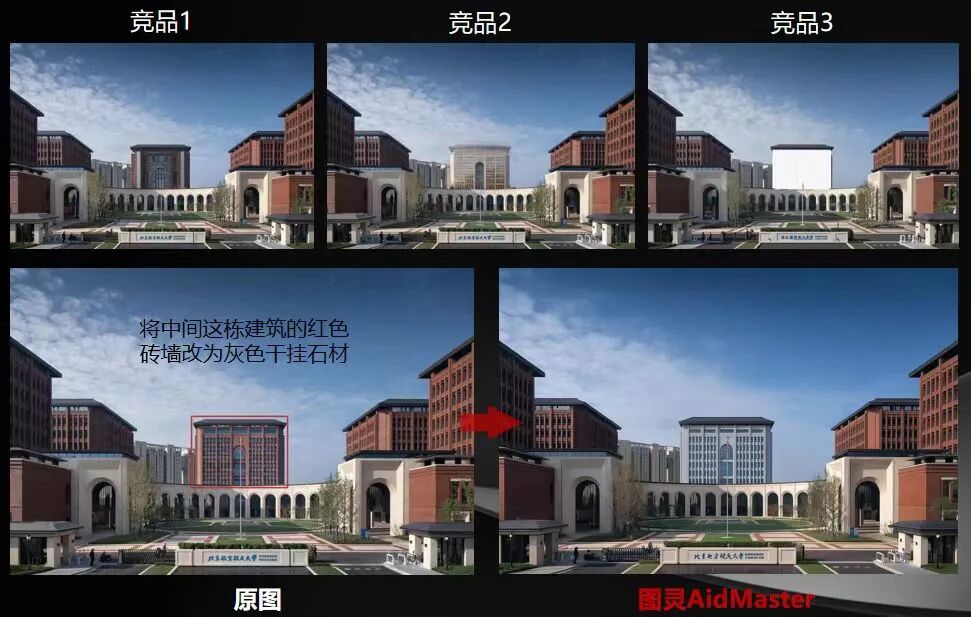
In terms of material modification, it also performs quite intelligently: changing the brick wall of the middle building to gray dry-hung stone can basically be done with point-and-shoot precision.
Talk is cheap—better to go straight to their official website (https://www.aidmaster.cn) and try it yourself; you should be pleasantly surprised.
After two years of rapid iteration and updates, AidMaster is actually still far from reaching a stable state. From our conversation with the Tuling team, they are still using AI to continuously add fun and useful new features to this platform.
AI Video Generation
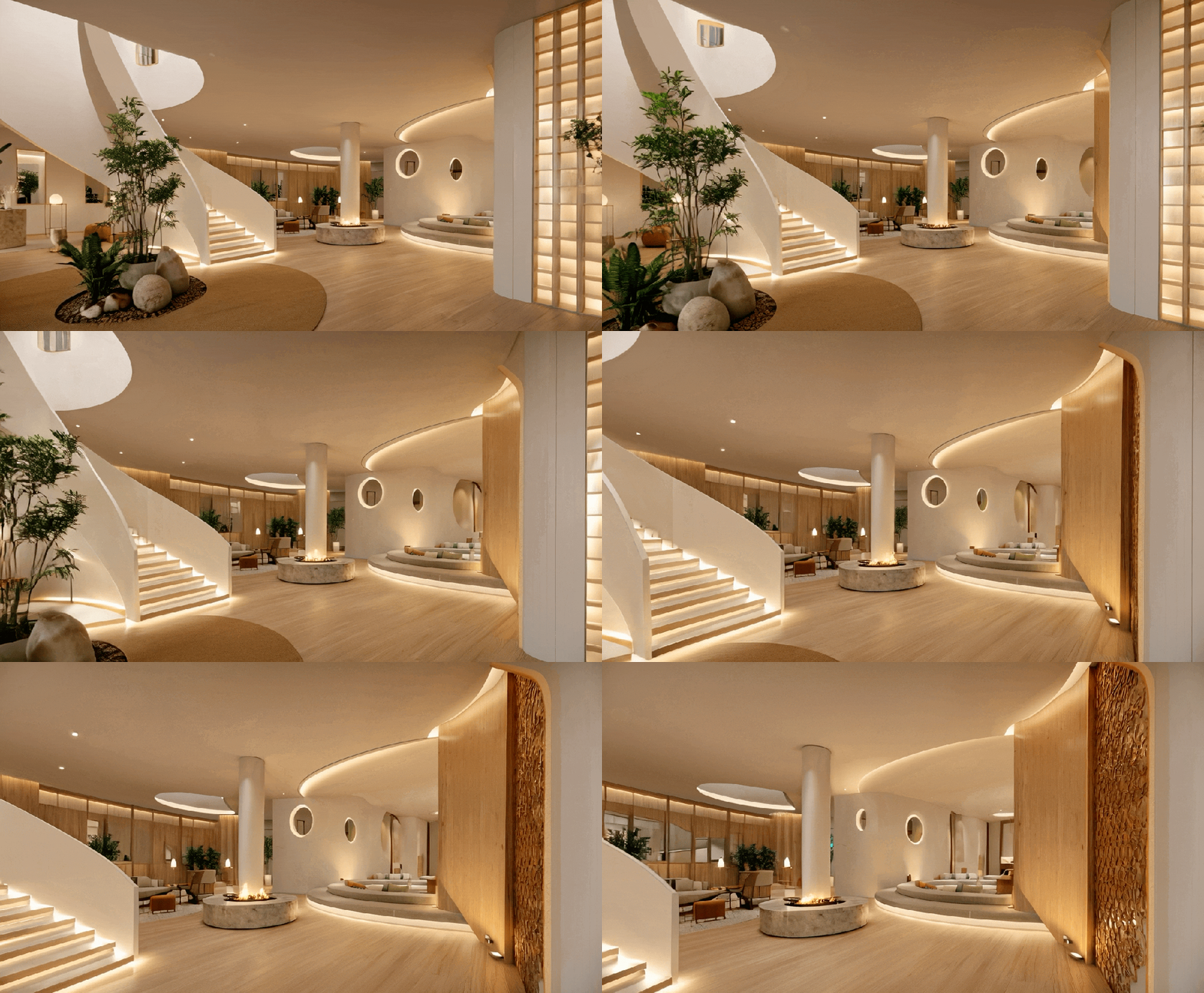
In addition to image generation, they have also developed a video-generation feature, likewise focused on the construction industry. By inputting a first frame, or both the first and last frames, you can turn a static rendering into a walkthrough video.
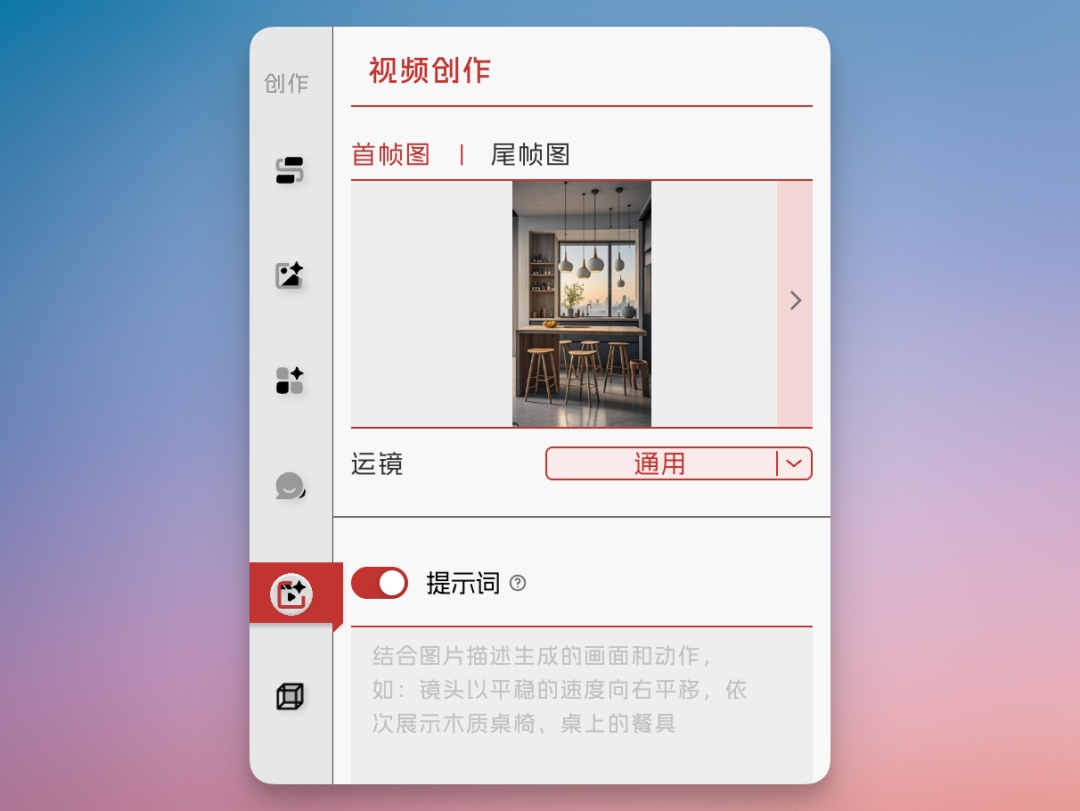
Designers can choose the movement of the walkthrough camera (dolly, pan, tilt, tracking, etc.), or enter prompts to tell the AI how the video should be produced. Currently it can support effect videos of about 5 seconds; if you want a longer duration, for now you have to save the last frame, use it as the first frame, generate segment by segment and then stitch them together. In the future it may support longer video generation. Now not only are the renderings taken care of, but the walkthrough animations are too.
3D Model Generation
This feature originated from a joint exploration by the Tuling team and a home-furnishing brand in the direction of renderings: importing product images directly into the Tuling platform, then using AI to help users replace them into their own home scenes with one click, so they can directly see the effect after purchase. This requires the generated furniture to be a 3D model with materials in order to work.
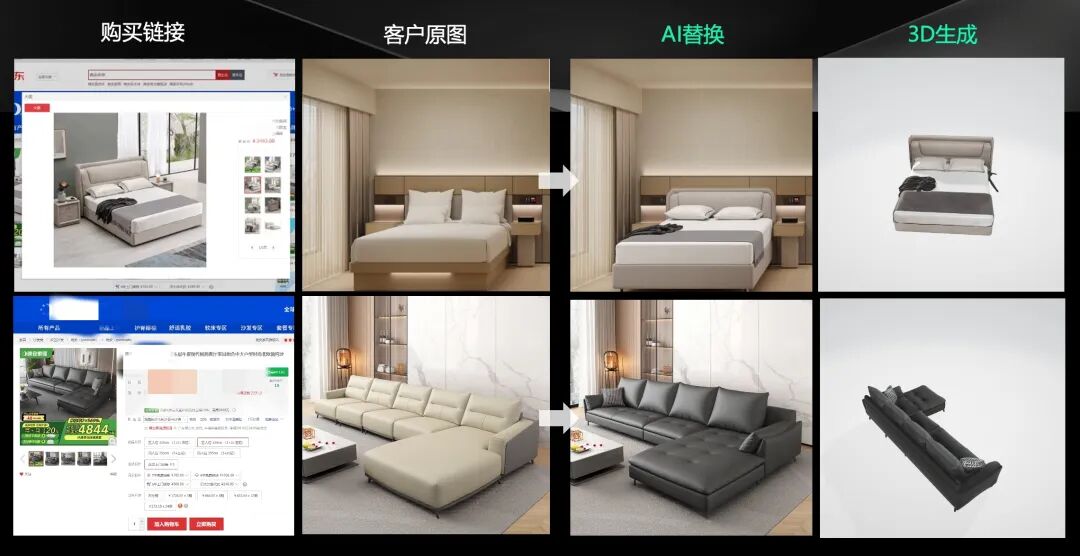
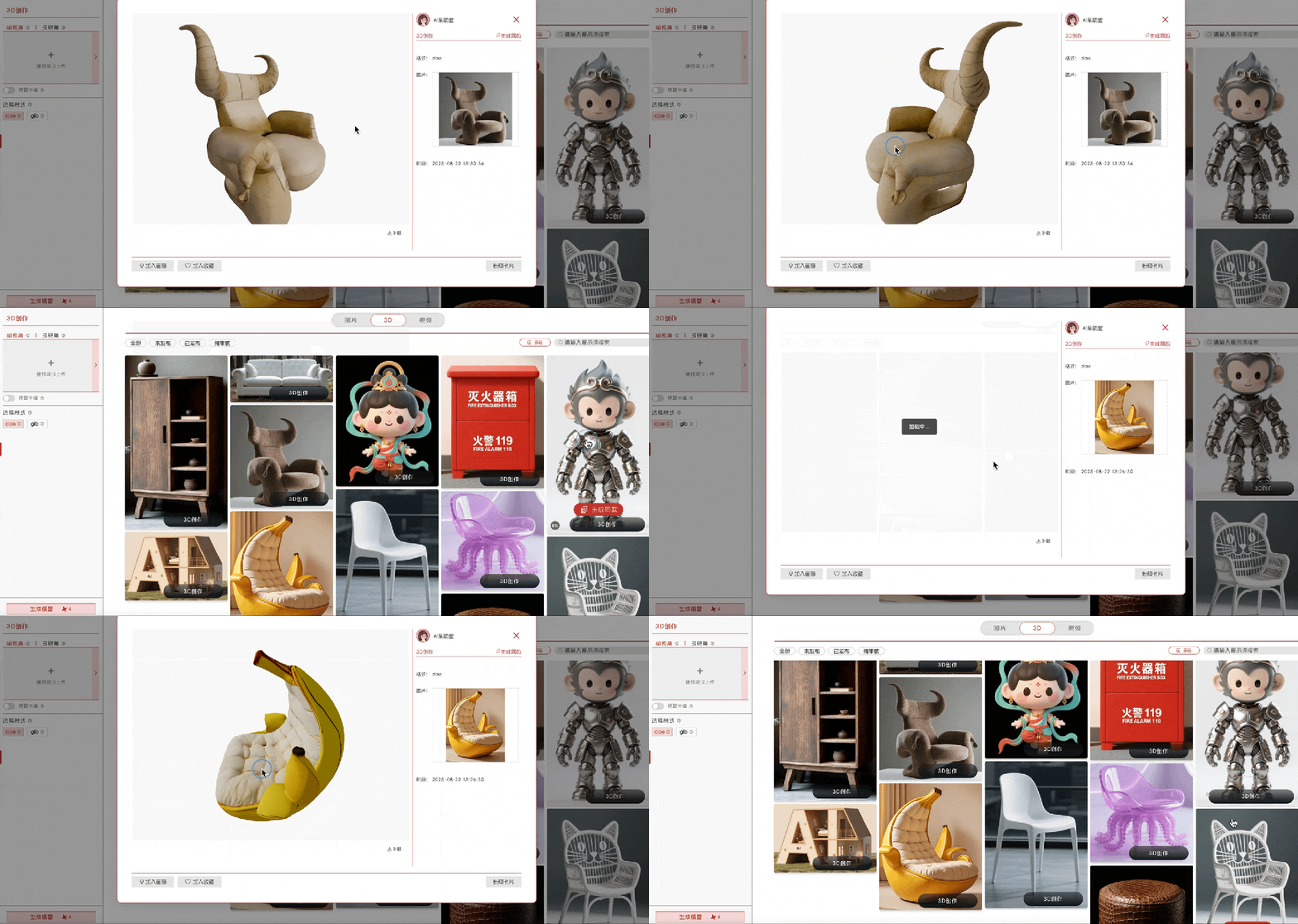
They have now extracted this image-to-3D feature and formed it into a separate module. You can upload an image from just one angle; if you need higher modeling precision for the sides and back, you can also upload multi-angle images. The “Extract Subject” feature can remove cluttered backgrounds and generate a 3D model with material textures that can be downloaded to your local machine with one click—well suited for teams to accumulate 3D model assets of small objects.
As long as the original image is clear enough, the generated results are quite good.
AI Q&A Knowledge Base
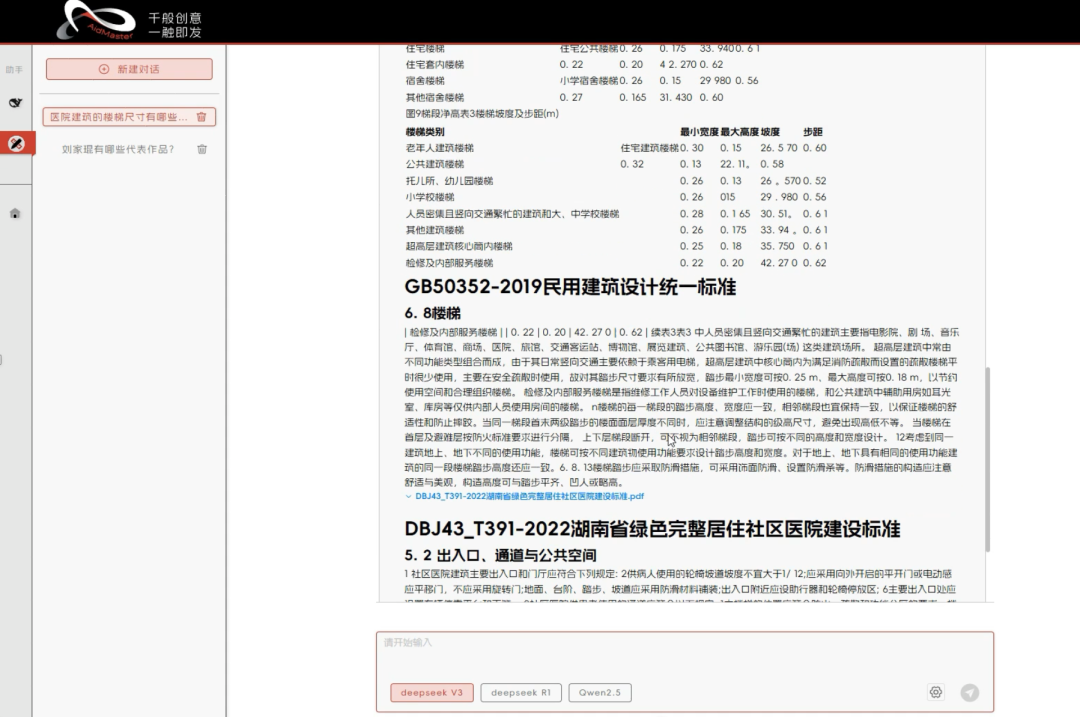
Last year, the Digital Research Institute of the Hunan Provincial Institute built an internal knowledge Q&A system. The most important role AI plays here is reducing the difficulty of searching.
For example, previously, searching codes required entering exact keywords to find an answer; now, by leveraging AI's natural-language understanding, you can easily invoke the back-end retrieval capability and get more accurate results.
They collected and organized the codes commonly used by designers and sorted through the original information. Unlike the general-purpose large language models on the market, the search is conducted only within the scope of the knowledge base, and it can jump to the original text of the code while giving search results, making it easy to verify and confirm.
Behind all these features we've discussed, is there a main thread of logic? In this episode of Digital Progress Night Talk, the Tuling team shared their thinking.
AidMaster started with text-to-image and image-to-image, and this function is also the most solid part at present. As AI technology develops at breakneck speed, the team's positioning and perspective are constantly changing. In the future, they hope to build it into a comprehensive AI agent for the construction industry. Looking at functions alone, the following directions are all being explored and developed:
➤ Multimodal generation:AI image generation is relatively mature, AI video generation is under development, and at the same time, in the text domain, many team members with professional AI backgrounds are going all out on development work such as industry knowledge bases, text generation, and even bid-document generation.
➤ 3D model generation:Furniture model generation has been preliminarily worked out, and next they will explore using AI to generate precise interior fit-out schemes.
➤ Design-assistance software:Future goals also include using AI to assist designers' office software, enabling command-based operation of CAD/Rhino and other DCC software. They have already preliminarily achieved controlling Rhino's API through natural language, and generating editable room-layout models based on simple floor plans.
➤ Industry database:In the longer term, they also plan to share drawing and model datasets with the industry on a compliant basis, jointly driving technological progress.
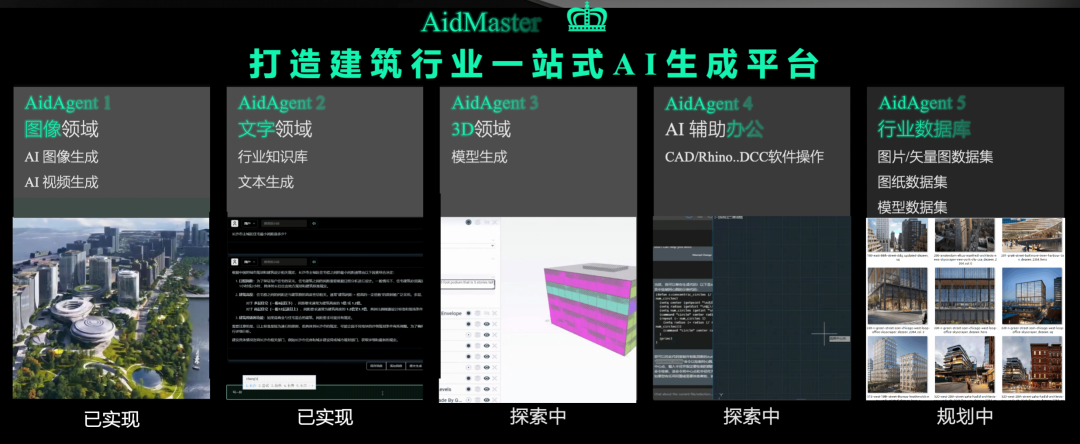
From a business perspective, this isn't a big, empty claim, but a product plan that is landing right in concrete business scenarios.
Take bidding, for example: 3D models plus renderings account for a large amount of labor cost, and the final output is still images plus text. So this agent can be dedicated to a specific use and become an AI bid-document generation system—handling everything in one stop, from AI image generation to generating bid documents from a historical bid-document knowledge base. This workflow has already achieved preliminary results, and partners are jointly pushing it forward.
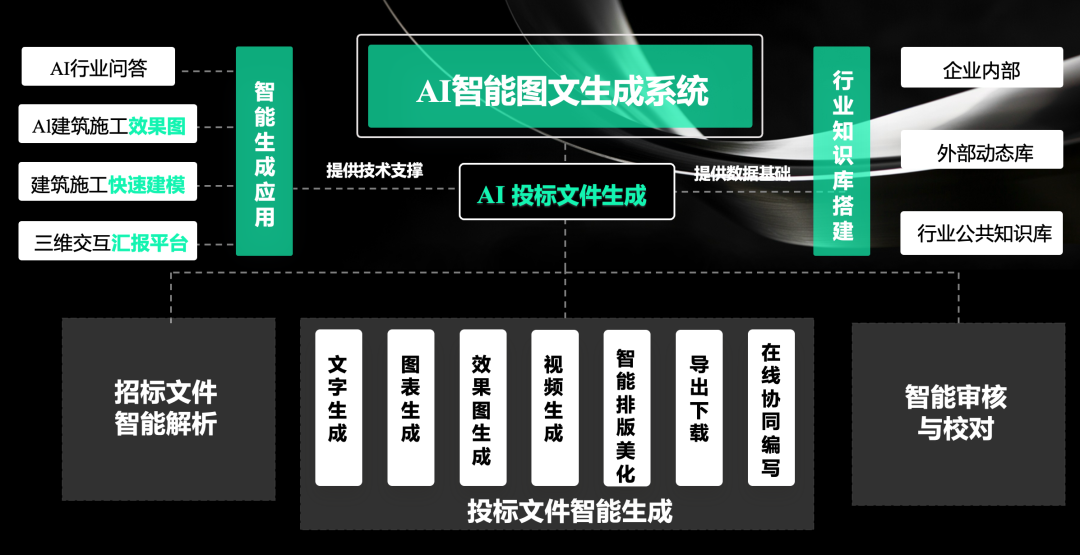
What we've discussed above is the content as of the publication date. In fact, from our conversation, the product is still iterating rapidly, and a mobile app is about to launch soon—worth looking forward to.
Looking back now, from a small team's free exploration and experimentation to a product plan with a complete commercial structure, we can see the liberation and support that the Hunan Provincial Institute's Digital Research Institute—this team we often “praise”—gives to young people, and we can also see the courage of a new generation of product people who dare to think and dare to act. Impressive.
Since its public beta, Tuling has mainly targeted individual users, and of course you're welcome to give it a try.
At the same time, as the digital research institute of a long-established state-owned enterprise, the whole team is also putting effort into the ToB direction. Several large enterprises have already confirmed their purchasing intent—to carry out customized development and targeted model training on top of the existing features, or for both parties to jointly develop in specific directions.
The Tuling team is gradually rolling out a full suite of services from tools to training. The advantage is that, as fellow construction-industry practitioners, the communication cost between users and them is far lower than that with major internet companies.
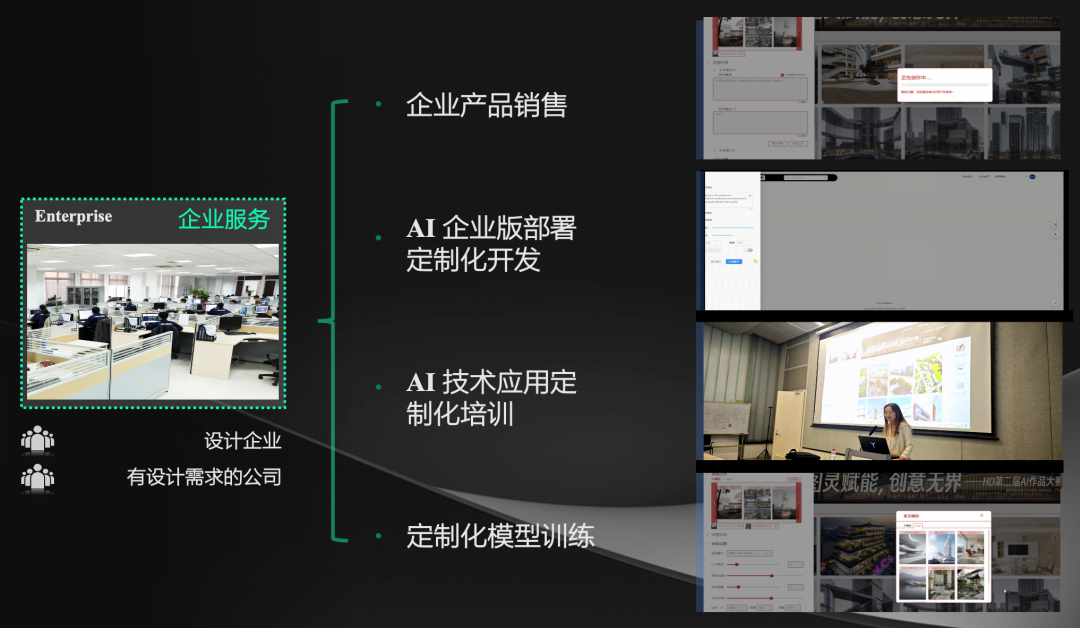
During the conversation, several friends from the Tuling team said that studying AI applications will definitely be a trend no company can avoid in the future, and different companies must also find their own ecological niche by combining the costs they can invest and their personnel capabilities. The construction industry as a whole is relatively slow and lagging in the AI wave; but looking on the bright side, the window of opportunity left for people is still long enough.
For design institutes, it's certainly not appropriate to invest huge costs to compete with major internet companies on foundational models. But the biggest advantage for traditional enterprises in specialized fields doing AI is that they have data in hand—such as renderings, historical documents and so on—which is a good hand of cards for us to play.
At the same time, you have to be prepared to do the hard, unglamorous work: first putting great effort into properly processing this “dirty and smelly” data, so as to build the enterprise's most core barrier.
Is Tuling a successful product in the architectural AI field? An absolute conclusion can't yet be drawn. As they themselves say, all the exploration is still on the way.
But after trying things out like everyone else, this young team dared to keep moving forward—working on data, training models, packaging capabilities and expanding capabilities—blazing a path to productization for those who come after. That deserves our applause.
Even for ordinary users who have no intention of exploring AI, it looks good, works well, produces high-quality images right out of the box, and the credit points aren't expensive—so you won't feel the pinch in daily work. For that alone, brothers and sisters, we should cherish it well and protect our friendly forces.
Finally, let me put the official website of Tuling AidMaster here again: copy it into your browser to visit, register with your mobile number, and you can use it. Hurry and give it a try.
https://www.aidmaster.cn
In addition, this young team really “knows how to have fun.” Besides building the product, they also run internet new-media operations, frequently sharing new features and new ways to play on their WeChat Official Account and Xiaohongshu (RED), producing many beginner-friendly free tutorials, and even hosting live streams to chat and share with everyone. If you want to deeply master some special techniques, we've kindly included their official WeChat Official Account and Xiaohongshu—feel free to follow them.

With attitude, with depth—BIMBOX, see you next time!
END
The views expressed are the author's own Copyright © Zhuwei Architectural Technology
Reproduction without authorization is prohibited
Please credit the source when reposting: Zhuwei Architectural Technology
Zhuwei Architectural Technology is a new-type technical services company specializing in integrated design optimization, BIM consulting and prefabricated construction design consulting. Our team brings together senior engineers from leading design institutes, former executives of real-estate companies, BIM engineers and prefabrication engineers, delivering integrated design optimization, refined drawing review, BIM consulting with MEP detailing, and prefabricated design services.
Design optimization consulting: Positioned as an extension and complement to the design management of real-estate developers, we focus on consulting and optimization for civil buildings. Across the whole process — or at key stages required by the client — we control the economy, rationality and safety of the design, eliminating unnecessary cost while measurably improving drawing quality, achieving "lower cost, higher efficiency".
BIM consulting: Through digital construction technology we help designers reduce errors and improve quality in the design phase, help contractors save cost and plan high-quality MEP installation in the construction phase, and extend BIM models into facility management for the operation phase — in collaboration with mainstream software vendors.
Prefabricated design consulting: Whole-process design on BIM platforms, using Revit and Tekla for PC detailing. Component geometry and reinforcement are linked parametrically — what you see is what you get. We deliver Industry 4.0-ready drawings with cut-length data for every rebar, and IoT-enabled support for production, storage, transport and installation of PC components.
Our expert team comes from leading design institutes, with deep technical grounding and extensive experience in dual-track design and optimization; its technical capability and control are industry-leading.
—— This article is auto-synced from the WeChat Official Account “Zhuwei Architectural Technology”. Read the original ——