Major News | Deepening Whole-Process BIM Application and Specifying Smart Construction Requirements in Bidding; Implementation Opinions on Advancing New Urban Infrastructure and Building Resilient Cities in Shandong Province Issued
WeChat Sync · Xiaowei · 2025-08-07
The following article is sourced fromShandong Provincial Department of Housing and Urban-Rural Development, authored by Baimu LianchuangBIM Services
SmartConstruction
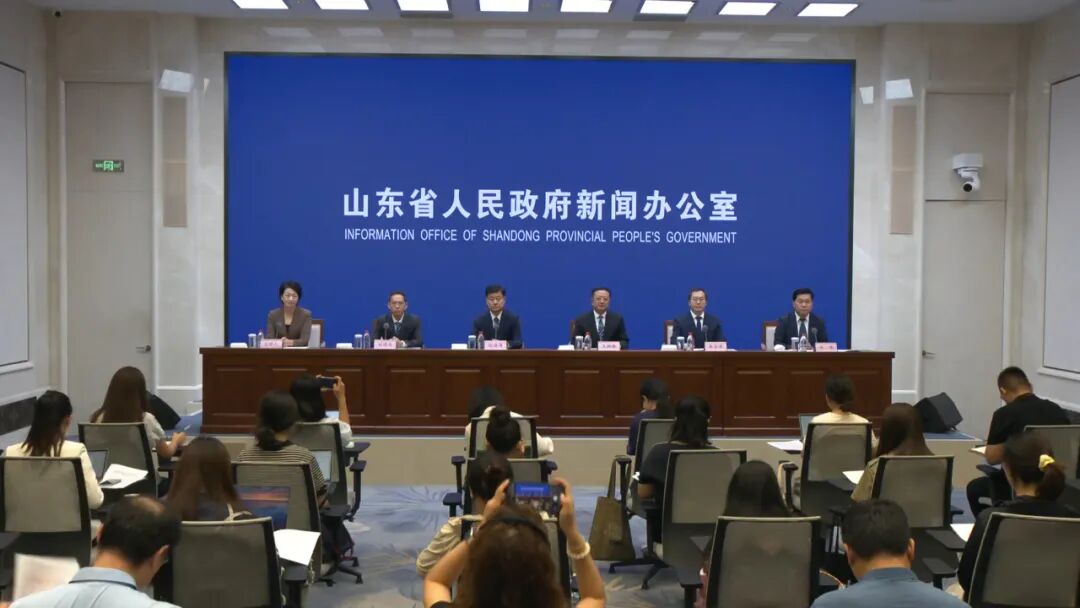
The Information Office of the Shandong Provincial People’s Government helda routine provincial government policy briefing on August 1, 2025, inviting principal officials from the Shandong Provincial Department of Housing and Urban-Rural Development to interpret the Implementation Opinions of Shandong Province on Promoting New Urban Infrastructure Construction and Building Resilient Cities. The document defines 12 key tasks across three dimensions: facility resilience, spatial resilience, and management resilience. Qilu Net and Lightning News provided full live coverage. The briefing highlighted:
Promote the coordinated development of smart construction and building industrialization.Support all cities in focusing on intelligent design, construction industry internet platforms, smart construction equipment, intelligent production, intelligent construction, smart O&M, and prefabricated interior fit-out, incorporating the smart construction industry into regional industrial development plans and ensuring reasonable land use for smart construction industrial clusters. Include smart construction-related technologies in the scope of provincial science and technology program support, and increase support for technological R&D and commercialization of results. Include smart construction-related equipment and software in the priority solicitation scope for the first-set major equipment and first-version software product application and promotion catalogs.Support government investment projects in specifying smart construction application requirements in tender documents.For enterprise investments in digital and intelligent transformation of dedicated equipment for energy conservation, water conservation, environmental protection, and work safety, implement the corporate income tax credit policy for investment in accordance with regulations. (Lead agency: Provincial Department of Housing and Urban-Rural Development; Responsible agencies: Provincial Development and Reform Commission, Provincial Department of Science and Technology, Provincial Department of Industry and Information Technology, Provincial Department of Finance, Provincial Department of Natural Resources, Provincial Big Data Bureau, Provincial State-owned Assets Supervision and Administration Commission, Provincial Tax Bureau, Qingdao Municipal Tax Bureau)
Build the City Information Modeling (CIM) platform.Strengthen information sharing across relevant industries and fields including territorial spatial planning, urban construction, surveying and remote sensing, and urban operation management. Fully utilize the survey data results from the First National Comprehensive Natural Disaster Risk Census on buildings and municipal facilities. Using the 3D Real-Scene Shandong as a base, build a 3D spatial foundational data model for urban and rural areas, advance the construction of the City Information Modeling platform, and achieve connectivity with national and provincial platforms. Promote the application of the CIM platform in accordance with local conditions, strengthen functional integration and coordinated development with territorial spatial and other foundational information platforms, further expand and enrich application scenarios, and provide fundamental support for“Digital Housing and Construction” development.Deepen the application of Building Information Modeling (BIM) technology throughout the full lifecycle of design, construction, and O&M. By the end of 2030, newly built large-scale public buildings and municipal infrastructure shall submit BIM models meeting data accuracy requirements at the construction drawing review and completion delivery stages.(Lead agency: Provincial Department of Housing and Urban-Rural Development; Responsible agencies: Provincial Department of Natural Resources, Provincial Big Data Bureau)

Notice on Issuing the Implementation Opinions of Shandong Province on Promoting New Urban Infrastructure Construction and Building Resilient Cities
Lu Jian Fa [2025] No. 10
To the People’s Governments of all cities, and relevant provincial departments and agencies:
The Implementation Opinions of Shandong Province on Promoting New Urban Infrastructure Constructionand Building Resilient Cities has been approved by the Provincial Party Committee and the Provincial Government, and is hereby issued to you. Please conscientiously implement it in light of local conditions.
Shandong Provincial Department of Housing and Urban-Rural Development
Office of the Cyberspace Administration Commission of the CPC Shandong Provincial Committee
Shandong Provincial Development and Reform Commission
Shandong Provincial Department of Industry and Information Technology
Shandong Provincial Department of Commerce
Shandong Provincial Big Data Bureau
July 25, 2025
Routine Provincial Government Policy Briefing
Full Text of the Implementation Opinions
Implementation Opinions of Shandong Province on Promoting New Urban Infrastructure Construction and Building Resilient Cities
To further advance new urban infrastructure construction, promote digital transformation of urban infrastructure, and continuously enhance urban safety and resilience, the following implementation opinions are put forward in light of Shandong’s actual conditions.
I. Overall Objectives
Guided by Xi Jinping Thought on Socialism with Chinese Characteristics for a New Era, thoroughly implementing the spirit of the 20th National Congress of the CPC and the Second and Third Plenary Sessions of the 20th CPC Central Committee, conscientiously implementing General Secretary Xi Jinping’s important discourses on urban work and his important speeches during inspections of Shandong, and following the decisions and deployments of the CPC Central Committee and the State Council, we shall adhere to a problem-oriented and systems-thinking approach, government guidance with public participation, seeking truth from facts while adapting to local conditions, and technological innovation with digital empowerment. We shall promote the deep integration of next-generation information technology with urban infrastructure construction, implement digital transformation of urban infrastructure, accelerate information platform development, enrich and expand smart application scenarios, build an intelligent, efficient, and resilient new urban infrastructure system, and promote safe urban development.
By2027, establish relatively complete standards and mechanisms for new urban infrastructure construction, build a province-wide unified and interconnected information platform, enrich smart application scenarios, and form a batch of replicable and scalable practices. By 2030, achieve comprehensive breakthroughs in digital transformation of urban infrastructure, fully cover key new urban infrastructure construction in the main urban areas of all prefecture-level cities, significantly enhance urban resilience in key areas of counties (cities and districts), and make urban operations safer, more orderly, smarter, and more efficient.
II. Key Tasks
(1) Implement smart construction and renovation to continuously enhance urban facility resilience.
1. Conduct thorough surveys and inspections of buildings and municipal infrastructure. Carry out comprehensive urban physical examinations, improve relevant indicator and standard systems, and conduct a full investigation of the current status and maintenance conditions of urban buildings and municipal infrastructure. Compile complete inventories of elevators in aging residential buildings including quantity, distribution, and inspection status, and gain a comprehensive understanding of safety hazards including seismic performance of aging building facilities, fire protection systems, fire truck access areas, evacuation routes, and aging municipal infrastructure equipment. Rely on the province-wide building safety management information system to achieve dynamic updating of building safety management information. Based on local conditions, scientifically develop action plans for digital transformation and upgrading of municipal infrastructure including water supply, electricity, gas, heating, fire hydrants, and underground utility tunnels. (Lead agency: Provincial Department of Housing and Urban-Rural Development; Responsible agencies: Provincial Administration for Market Regulation, Provincial Energy Bureau, Provincial Fire and Rescue Corps)
2. Accelerate construction of the urban infrastructure lifeline safety project. Advance the construction of the Shandong Province urban infrastructure lifeline safety supervision platform, vigorously promote the installation of IoT intelligent sensing devices on underground pipe networks, bridges, tunnels, utility tunnels, manholes, and other facilities, and achieve real-time monitoring, dynamic early warning, precise tracing, and coordinated response for urban infrastructure operations, effectively preventing accidents such as bridge collapses, urban waterlogging, and gas pipeline leaks. Establish and improve standards for IoT sensing device installation on municipal infrastructure. Newly built urban infrastructure shall be designed, constructed, accepted, and commissioned simultaneously with the main equipment. Intelligent retrofitting of aging facilities shall be prioritized and advanced in a coordinated manner. (Lead agency: Provincial Department of Housing and Urban-Rural Development; Responsible agency: Provincial Big Data Bureau)
3. Advance the construction of the full-lifecycle building safety supervision project in an orderly manner. Promote full-lifecycle digital management of construction projects, deepen the integration and upgrading of the construction project approval system and the building market supervision platform, and promote interconnection with the building safety management information system. Establish a smart construction site supervision platform, comprehensively applying intelligent, informatized, digital, and technology-driven means to strengthen full-element, full-coverage management of personnel, machinery, materials, methods, and environment in construction, fully consolidate the responsibilities of all participating parties, and improve construction quality and safety supervision levels. Utilize satellite remote sensing, IoT, and other means to perceive the operational status of building structures in real time, achieving real-time monitoring of key parameters such as building displacement, settlement, tilting, and cracking. Accelerate exploration and innovation by cities such as Qingdao, Yantai, and Weihai in building inspections, public funding for building safety management, and building insurance systems, and establish a long-term mechanism for full-lifecycle building safety management. (Lead agency: Provincial Department of Housing and Urban-Rural Development)
4.Promote the coordinated development of smart construction and building industrialization. Support all cities in focusing on intelligent design, construction industry internet platforms, smart construction equipment, intelligent production, intelligent construction, smart O&M, and prefabricated interior fit-out, incorporating the smart construction industry into regional industrial development plans and ensuring reasonable land use for smart construction industrial clusters. Include smart construction-related technologies in the scope of provincial science and technology program support, and increase support for technological R&D and commercialization of results. Include smart construction-related equipment and software in the priority solicitation scope for the first-set major equipment and first-version software product application and promotion catalogs. Support government investment projects in specifying smart construction application requirements in tender documents. For enterprise investments in digital and intelligent transformation of dedicated equipment for energy conservation, water conservation, environmental protection, and work safety, implement the corporate income tax credit policy for investment in accordance with regulations. (Lead agency: Provincial Department of Housing and Urban-Rural Development; Responsible agencies: Provincial Development and Reform Commission, Provincial Department of Science and Technology, Provincial Department of Industry and Information Technology, Provincial Department of Finance, Provincial Department of Natural Resources, Provincial Big Data Bureau, Provincial State-owned Assets Supervision and Administration Commission, Provincial Tax Bureau, Qingdao Municipal Tax Bureau)
(2) Expand smart application scenarios and optimize urban spatial resilience.
5. Promote coordinated development of smart city infrastructure and intelligent connected vehicles. Gradually and prudently promote the application of assisted driving, implement the autonomous driving “Demonstration Application” initiative, accelerate the deployment of intelligent sensing devices on urban road infrastructure, and enhance vehicle-road coordination capabilities. Accelerate the construction and renovation of smart parking facilities. Strengthen the planning, construction, and renovation of urban delivery facilities, and build an intensive, efficient, and smart green delivery system. In conjunction with “dual-use for peacetime and emergency” public infrastructure construction, rationally deploy urban emergency supplies transit facilities and enhance the city’s capacity for rapid emergency supply assurance. Advance Jinan’s national intelligent connected vehicle “vehicle-road-cloud integration” pilot program and accelerate the expansion of pilot demonstration application scenarios. Coordinate province-wide urban last-mile unmanned delivery, Yantai’s full-scenario autonomous driving, and the “vehicle-road-cloud integration” pilots in the Jinan New and Old Kinetic Energy Conversion Starting Area and the Qingdao West Coast New Area, promoting breakthroughs and momentum for autonomous driving across all scenarios and multiple fields. (Lead agencies: Provincial Department of Housing and Urban-Rural Development, Provincial Department of Industry and Information Technology; Responsible agencies: Provincial Development and Reform Commission, Provincial Department of Public Security, Provincial Department of Natural Resources, Provincial Department of Transportation, Provincial Department of Commerce, Provincial Emergency Management Department, Provincial Big Data Bureau)
6. Enhance smart O&M levels for municipal facilities. Build a foundational data platform covering the entire process of underground pipe network planning, construction, O&M, and management, and establish a 3D-visualized underground pipe network “One Map” system. Accelerate intelligent retrofitting of security equipment including video surveillance in key public areas and on roads. Strengthen intelligent monitoring of gas leaks and strictly implement pipeline safety supervision and inspection responsibilities. Implement flood prevention and safety protection measures for residential pressurization and storage facilities, and strengthen water quality safety monitoring. Enhance safety operation monitoring of aging urban bridges, tunnels, and other facilities. Coordinate pipe networks with water networks, and flood control with drainage, improve the urban emergency flood drainage and coordination mechanism, promote drainage and flood prevention capacity improvement for key underground facilities such as urban rail transit and underground parking garages, and strengthen flood prevention and power outage prevention functions. (Lead agency: Provincial Department of Housing and Urban-Rural Development; Responsible agencies: Provincial Department of Public Security, Provincial Department of Transportation, Provincial Department of Water Resources, Provincial Emergency Management Department)
7. Advance smart residential community construction. In conjunction with complete community development, promote age-friendly and child-friendly renovations, implement the urban community embedded service facility construction project, carry out smart convenience facility initiatives in communities, optimize and enhance comprehensive convenience services such as meal delivery, package delivery, and medicine delivery, improve the service functions of the 15-minute convenient living circle, and build smart commercial districts. Develop smart property management services, guide and support property management enterprises in providing online and offline lifestyle services, and promote the integration of smart property management platforms with government service platforms. Conduct residential community safety hazard inspections and remediation, promote the construction of technical security facilities including video surveillance and perimeter protection in existing communities as well as electric bicycle charging facilities, keep fire lanes clear, establish a digitally empowered, multi-stakeholder residential community safety governance system, and enhance urban residential community resilience. (Lead agency: Provincial Department of Housing and Urban-Rural Development; Responsible agencies: Provincial Development and Reform Commission, Provincial Department of Public Security, Provincial Department of Commerce, Provincial Big Data Bureau, Provincial Fire and Rescue Corps)
8. Promote digital home construction. Incorporate digital homes into the “Good Housing” construction program. Newly built fully furnished residences shall be equipped with basic smart products for monitoring electricity, fire, gas, and water safety as well as environmental health, with fiber-to-the-home and mobile communication infrastructure built simultaneously. Encourage existing residences to install smart products following the standards of new construction, and carry out electrification, digitization, and networking upgrades of traditional household products. Provide subsidies for individual consumers purchasing smart home products, and cultivate decoration and fit-out enterprises offering one-stop, standardized smart home products and services. Support qualified cities in actively applying for national digital home pilot programs. (Lead agency: Provincial Department of Housing and Urban-Rural Development; Responsible agency: Provincial Department of Commerce)
(3) Advance information platform construction to comprehensively strengthen urban management resilience.
9.Build the City Information Modeling (CIM) platform. Strengthen information sharing across relevant industries and fields including territorial spatial planning, urban construction, surveying and remote sensing, and urban operation management. Fully utilize the survey data results from the First National Comprehensive Natural Disaster Risk Census on buildings and municipal facilities. Using the 3D Real-Scene Shandong as a base, build a 3D spatial foundational data model for urban and rural areas, advance the construction of the City Information Modeling platform, and achieve connectivity with national and provincial platforms. Promote the application of the CIM platform in accordance with local conditions, strengthen functional integration and coordinated development with territorial spatial and other foundational information platforms, further expand and enrich application scenarios, and provide fundamental support for “Digital Housing and Construction” development. Deepen the application of Building Information Modeling (BIM) technology throughout the full lifecycle of design, construction, and O&M. By the end of 2030, newly built large-scale public buildings and municipal infrastructure shall submit BIM models meeting data accuracy requirements at the construction drawing review and completion delivery stages. (Lead agency: Provincial Department of Housing and Urban-Rural Development; Responsible agencies: Provincial Department of Natural Resources, Provincial Big Data Bureau)
10. Improve the urban operation management service platform. Based on grid-based management, comprehensively leverage the construction achievements of the urban comprehensive management service system and the urban infrastructure safety operation monitoring system to advance “One Network for Unified Management” in urban operations. Accelerate the three-level integration of the urban operation management service platform across province, city, and county levels, and develop a batch of exemplary digital application cases in household waste sorting, construction waste management, landscaping, and parking management. (Lead agency: Provincial Department of Housing and Urban-Rural Development)
11. Integrate and share information systems. Focusing on system integration, information sharing, and business coordination, aggregate multiple types of urban data including intelligent connected vehicles, urban buildings, and municipal infrastructure, and build consolidated platforms for urban operation management services, emergency management, gas and heating safety management, flood control and drainage, and urban lifeline supervision. Strengthen cross-regional, cross-departmental, and cross-level sharing and utilization of data resources, and explore the establishment of data sharing, exchange, collaboration, and open-access models that support new urban infrastructure construction. (Lead agencies: Provincial Department of Housing and Urban-Rural Development, Provincial Big Data Bureau; Responsible agencies: Provincial Department of Industry and Information Technology, Provincial Department of Water Resources, Provincial Emergency Management Department)
12. Strengthen cybersecurity and data security. Implement the cybersecurity classified protection system in accordance with the law, conduct regular cybersecurity inspections and risk assessments, improve the cybersecurity defense system, apply secure and controllable technologies and products, strengthen security management of information infrastructure, informatized supervision platforms, and sensing devices by category and level, and enhance routine confidentiality management of personal privacy and public data. Establish and improve a “two-site, three-center” cybersecurity and data security emergency response system, strengthen the resilience of critical information infrastructure against destruction, enhance cybersecurity and data security monitoring, notification, early warning, and information sharing, and comprehensively improve the ability of new urban infrastructure to resist security risks. (Lead agencies: Provincial Cyberspace Administration Office, Provincial Big Data Bureau; Responsible agencies: Provincial Department of Public Security, Provincial Department of Housing and Urban-Rural Development)
III. Safeguard Measures
Integrate Party leadership throughout all aspects and the entire process of promoting new urban infrastructure construction and building resilient cities. The Provincial Department of Housing and Urban-Rural Development shall take the lead in strengthening overall planning, researching and resolving prominent issues, working with relevant departments to enhance guidance and supervision, conducting regular policy implementation effectiveness assessments, and promptly summarizing and promoting exemplary experiences. Select certain cities and counties (cities and districts) as provincial-level pilot areas to explore the establishment of operational mechanisms and business models for new urban infrastructure construction. All levels shall strengthen research, refine implementation measures, and earnestly organize implementation. Major matters shall be promptly reported to the Provincial Party Committee and the Provincial Government in accordance with procedures. (Lead agency: Provincial Department of Housing and Urban-Rural Development) Promote the establishment of a diversified investment and financing system guided by government investment and led by enterprise investment, guide financial institutions in financial product innovation, support qualified projects in issuing infrastructure Real Estate Investment Trusts (REITs), include them in the scope of local government special bond support, and encourage policy guidance through reward-in-lieu-of-subsidy approaches. (The Provincial Financial Office of the CPC Committee, Provincial Development and Reform Commission, Provincial Department of Finance, Provincial Department of Housing and Urban-Rural Development, Provincial Administration for Market Regulation, Shandong Securities Regulatory Bureau, and the People’s Bank of China Shandong Branch are responsible according to their respective duties) Intensify efforts in key core technology breakthroughs, leverage relevant talent programs, and support enterprises in cultivating composite innovative talents in fields such as next-generation information technology, engineering construction, urban management, and urban safety. (The Provincial Department of Industry and Information Technology, Provincial Department of Science and Technology, Provincial Department of Human Resources and Social Security, and Provincial Department of Housing and Urban-Rural Development are responsible according to their respective duties)
Policy Interpretation
Policy Interpretation of the Implementation Opinions of Shandong Province on Promoting New Urban Infrastructure Constructionand Building Resilient Cities
To thoroughly implement the spirit of the Central Urban Work Conference and the decisions and deployments of the CPC Central Committee and the State Council, the Provincial Department of Housing and Urban-Rural Development, together with relevant departments, formulated the Implementation Opinions of Shandong Province on Promoting New Urban Infrastructure Constructionand Building Resilient Cities (hereinafter referred to as the “Implementation Opinions”), which was approved by the Provincial Party Committee and the Provincial Government and recently issued for implementation.
I. Overall Objectives Established by the Implementation Opinions
First, by2027, establish relatively complete standards and mechanisms for new urban infrastructure construction, build a province-wide unified and interconnected information platform, enrich smart application scenarios, and form a batch of replicable and scalable practices.
Second, by2030, achieve comprehensive breakthroughs in digital transformation of urban infrastructure, fully cover key new urban infrastructure construction in the main urban areas of all prefecture-level cities, significantly enhance urban resilience in key areas of counties (cities and districts), and make urban operations safer, more orderly, smarter, and more efficient.
II. Key Tasks Defined by the Implementation Opinions
The Implementation Opinions address facility resilience, spatial resilience, and management resilienceacross three dimensions, defining 12 key tasks.
(1) Consolidating the“facility resilience” foundation and safeguarding the city’s lifeline. Adhering to inspection first, improve relevant indicator and standard systems, conduct thorough surveys of buildings and municipal infrastructure, gain a comprehensive understanding of the current status of urban infrastructure and aging buildings, accurately identify problems, and apply targeted remedies. On this basis, accelerate the construction of “two major projects”: first, the urban infrastructure lifeline safety project, installing IoT intelligent sensing devices at urban “blood vessels” and “joints” including underground pipe networks, bridges, tunnels, utility tunnels, and manholes, achieving real-time monitoring, dynamic early warning, precise tracing, and coordinated response; second, the full-lifecycle building safety supervision project, accelerating smart construction site development, strengthening full-element, full-coverage management of personnel, machinery, materials, methods, and environment in construction, utilizing satellite remote sensing, IoT, and other means to perceive the operational status of building structures in real time, and achieving real-time monitoring of key parameters such as building displacement, settlement, tilting, and cracking. In addition, the Implementation Opinions propose promoting the coordinated development of smart construction and building industrialization, cultivating smart construction industrial clusters, and providing strong support for urban infrastructure resilience construction.
(2) Optimizing the“spatial resilience” layout and building livable smart communities. Adhering to a people-centered approach, focusing on residents’ needs for travel and daily living, and building and optimizing four types of application scenarios. First, optimize the road travel scenario by promoting coordinated development of smart city infrastructure and intelligent connected vehicles, accelerating the construction and renovation of smart parking facilities and green delivery systems, and driving breakthroughs for autonomous driving across all scenarios and multiple fields. Second, optimize the municipal public space scenario by building a 3D-visualized underground pipe network “One Map,” coordinating urban flood control systems and waterlogging management, strengthening intelligent monitoring of gas leaks, and enhancing smart O&M levels for municipal facilities. Third, optimize the smart residential community scenario by focusing on “the elderly and the young,” advancing embedded service facility construction, carrying out smart convenience facility initiatives in communities, vigorously developing smart property management, inspecting and remediating safety hazards, and establishing a digitally empowered, multi-stakeholder residential community safety governance system. Fourth, optimize the digital home scenario by integrating with “Good Housing” construction, promoting smart product installation in newly built fully furnished residences, encouraging existing residences to undergo electrification, digitization, and networking upgrades, improving the convenience and intelligence of home life, and making residents feel more secure, comfortable, and at ease.
(3) Enhancing theeffectiveness of “management resilience” and building a smart urban command center. Adhering to digital empowerment, focusing on the modernization of urban governance systems and capabilities, and deeply advancing the construction of “two major platforms.” First, build the City Information Modeling (CIM) platform, accelerate “Digital Housing and Construction” development, integrate multi-source information including geographic data, building models, and infrastructure data, and form a “digital sandbox” covering the 3D spatial extent of urban and rural areas. Second, improve the urban operation management service platform, strengthen grid-based management and cross-departmental information sharing, advance three-level integration across province, city, and county, and achieve “One Network for Unified Management” with coordinated response in urban operations. In addition, the Implementation Opinions specify work measures for “integrating and sharing information systems, and strengthening cybersecurity and data security,” ensuring that various systems and platforms are built in an integrated and consolidated manner with safe and stable operations, and comprehensively improving the security risk defense capabilities of new urban infrastructure.
III. Key Features of the Implementation Opinions
First, emphasis on a people-centered approach with systematic advancement. Thoroughly practicing the concept of people’s cities,integrating “people-centered” principles throughout the entire process of urban planning, construction, and governance, increasing “investment in people,” and driving the deep transformation of cities from “development of things” to “development of people.” At the same time, treating the city as an organic living entity, establishing full-lifecycle management awareness, and exploring multi-level layouts and full-chain improvement plans from municipal infrastructure to smart construction, and from smart residential communities to household terminals. Through “strengthening the skeleton, building the body, and toughening the cells,” effectively support the “Four Goods” construction of good housing, good residential compounds, good communities, and good urban districts, substantially improve safety and resilience levels, and enhance the city’s “immunity” and “recovery capacity” in responding to various risks.
Second, emphasis on technological innovation and smart empowerment. Upholding the prominent position of technological innovation, promoting the deep integration of next-generation information technology with urban infrastructure construction, by the end of this year, urban lifeline projects in all cities shall basically cover key business areas, gradually enhancing urban risk perception, hazard remediation, and emergency response capabilities, achieving a transition from“passive response” to “proactive prevention and control.” While building the city’s “central brain,” plan and promote smart retrofitting of residential communities, especially aging communities, as the “peripheral nerves,” optimize smart services and emergency systems, and enhance the precision, adaptability, and inclusiveness of urban governance.
Third, emphasis on information integration and collaborative efficiency. Based on facility interconnection, breaking through multiple boundaries of urban governance, strengthening cross-regional, cross-departmental, and cross-level sharing and utilization of multiple types of data resources including intelligent connected vehicles, urban buildings, and municipal infrastructure, effectively eliminating digital divides and information barriers, striving to achieve comprehensive situational awareness, intelligent trend analysis, coordinated and efficient response, agile dispatching, and rapid switching between peacetime and emergency modes, building an urban governance panorama with full information coverage and full element connectivity—the“One Map.”
Fourth, emphasis on strengthening leadership and scientific coordination. Upholding the integration of Party leadership throughout all aspects and the entire process of promoting new urban infrastructure construction and building resilient cities. Strengthening provincial-level coordination, exploring innovative operational mechanisms and business models, and promoting the establishment of a diversified investment and financing system. Supporting enterprises and research institutions in carrying out core technology breakthroughs, cultivating composite talents in fields such as information technology, engineering construction, urban management, and urban safety, and providing human and intellectual support for promoting new urban infrastructure construction and building resilient cities.
❖ END ❖
END
The views expressed are the author's own Copyright © Zhuwei Architectural Technology
Reproduction without authorization is prohibited
Please credit the source when reposting: Zhuwei Architectural Technology
Zhuwei Architectural Technology is a new-type technical services company specializing in integrated design optimization, BIM consulting and prefabricated construction design consulting. Our team brings together senior engineers from leading design institutes, former executives of real-estate companies, BIM engineers and prefabrication engineers, delivering integrated design optimization, refined drawing review, BIM consulting with MEP detailing, and prefabricated design services.
Design optimization consulting: Positioned as an extension and complement to the design management of real-estate developers, we focus on consulting and optimization for civil buildings. Across the whole process — or at key stages required by the client — we control the economy, rationality and safety of the design, eliminating unnecessary cost while measurably improving drawing quality, achieving "lower cost, higher efficiency".
BIM consulting: Through digital construction technology we help designers reduce errors and improve quality in the design phase, help contractors save cost and plan high-quality MEP installation in the construction phase, and extend BIM models into facility management for the operation phase — in collaboration with mainstream software vendors.
Prefabricated design consulting: Whole-process design on BIM platforms, using Revit and Tekla for PC detailing. Component geometry and reinforcement are linked parametrically — what you see is what you get. We deliver Industry 4.0-ready drawings with cut-length data for every rebar, and IoT-enabled support for production, storage, transport and installation of PC components.
Our expert team comes from leading design institutes, with deep technical grounding and extensive experience in dual-track design and optimization; its technical capability and control are industry-leading.
—— This article is auto-synced from the WeChat Official Account “Zhuwei Architectural Technology”. Read the original ——