Some Thoughts on BIM Compliance Checking
WeChat Sync · Xiaowei · 2024-02-20
This article is reprinted from the WeChat official account “Lao Shuai BIM” for learning and exchange purposes only. All rights belong to the original author.
Recently, the Shanghai Municipal Commission of Housing and Urban-Rural Development also issued a notice to trial BIM-assisted review from February 1, 2024.
Trial from February 1, 2024! Shanghai to Launch BIM Intelligent Assisted Review
The author has studied compliance checking at Tongji Design Institute (hereinafter referred to as TJAD) for many years and has been pondering this question all along. So what exactly is the essence of BIM compliance checking? What other meanings does the ARC (Automated Rule Checking) spoken of abroad carry? This article may provide the answer.
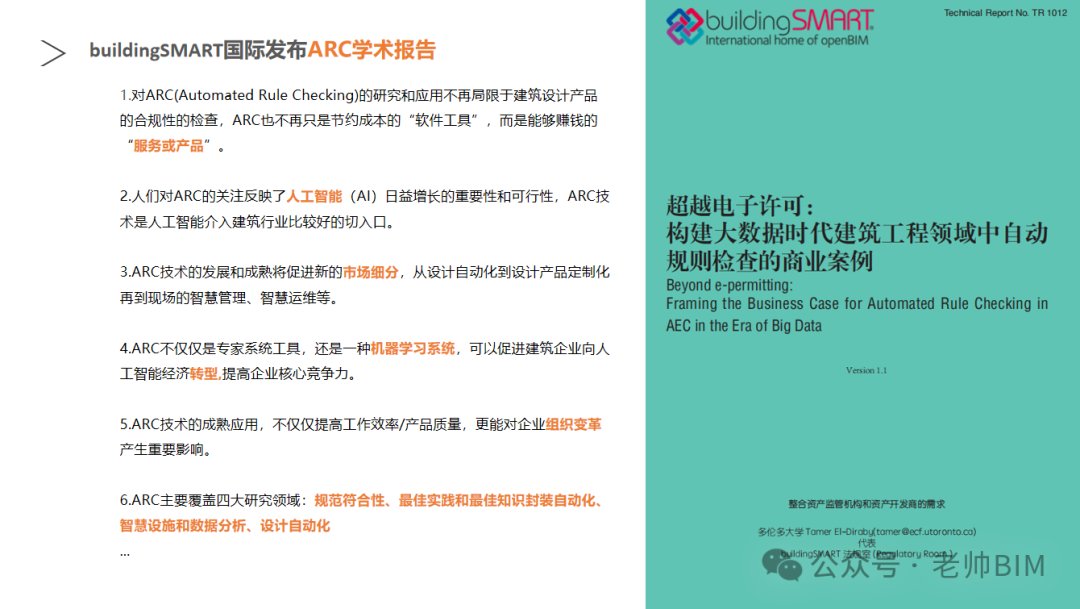
First, the concept of ARC was proposed by buildingSMART in the article Beyond e-permitting:Framing the Business Case for Automated Rule Checking in the Era of Big Data, and was first translated, disseminated and promoted in China by Mr. Wei Lai of the China Institute of Standardization.The literal meaning is: Beyond e-permitting - framing the business case for automated rule checking in the construction engineering field in the era of big dataTwo key words: Beyond e-permitting - the scenario for rule checking is not limited to drawing review. Big data: empowered by artificial intelligence technology, ARC will deliver its due value. It mainly carries two layers of meaning:
1. Passive rule creation, i.e., top-down passive translation, such as the product approach of Solibri software and the current domestic approach to BIM review in China. 2. Active rule extraction, i.e., bottom-up active learning, such as collecting and accumulating preliminary data and, through machine learning and other means, upgrading to AI review. The core value of ARC also lies in its second major tenet: mining and utilizing data based on AI, and, in the process of sorting out or fixing business workflows, identifying the problems exposed by routine production, such as insufficient experience, low efficiency and repeated checking and review. Finally, it brings into play the role of converting data into a production factor, integrates enterprise production scenarios and builds an enterprise ARC platform to support the enterprise's digital transformation. Speaking of data mining and utilization, with the development of AI technology in recent years, especially large language model technology, the way data is converted into a production factor is one step closer to further implementation.
For details, see the author's previously published articles; click the hyperlinks below to view:
A Brief Discussion on the Application of Large Language Models in the Construction Field
At present, BIM review 1.0 (rule-based passive review) is both an exploration and a breakthrough, and it is a stage that must inevitably be experienced. After BIM review 1.0, with the practical application of AI technology, the arrival of BIM review 2.0 (knowledge-based AI review) is not far off.
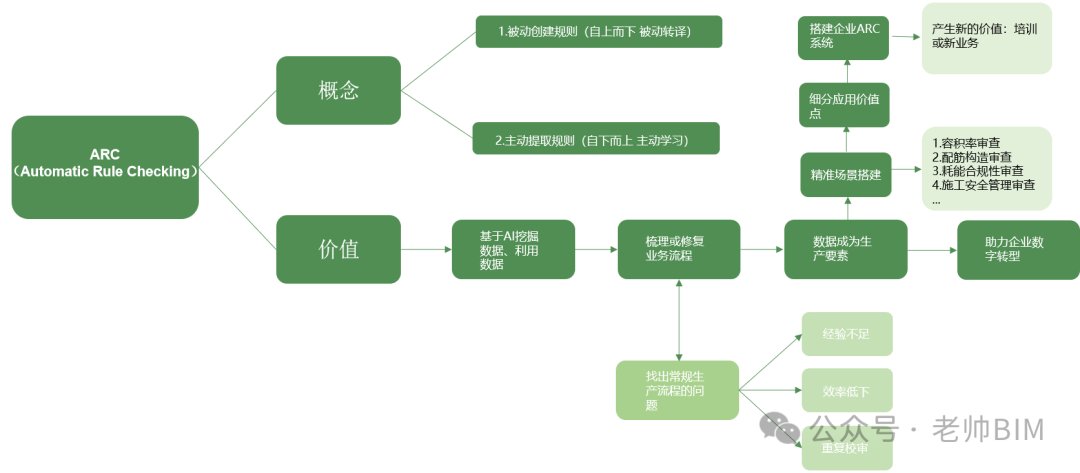
Diagram Breaking Down the ARC Technical Concept
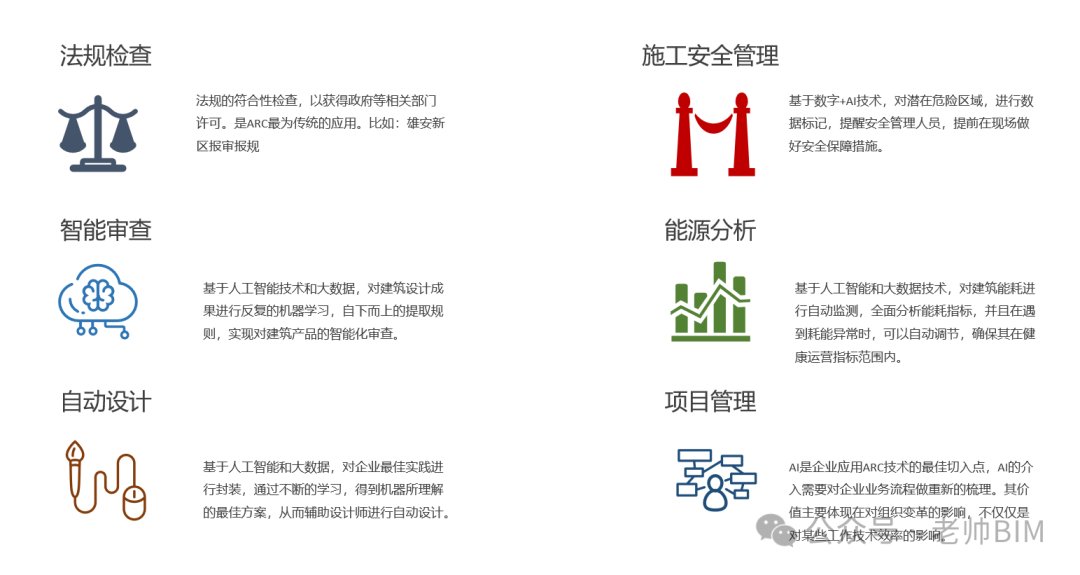
What specific application scenarios does ARC technology have? Based on relevant literature and lectures, combined with his own research experience, the author summarizes the following six major modules:
For related preliminary-stage ARC research cases, see:
TJAD ARC Application Scenario 1: Research on Intelligent Evacuation Technology
TJAD ARC Application Scenario 2: ARC-based Passive Review of Building Economic Indicators
TJAD ARC Application Scenario 3: ARC-based Passive Review of Building Stairway Clear Height
TJAD ARC Application Scenario 4: Research on the Application of AI-based Large Language Model Technology
TJAD ARC Application Scenario 5: Research on the Application of BIM Quantity Take-off Technology based on the ARC concept; for details, see the article: BIM Integrated Drawing and Quantity Take-off
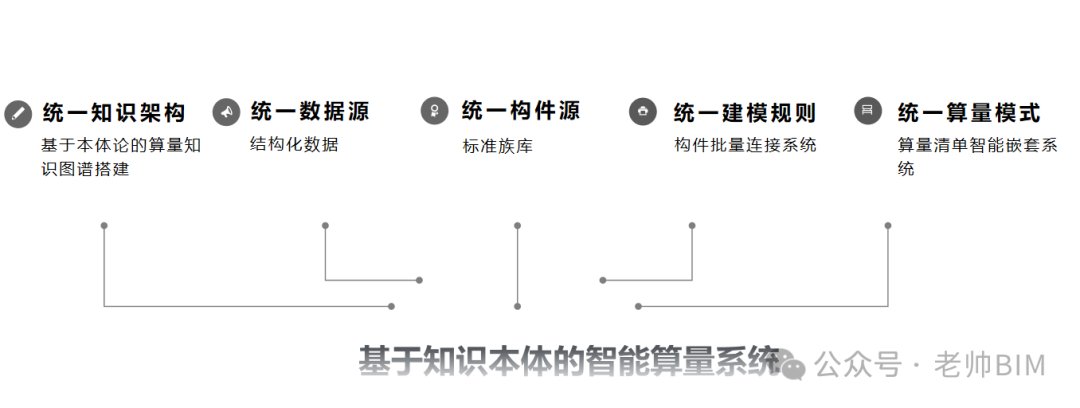
TJAD ARC Application Scenario 6: An ARC-based Integrated Platform for Panoramic Inspection and Data Collection
For a more systematic understanding of ARC, see the author's original ARC Technology Application Breakdown Atlas:
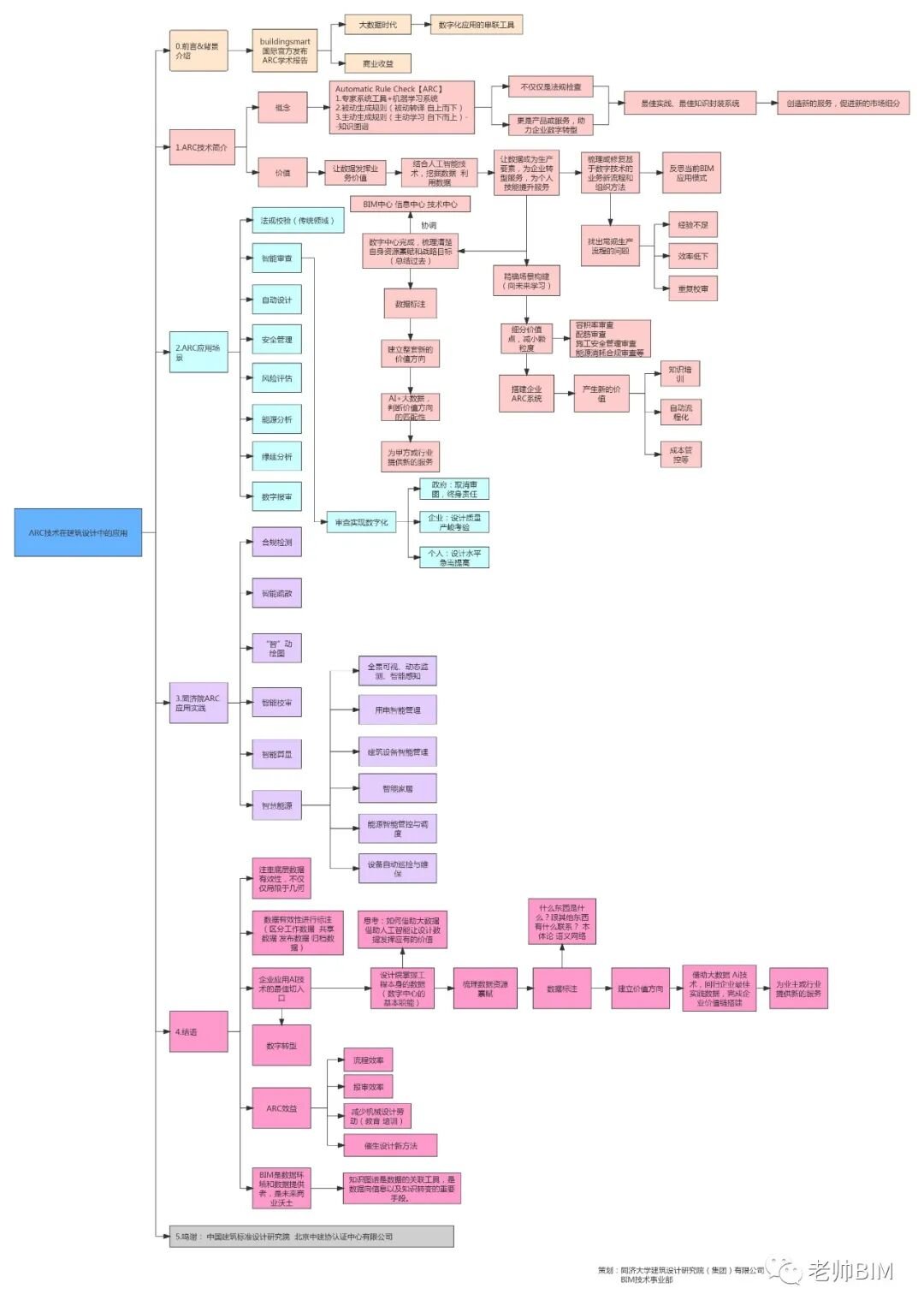
ARC Technology Application Breakdown Atlas
Top-down ARC technology applications need to help production staff improve efficiency. Bottom-up ARC applications help enterprises optimize production processes and promote digital transformation.
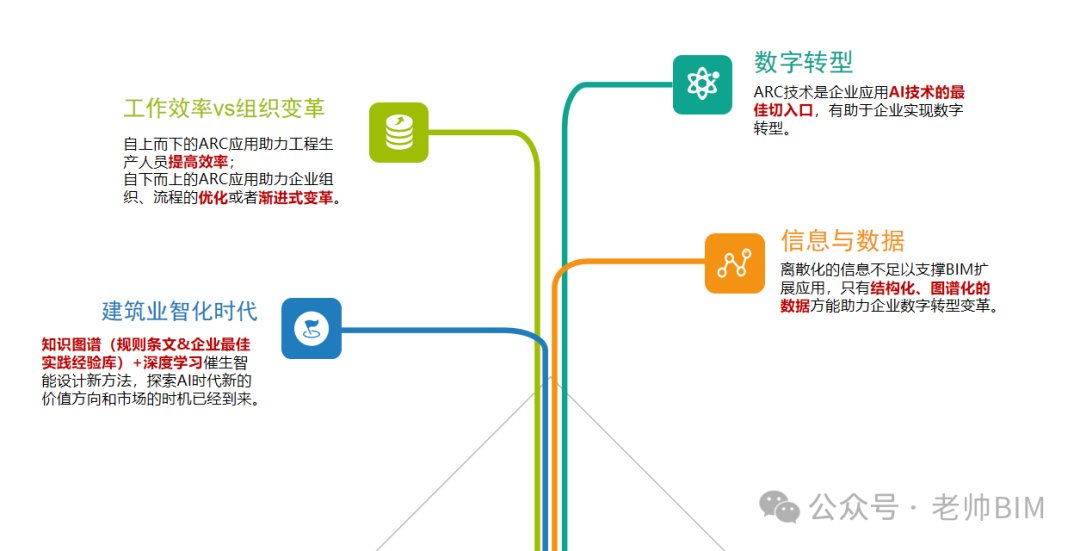
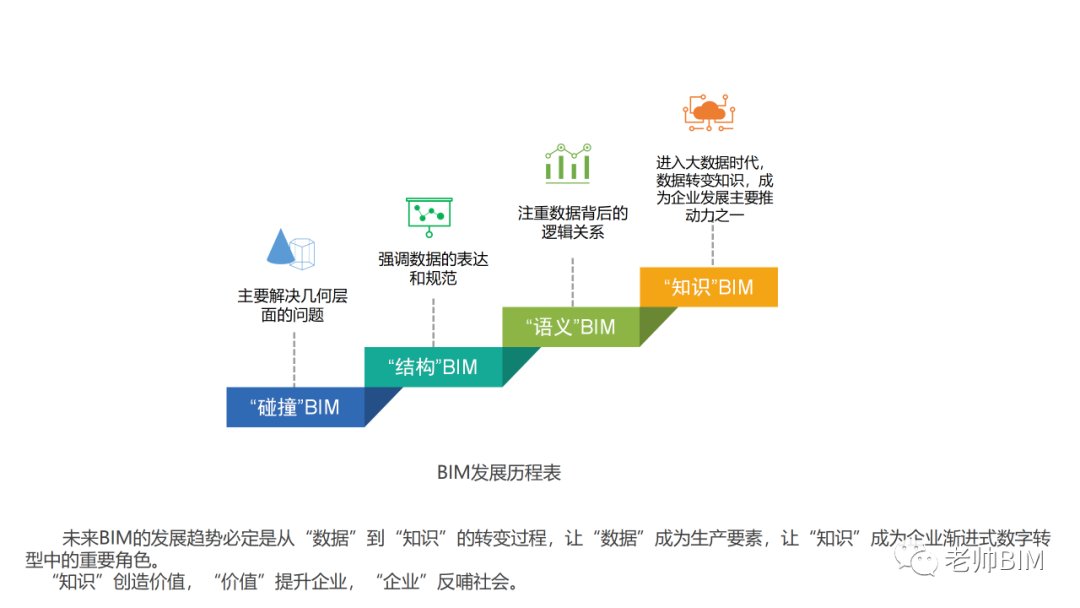
Based on the above, the author also categorizes BIM technology into four major development stages:
1. “Clash” BIM: the current mainstream application; even after being riddled with problems, it still shines and delivers value;
2. “Structural” BIM: emphasizing the expression and standardization of data; it can be understood as “Spatial BIM 1.0” [a foreshadowing planted here — the author will analyze Spatial BIM in a dedicated article later];
3. “Semantic” BIM: focusing on the logical relationships behind the data; it can also be understood as “Spatial BIM 2.0”;
4. “Knowledge” BIM: transforming data into knowledge and bringing data's productive role into play.
Summary
1. Although the industry is in a downturn, the pace of digital technology development will not stop;
2. BIM will continue to exist and gradually iterate and develop, but it requires more knowledge input from industry experts; BIM remains the direction of future digital development;
3. The development of BIM technology will usher in a new stage after artificial intelligence technology reaches a certain level.
Acknowledgements
1. China Institute of Building Standard Design
2. Beijing CICAS Certification Center Co., Ltd.
After large language models, Sora has arrived; AI technology is developing too fast — let's keep going together!
Recommended popular past articles:
1. Supporting CAD-positioned inspection and fully integrating BIM with the site: capturing the entire project construction process — all the technology and know-how on the construction site are here!
2. A Brief Discussion on the Application of Large Language Models in the Construction Field
3. Exploration and Practice of BIM 3D Forward Design for the Structural Discipline
4. Exploration and Reflections on Knowledge Graphs + Construction Large Language Models by the BIM Technology Division of Tongji Design
5. A Brief Analysis of BIM Development Trends in the New Era
6. A Preliminary Exploration of the Development Direction of BIM Design Software Against the Backdrop of High Computing Power
7. A Preliminary Exploration of the Application of Knowledge Graph Technology in Construction Engineering
8. BIM Compliance Checking Tool — A Complete Breakdown of Solibri's Functions
About the author:
Ji Jiumao
Senior Engineer
Architectural Design & Research Institute of Tongji University | BIM Technology Division
Research directions: AI large language model development, AI on-site panoramic inspection, whole-process BIM consulting, BIM review, BIM graph database development, and 3D forward architectural design
END
The views expressed are the author's own Copyright © Zhuwei Architectural Technology
Reproduction without authorization is prohibited
Please credit the source when reposting: Zhuwei Architectural Technology
Zhuwei Architectural Technology is a new-type technical services company specializing in integrated design optimization, BIM consulting and prefabricated construction design consulting. Our team brings together senior engineers from leading design institutes, former executives of real-estate companies, BIM engineers and prefabrication engineers, delivering integrated design optimization, refined drawing review, BIM consulting with MEP detailing, and prefabricated design services.
Design optimization consulting: Positioned as an extension and complement to the design management of real-estate developers, we focus on consulting and optimization for civil buildings. Across the whole process — or at key stages required by the client — we control the economy, rationality and safety of the design, eliminating unnecessary cost while measurably improving drawing quality, achieving "lower cost, higher efficiency".
BIM consulting: Through digital construction technology we help designers reduce errors and improve quality in the design phase, help contractors save cost and plan high-quality MEP installation in the construction phase, and extend BIM models into facility management for the operation phase — in collaboration with mainstream software vendors.
Prefabricated design consulting: Whole-process design on BIM platforms, using Revit and Tekla for PC detailing. Component geometry and reinforcement are linked parametrically — what you see is what you get. We deliver Industry 4.0-ready drawings with cut-length data for every rebar, and IoT-enabled support for production, storage, transport and installation of PC components.
Our expert team comes from leading design institutes, with deep technical grounding and extensive experience in dual-track design and optimization; its technical capability and control are industry-leading.
—— This article is auto-synced from the WeChat Official Account “Zhuwei Architectural Technology”. Read the original ——