A Review of BIM Technology Application Research in Green Buildings in China: From Localized Application to Full Life Cycle Development
WeChat Sync · Xiaowei · 2024-09-26
This article is reprinted from the WeChat public account "Global Engineering Management" for learning and exchange purposes only. All rights belong to the original authors.
Article No.: GLOBAL-168 Please cite the source when reprinting: WeChat public account gipcenter
Original title: A Review of BIM Technology Application in Green Buildings in China: From Partial Application to Whole-Life-Cycle Development
Originally published in: Journal of Civil Engineering and Management, 2024, 41(03): 72-79
Original authors: Zhang Sujuan, Zhang Xiaolong, Yang Yumiao, Zheng Saina
Abstract: This paper uses CNKI as the data source and, based on 2,900 journal articles, employs the CiteSpace bibliometric tool to analyze the research status and development trends of Building Information Modeling (BIM) technology applied to the field of green buildings in China. Through bibliometric analysis of research literature on BIM technology applied to green buildings, knowledge maps of keywords and keyword clusters are constructed, and the research status and evolutionary trends in this field are analyzed from three aspects: knowledge base, research hotspots, and evolutionary trends. The results show that research on BIM technology application in green buildings has generally gone through four stages, entering a stable development phase since 2019; existing studies have mostly focused on BIM technology application in a single phase of green buildings, and future research can further explore the integrated application of BIM technology across the whole life cycle of green buildings.Keywords: BIM technology; CiteSpace; green building; sustainability; low-carbon; building energy efficiency
Since 2022, with the completion of the "1+N" policy framework for the dual-carbon strategy, the state has further required the socio-economic development model to rapidly transition toward green and low-carbon approaches. The construction industry is a traditionally high-energy-consuming sector. In 2020, the total carbon emissions from the entire building process nationwide reached 5.08 billion t CO2, accounting for 50.9% of the nation’s total carbon emissions. This high proportion of carbon emissions has made the construction industry a key target for green development reform. To achieve green and intelligent design, construction, and O&M management in the construction industry and promote its high-quality, sustainable development, the government has issued a series of policies to advance "dual-carbon" actions in the construction sector. In October 2021, China successively released Opinions on Fully, Accurately, and Comprehensively Implementing the New Development Philosophy and Doing Well in Carbon Peak and Carbon Neutrality Work and Action Plan for Carbon Peak Before 2030. Green buildings, low-carbon buildings, and energy-efficient buildings, as practical carriers for energy conservation and emission reduction in the construction sector, possess emission reduction potential in building material production, architectural planning and design, construction, and building operation phases, and are important levers for achieving the "dual-carbon" goals.
Green and low-carbon development has become an inevitable requirement for the sustainable development of the current construction industry and enterprises. Building Information Modeling (BIM) technology, as the core carrier of construction informatization and digitalization, effectively promotes the development of low-carbon and green buildings. The application of BIM technology for optimized design and O&M of green buildings has attracted increasing attention from scholars. As the core technology and key means leading the digital revolution in the construction industry, BIM technology has been endowed with the concept of sustainable development in the process of its continuous application deepening and evolution. As a driver of digital transformation in the built environment, BIM demonstrates growing compatibility with green buildings. With its technical characteristics of visualization, informatization, simulation, collaboration, and multi-dimensional information linkage, BIM plays diverse functions as a simulation, analysis, and management tool in the whole life cycle application of green building design, low-carbon construction methods, and smart construction technologies. For example, in the architectural design phase, BIM is used for energy efficiency and building material analysis, simulating building energy consumption to guide the selection and production of building materials; secondary development based on BIM technology can simulate the energy consumption patterns during the building operation phase, providing technical support for exploring emission reduction operation paths; BIM combined with environmental analysis and facility operation monitoring functions can provide data information for building energy consumption control. In summary, BIM provides strong technical support for the sustainable development of green buildings throughout their whole life cycle. Existing studies have conducted relevant reviews on BIM technology application. Hua Yuanyuan et al. conducted an in-depth analysis of the research status and hotspot issues of BIM-based O&M management in China and proposed difficulties in applying BIM technology to the O&M phase; Volk et al. explored the current application status of BIM technology in construction and pointed out the limitations of BIM in project implementation; Bradley et al. discussed BIM applications in the infrastructure sector from the perspective of constructors and proposed the importance of integrating BIM processes with business processes. Although the application of BIM technology in the field of green buildings has received widespread attention, a comprehensive and systematic summary of the research status of green building BIM in China has not yet been formed. To better understand the development history and research dynamics in this field in China and to explore future research directions for green building BIM technology application, it is necessary to review and systematically analyze relevant research findings and further summarize existing research outcomes. Therefore, this paper mainly focuses on the current status of green building BIM technology application in China, using the China National Knowledge Infrastructure (CNKI) as the literature selection database, employing visual literature analysis software (CiteSpace) and a literature retrieval and management system (NoteExpress) to conduct quantitative statistics on the number of publications in this research field, analyze and cluster keywords, and draw corresponding knowledge maps for quantitative analysis, to obtain the research overview and hotspots of BIM technology applied to the field of green buildings, and to explore the research development trends in this field, providing guidance and reference for the further effective integration of BIM technology and green buildings.
1 Research Design
1.1 Data Sources
The foundation of literature analysis is the collection of textual data, which requires a suitable literature database and a mature literature retrieval strategy. To ensure the accuracy and comprehensiveness of the data, this paper selects the CNKI database, which has relatively complete domestic literature data, as the retrieval system for literature collection. The advanced retrieval function is used, with "BIM" or "Building Information Modeling" combined with "green" or "energy-efficient" or "low-carbon" as subject terms for retrieval. Among these, "energy-efficient" is an important connotation of "green performance" in the Assessment Standard for Green Building, and "low-carbon" is one of the important criteria for measuring the "greenness" of buildings and construction. The source category is set to journal articles. Based on the preliminary retrieval results, the first relevant article was published in 2006. After removing irrelevant disciplinary literature, a total of 3,501 articles were retrieved. Each article was manually screened one by one, excluding news, conference notices, informational content, articles with low relevance, and duplicate articles, ultimately yielding 2,900 valid articles.
1.2 Analysis Methods
CiteSpace v.6.1.2 software is used to perform visual analysis on the screened literature, mapping the existing data of the "knowledge base" to statistical analysis of the "research frontiers," generating scientific knowledge maps for the combined application research field of BIM technology and green buildings. Specifically, this paper combines quantitative and qualitative analysis. On one hand, statistical research is conducted on high-frequency terms and their frequencies in the field, using CiteSpace and NoteExpress for visual and statistical analysis, drawing keyword networks, keyword cluster networks, and temporal distribution maps to reflect the research status and evolutionary trends in this field. On the other hand, qualitative analysis is used to review the main content of the literature, introduce the research hotspots of BIM technology combined with green buildings, and analyze the technical value that BIM brings to green buildings. The data retrieval and knowledge map construction process of this paper is shown in Figure 1.
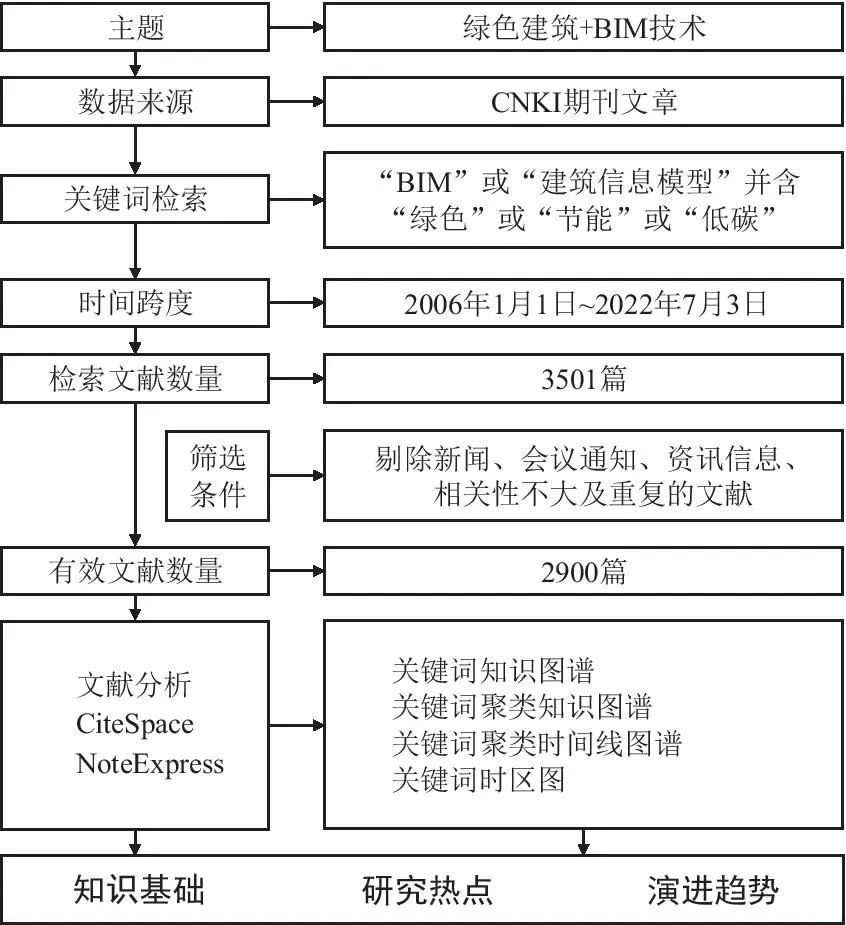
Figure 1 Data retrieval and knowledge map construction process
2 Knowledge Base Analysis
Based on the number of relevant literature on BIM technology application in green buildings, the temporal distribution characteristics of the research can be analyzed, as shown in Figure 2 (data for 2022 is incomplete and therefore not included; the total from 2006 to 2021 is 2,728 articles). Through analysis of the temporal distribution of research literature, the development of this field can be roughly divided into the following four stages:
(1) Initial Development Stage (2006-2009): Before 2006, research in this field was blank. During the initial development stage, the annual publication volume was small with minor fluctuations; the average annual publication volume from 2006 to 2009 was fewer than 5 articles. The earliest publishing author was Zeng Xudong from the Faculty of Architecture and Urban Planning at Chongqing University, who in 2006 first proposed an energy-efficient building design method in the design field, combining BIM technology with building energy consumption analysis to deepen energy-efficient design.
(2) Slow Development Stage (2010-2014): The number of articles published in 2010 reached 12, and the publication volume showed a slow growth trend. National policies promoted the development of BIM technology application in green buildings. For example, MOHURD issued the Outline for the Development of Construction Industry Informatization 2011-2015, proposing requirements to accelerate the development of new technologies such as BIM; in 2011, MOHURD required the revision and completion of a new Assessment Standard for Green Building. Since then, the publication volume increased year by year, and the research content gradually enriched, forming research achievements in green construction, carbon emission measurement, and other areas.
(3) Rapid Expansion Stage (2015-2018): The third stage generally began in 2015 (annual publication volume of 122 articles), during which the publication volume showed a rapid growth trend. The new GB/T 50378-2014 Assessment Standard for Green Building implemented in 2015 expanded the types of green buildings; in 2016, MOHURD issued the Outline for the Development of Construction Industry Informatization 2016-2020, requiring enhanced integrated application capabilities of new technologies such as BIM. Under the guidance of the development outline, subsequent research focused on and promoted the coordinated development of greening, integration, and informatization in the construction industry.
(4) Stable Development Stage (2019-Present): The annual publication volume in 2019 reached its peak at 490 articles, after which the annual publication volume remained above 400 articles and began to show a stable trend. This stage represents the stable development phase. With the popularization and in-depth application of BIM, it provides an effective tool for information integration in the whole life cycle management of green buildings, promoting the multi-scenario integration of BIM and green buildings.
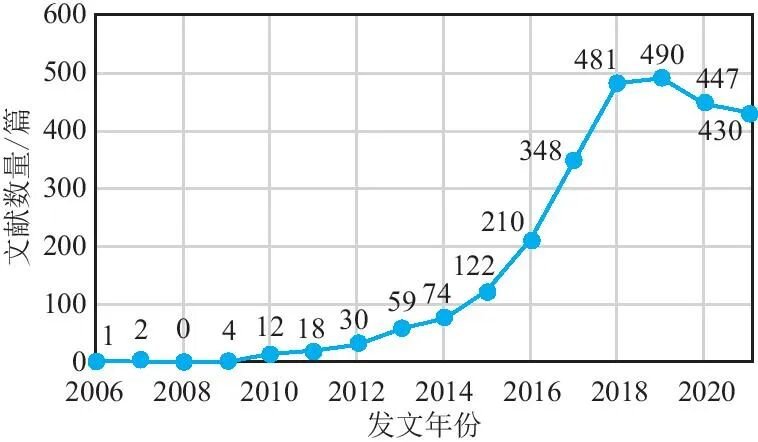
Figure 2 Temporal distribution of research literature
3 Research Hotspot Analysis
3.1 High-Frequency Keyword Analysis
Keywords are a condensation of the main ideas of the full text. Statistical analysis of keywords can highlight the core content and research hotspots in the field, and drawing keyword knowledge maps can reflect research trends and knowledge architecture. The visual network results after preliminary analysis were too dense and did not highlight key points, so important connections were retained to enhance the readability of the map while emphasizing its important structural features. The Pathfinder Network (PFNET) network pruning method was adopted, and the Pruning the Merged Network auxiliary pruning strategy was selected. The keyword knowledge map is shown in Figure 3.
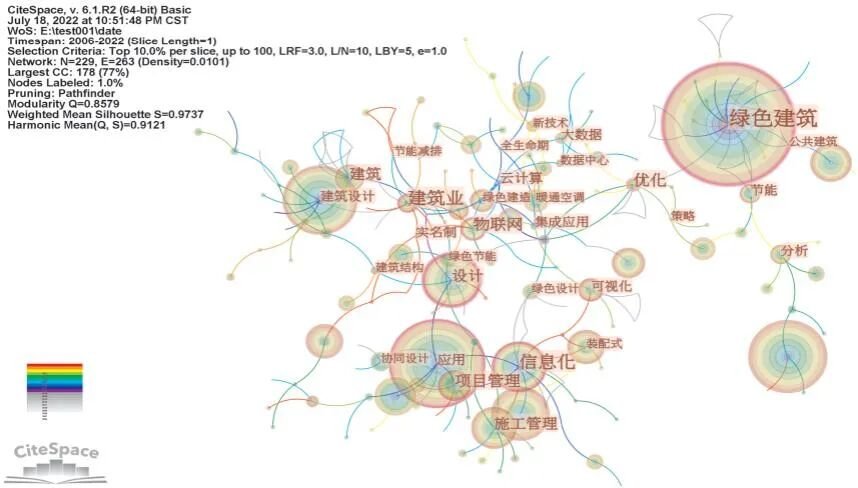
Figure 3 Keyword knowledge map
To better identify the high-frequency keywords in this field, keywords with identical or similar meanings, insufficient specificity, and poor relevance were manually identified and screened. Subject retrieval terms such as BIM, Building Information Modeling, green, energy-efficient, and low-carbon were removed. High-frequency research keywords were organized according to keyword occurrence frequency and centrality, as shown in Table 1. As shown in Table 1, corresponding to the development stages described above, most high-frequency keywords fall within the slow development and rapid development stages, further confirming that these two stages represent the peak period of research on BIM technology application in green buildings.
Table 1 High-frequency research keywords
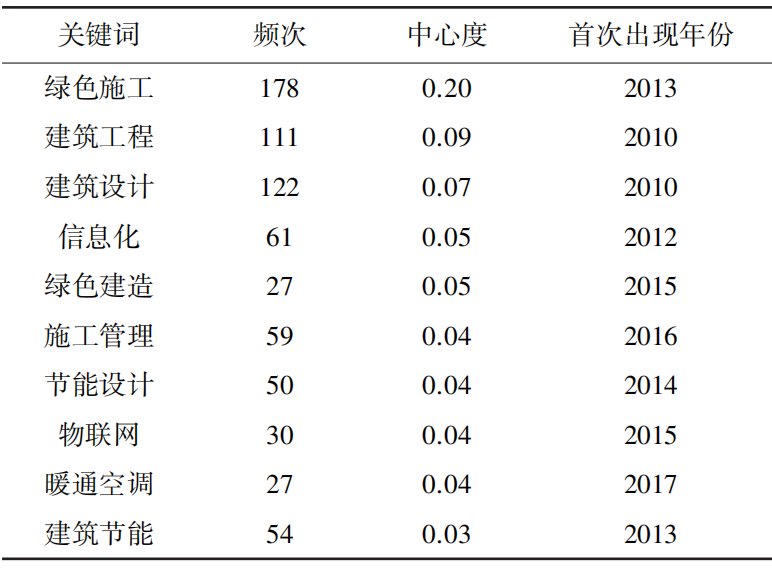
High-frequency keywords reveal the widespread application of BIM technology in the green building construction phase. Ge Xianglin et al. first achieved process-based green construction by establishing BIM models in specific building cases, reducing environmental damage caused by the construction process. Since then, research on BIM application in the green building construction phase has increased year by year. The emergence of the keywords "building engineering" and "architectural design" indicates that early research focused more on the design phase of green building projects. For example, Long Wenzhi took the BIM technology integration in the design phase of the Shanghai Tower as an entry point to explore the core concepts of BIM design. Secondly, combined with Figure 3, it can be seen that informatization extends to "construction management," "project management," "green design," "collaborative design," and other content, reflecting the application of BIM informatization and other functions in multiple phases of green buildings. Over time, green construction has been combined with "IoT," "HVAC," "cloud computing," and other technologies. BIM has begun to integrate various new technologies for whole life cycle application in green buildings, with particular attention to the practical implementation of applications in the building O&M phase. For example, Ma Guofeng and Song Xue utilized BIM-based whole-process information storage and management, and through information extraction and data mining, constructed an intelligent building O&M management platform, promoting the intelligent development of O&M management for office buildings.
3.2 Keyword Clustering and Hotspot Analysis
Keyword clustering refers to the use of specific algorithms for correlation clustering analysis of keywords based on keyword co-occurrence. The keyword clustering knowledge map is shown in Figure 4, where the network modularity Q=0.8579>0.3, indicating that the map is highly significant; the network homogeneity S=0.9737>0.7, indicating that the keyword clustering results have high reliability; both network homogeneity and modularity are close to 1, indicating that the network clustering results are reasonable. The keyword clustering timeline knowledge map is shown in Figure 5.
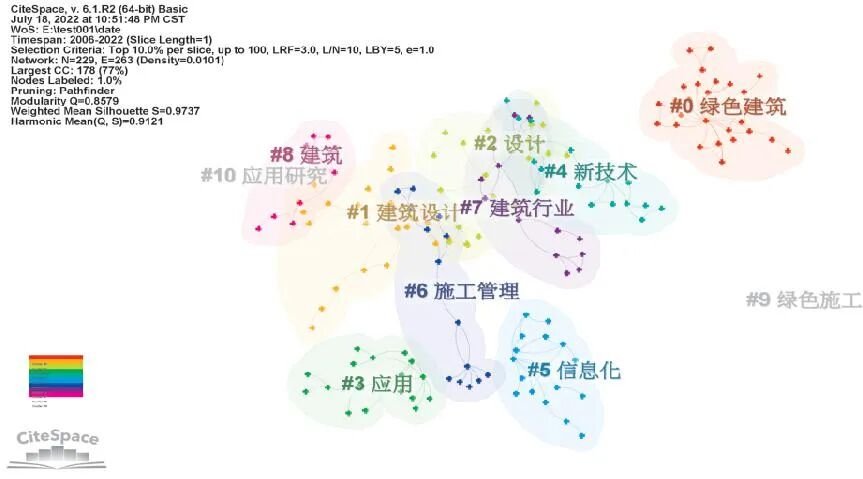
Figure 4 Keyword clustering knowledge map
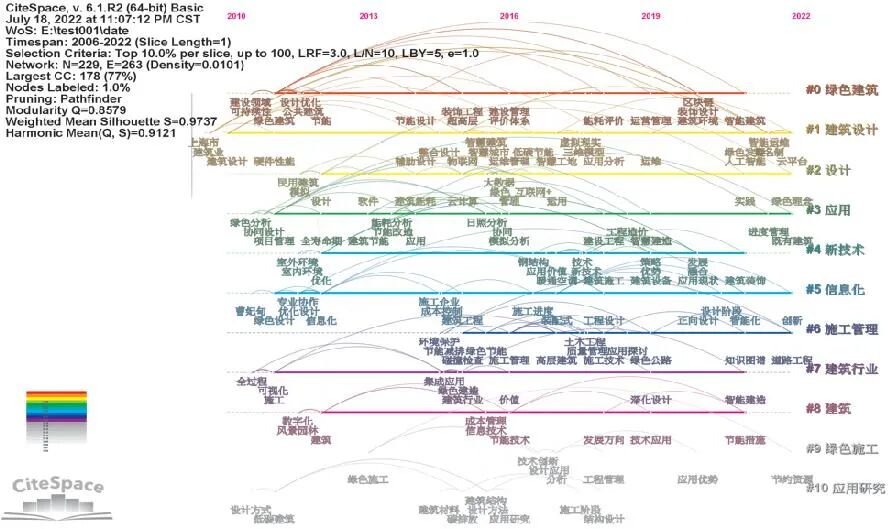
Figure 5 Keyword clustering timeline map
The first major category of hotspot research keywords, "green building," is one of the ways to achieve sustainable transformation in the construction field. Early research focused more on energy-efficient design and optimized design in the architectural design phase. While studying building energy efficiency design methods, researchers also explored the interface development and application of BIM data in various professional building energy consumption simulation software, preparing for the comprehensive implementation of parametric design throughout the green building process. BIM technology leveraged its collaborative design capabilities to gradually apply in green analysis, energy consumption analysis, and energy-efficient renovation of green buildings, and was deeply applied in structural design and performance analysis.
The second major category of keywords focuses on new technologies, informatization, and related terms. BIM combined with new technologies is applied to green building construction, such as blockchain, big data, IoT, cloud computing, and other new digital means applied to improving analytic hierarchy process, energy consumption evaluation, operations management, building environment monitoring, and smart building construction. In particular, in recent years, with the rapid development of computers, the integration of BIM with new technologies such as IoT in the building operation and maintenance phase has gradually increased.
The third major category of keywords focuses on construction management, green construction, the construction industry, and related areas. From the chronological sequence, it can be seen that research progress in green construction lagged behind green design, gradually advancing design-construction integration. Subsequent research focused on the entire green building construction process and promoted research on energy conservation and emission reduction technologies as well as the improvement of management technologies such as project management.
4 Evolutionary Trend Analysis
4.1 Research Stage Classification
CiteSpace is used to compile keyword frequencies over a certain period, based on which changes in research topics are predicted to obtain the evolutionary trends of research topics, as shown in Figure 6. Combined with the temporal distribution of research literature (Figure 2) and the four classified stages, this section provides a detailed analysis of the keywords for each stage.
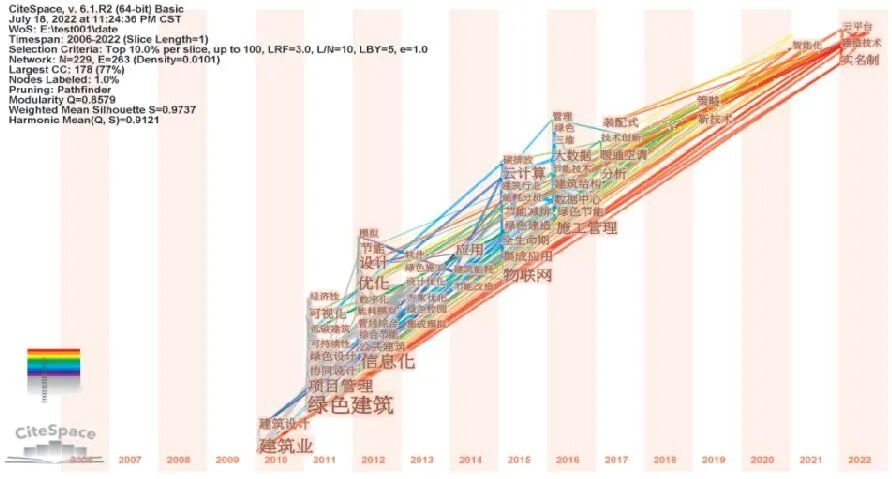
Figure 6 Keyword time zones
(1) Initial Development Stage (2006-2009) During this stage, the application of BIM technology to green buildings was just beginning, and national policies played a guiding role. On July 1, 2005, China’s first Design Standard for Energy Efficiency of Public Buildings was officially implemented. In 2006, the first edition of GB/T 50378-2006 Assessment Standard for Green Building was promulgated, guiding the development of green building design. Research during this stage focused more on the application of BIM in the green building design phase and proposed green building assessment systems based on the green building concept. For example, Zeng Xudong first proposed in 2006 combining BIM technology with building energy consumption analysis for energy-efficient building design. During this stage, due to the limitations of relevant software and the fact that awareness of building energy efficiency had not yet been widely disseminated, the scope and depth of BIM technology application in the green building design phase were somewhat limited.
(2) Slow Development Stage (2010-2014) In 2010, the application of BIM technology in green buildings entered the slow development stage. BIM leveraged its technical characteristics and advantages of visualization, collaborative design, informatization, and digitalization, mainly applied in the architectural planning and design phases of green buildings, with a small number of studies mentioning the application of BIM technology in green construction. In 2013, related research began to mention BIM technology and "green construction." For example, Li Xiao proposed that BIM could be used during the construction process to pre-simulate construction site resource management, optimize workflows, and reduce rework and resource waste. The application of BIM technology to "project management" in green buildings is mainly reflected in BIM’s ability to achieve associated modifications across projects, reduce redundant information input, and improve the collaborative efficiency of all participants. The "sustainability" and "economy" of green buildings were also goals pursued by scholars, leading to the emergence of "low-carbon buildings" and related low-carbon design, carbon emission calculation methods, and low-carbon building carbon emission standards. For example, Hua Hong et al. constructed a carbon emission measurement model based on BIM technology for low-carbon design analysis methods, driven by the needs of low-carbon design and carbon emission measurement for public buildings. One reason for the slow development during this stage was that BIM still lacked unified industry standards in its application to the construction industry. Although relevant software was gradually updated and iterated compared to the previous stage, its development still needed improvement.
(3) Rapid Expansion Stage (2015-2018) In 2015, BIM technology began to be widely applied in different phases of the whole life cycle of green buildings. "Green construction," "whole life cycle," and "construction management" emerged as initial keywords for this stage, followed by the cross-integration of emerging technologies such as "IoT," "cloud computing," and "big data" with BIM technology, promoting the whole life cycle development of green buildings from a technical perspective. In 2017, "prefabricated" became one of the research keywords. Compared with traditional reinforced concrete buildings and steel structure buildings, the emerging prefabricated building approach demonstrates corresponding advantages in the realization of green buildings. For example, Xu Zhao et al. reviewed and systematically analyzed the application of BIM in the precast component production phase of prefabricated buildings, proposing a green building development direction combining BIM with prefabricated precast components.
(4) Stable Development Stage (2019-Present) In 2019, the volume of research literature in this field reached its maximum, after which it entered a stable development stage. Scholars have continued to explore more efficient and comprehensive applications of BIM in green buildings. During this stage, various technology applications have been gradually optimized and refined, such as the construction and O&M of smart construction site cloud platforms and energy-saving optimization of construction technologies. The application of BIM technology in the O&M phase of green buildings has further deepened, with many scholars planning and designing corresponding management platforms from a research perspective to meet the needs of actual projects such as prefabricated buildings, urban rail transit, water conservancy projects, bridge engineering, and comprehensive utility tunnels. For example, Li Zhongfu et al. studied and analyzed the benefits of BIM technology in the operation phase of green public buildings, supporting the further application and promotion of BIM.
4.2 Research Frontier Analysis
The frequency of terms in research literature can usually map the development trends of research. CiteSpace is used to analyze and generate visual maps, and burst terms with higher frequencies are analyzed to anticipate research frontiers. Based on the burst term intensity and the time periods in which they appear, the latest research trends can be identified. It can be found that the research frontiers that have emerged in this field mainly focus on "collaborative design," "building energy efficiency," "software simulation," "integrated application," "cloud computing," and related areas.
(Due to space limitations, the subsequent "5 Conclusions" section and references of this paper are available in the original article.)
END
The views expressed are the author's own Copyright © Zhuwei Architectural Technology
Reproduction without authorization is prohibited
Please credit the source when reposting: Zhuwei Architectural Technology
Zhuwei Architectural Technology is a new-type technical services company specializing in integrated design optimization, BIM consulting and prefabricated construction design consulting. Our team brings together senior engineers from leading design institutes, former executives of real-estate companies, BIM engineers and prefabrication engineers, delivering integrated design optimization, refined drawing review, BIM consulting with MEP detailing, and prefabricated design services.
Design optimization consulting: Positioned as an extension and complement to the design management of real-estate developers, we focus on consulting and optimization for civil buildings. Across the whole process — or at key stages required by the client — we control the economy, rationality and safety of the design, eliminating unnecessary cost while measurably improving drawing quality, achieving "lower cost, higher efficiency".
BIM consulting: Through digital construction technology we help designers reduce errors and improve quality in the design phase, help contractors save cost and plan high-quality MEP installation in the construction phase, and extend BIM models into facility management for the operation phase — in collaboration with mainstream software vendors.
Prefabricated design consulting: Whole-process design on BIM platforms, using Revit and Tekla for PC detailing. Component geometry and reinforcement are linked parametrically — what you see is what you get. We deliver Industry 4.0-ready drawings with cut-length data for every rebar, and IoT-enabled support for production, storage, transport and installation of PC components.
Our expert team comes from leading design institutes, with deep technical grounding and extensive experience in dual-track design and optimization; its technical capability and control are industry-leading.
—— This article is auto-synced from the WeChat Official Account “Zhuwei Architectural Technology”. Read the original ——