Research on the Development of Prefabricated Buildings Under the "Dual Carbon" Goals
WeChat Sync · Xiaowei · 2023-11-10
The following article is from: Hebei Dual Carbon Alliance
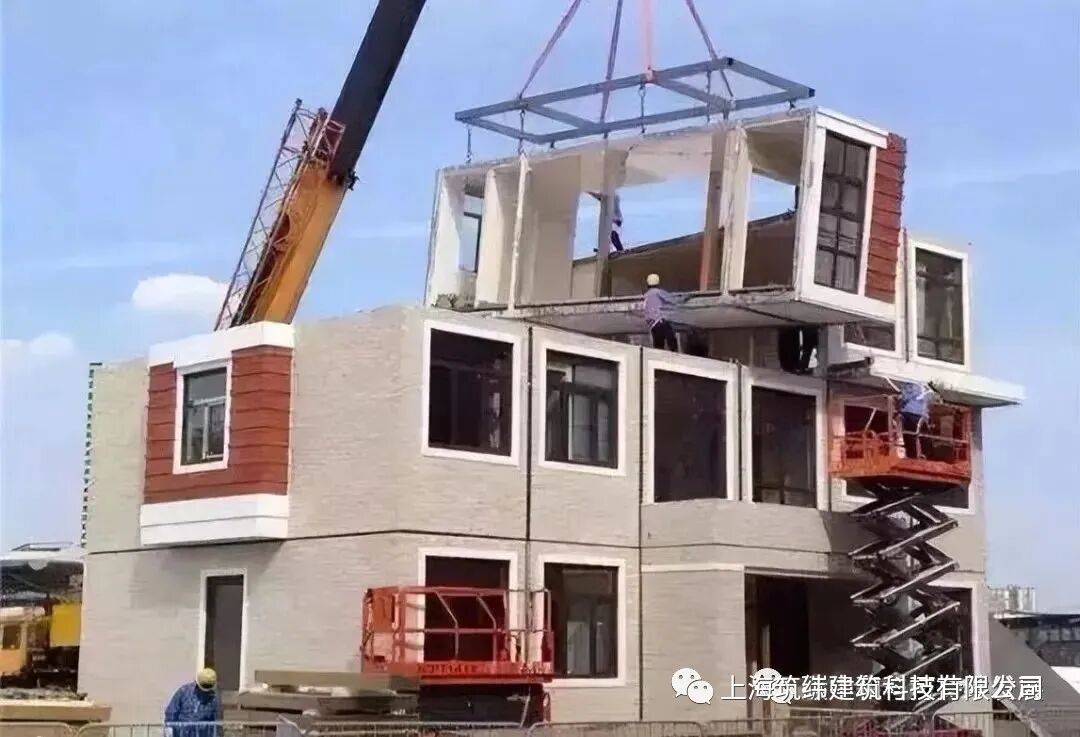
Abstract :Compared with traditional construction methods, prefabricated buildings improve construction efficiency, promote energy conservation and emission reduction, and alleviate labor shortages. In September 2020, China put forward the 'dual carbon' emission reduction goals. As a major carbon emitter in China, the construction industry naturally bears the important responsibility of energy conservation and emission reduction, and prefabricated buildings are the main means by which the construction industry achieves these goals. At present, domestic development in this area is still relatively lagging. Therefore, I will elaborate on the development of prefabricated construction in China and overseas, summarize the advantages and practical difficulties of prefabricated buildings, and explore the development path for prefabricated construction in China, so as to better promote the in-depth development of prefabricated buildings in China.
1 Introduction
Benefiting from the push of national policies, China's prefabricated building sector is developing at a rapid pace. Compared with traditional construction methods, prefabricated buildings enjoy inherent advantages in overall benefits. They improve construction quality, achieve low-carbon and environmental protection, alleviate labor shortages, and accelerate industrial transformation. Vigorously developing modern prefabricated housing is an important embodiment of China's adherence to innovative development and green building concepts, and an important path to realizing informatization in urban construction. In September 2020, China put forward the 'dual carbon' emission reduction goals. As one of the pillar industries of China's national economy, the construction industry places particular importance on energy conservation and emission reduction against the dual carbon backdrop. In addition, the country currently faces a labor shortage in the construction industry, and against this backdrop, vigorously developing prefabricated buildings is also an inevitable trend for the development of China's construction industry.
2 Development of Prefabricated Buildings Abroad
Since the Industrial Revolution, developed Western countries have been exploring the development of prefabricated buildings. To date, prefabricated construction abroad has reached a relatively mature and complete stage. The United States promotes the popularization of prefabricated housing through market-oriented and socialized approaches. In the 1960s, a severe shortage of skilled construction workers drove the country's integrated construction progress; mechanized manufacturing of building structures became mainstream in construction, and prefabricated structures thus entered a period of rapid growth. Currently, prefabricated building structures in the United States have a high degree of standardization and commercialization, offering strong structural stability, good versatility, and low cost. Meanwhile, U.S. prefabricated construction has undergone a shift from scale-oriented to efficiency-oriented, and products incorporating new environmental concepts are also developing rapidly, offering substantial energy, land, low-carbon, and material savings, protecting the environment, and reducing pollution. In 2016, consumer satisfaction with prefabricated housing in the United States reached 80% and has been widely recognized by consumers.As early as 1891, more than 130 years ago, the French had already begun to use prefabricated reinforced-steel structural buildings. France's industrialization focused mainly on reinforced-steel structural buildings, using frame or slab-beam structures, and gradually extending to large public buildings. In recent years, French construction mechanization has exhibited three characteristics: first, the popularization of new methods such as welded structures; second, the separation of building structures from machinery and installation construction to avoid embedded parts, thereby improving construction quality and efficiency; third, buildings mainly use prestressed reinforced prefabricated frame structural systems, with installation efficiency exceeding 80% and energy savings reaching 70%. As early as 1963, the Japanese government established the Architectural Design Society; in 1968 it clearly proposed the design concept of prefabricated building residential areas; and in 1969 it formulated the Five-Year Action Plan for Promoting the Standardization of the Housing Industry. Japan's prefabricated housing is a mid-to-high-end residential district construction structure that adapts to the relatively densely populated residential market demand in Japan, and it uses legislation to improve the efficiency of prefabricated structures, establishing a large number of policies, guidelines, and standards in the field of assembled housing, and building a systematic set of digital signal specifications.3 Background of Prefabricated Building Promotion in ChinaCurrently, China is vigorously advancing the coordinated development of environmental pollution prevention and control with pollution reduction and carbon reduction, and encouraging eligible regions to take the lead in achieving the 'peak carbon emissions' goal. In addition, we are actively promoting and developing new economic growth drivers, accelerating adjustments to the current energy structure, and improving the industrial structure. We will refine the dual management mechanism for resource consumption, accelerate the establishment of a national market for energy use rights and carbon emission rights, and vigorously promote the development of low-energy-consumption buildings to reduce dependence on energy and achieve energy conservation and emission reduction goals.The total number of workers in China's construction industry has been continuously declining since 2014, dropping from 61.1 million to 54.2 million. The proportion of migrant workers among China's construction industry workers has also been declining since 2014, and the growth rate of overall labor supply and demand in the construction industry is falling. Meanwhile, research shows that the new generation of workers prefers industry over construction. In the future, the construction industry will still face significant labor supply-and-demand pressure.In recent years, the state has issued a large number of documents promoting the development of prefabricated buildings. The Guiding Opinions on Promoting the Coordinated Development of Smart Construction and Building Industrialization, issued on July 28, 2020, is one of the more critical policy documents issued recently. The government's guiding opinions hold that we should vigorously develop prefabricated buildings and promote lean construction in architectural design, exploring effective methods suitable for the coordinated and rapid development of smart construction and building industrialization.
4 Advantages of Prefabricated Buildings under the Dual Carbon Context and Practical Challenges They Face
4.1 Advantages of Prefabricated Buildings
Prefabricated buildings offer broad application environments, short construction times, and resource savings, among many other advantages. Under the dual carbon context, the advantages of prefabricated buildings are better demonstrated. Because they adopt a 'standardized planning, factory-based manufacturing, assembly-type construction' approach, construction is less affected by weather, generates less construction waste, and progresses faster, greatly reducing carbon emissions and material waste and improving energy conservation and environmental protection outcomes.Currently, under the dual carbon context, many construction companies have already begun to explore the use of green construction technologies to improve the overall construction process. The use of precast concrete prefabrication technology has improved environmental problems. By using pre-prepared components, the recyclability and reusability of buildings has been enhanced, construction costs have been saved, building material usage has been reduced, and construction units can ensure construction quality at the lowest production cost. The use of prefabricated construction technology saves more resources. In this environment, environmental pollution caused by construction waste is greatly reduced, thereby ensuring the development of the construction industry in energy conservation and emission reduction.Under the dual carbon context, prefabricated buildings should determine building energy-saving goals at the engineering design stage and scientifically formulate all technical parameters. Reasonably determining construction parameters can better determine the energy consumption of building projects, and prefabricated production and processing can ensure the efficient use of resources, fundamentally reducing overall energy consumption. China's buildings generate 400 million tons of construction waste each year, which has become one of the important factors constraining urban waste management in China. Under the country's dual carbon goals, prefabricated buildings can cut off building dust at the source, and developing prefabricated buildings is also an effective way to reduce urban environmental pressure. Therefore, from a long-term development perspective, prefabricated buildings offer outstanding resource-saving advantages across design, manufacturing, construction, and O&M.
4.2 Real Difficulties Faced by Prefabricated Buildings and Countermeasures
4.2.1 Difficulties Faced
In the 1950s, China began developing prefabricated buildings by drawing on foreign experience, but many deficiencies existed due to constraints from the economic foundation and technological conditions. In the 1990s, cast-in-situ construction projects emerged in large numbers, and prefabricated buildings gradually declined. It was not until 2012 that prefabricated buildings gradually regained social attention. In March 2017, the Ministry of Housing and Urban-Rural Development (MOHURD) issued the 13th Five-Year Action Plan for Prefabricated Buildings and related management measures, translating the promotion of prefabricated buildings into concrete steps and specifying that by 2020 prefabricated buildings should account for more than 15% of newly added construction projects, and by 2025, for 30%. Although the government has actively promoted the development of prefabricated buildings, the actual effect still needs improvement due to the popularization of big data technology and the incompleteness of industry standards and the industrial chain. According to the latest research, BIM technology has become the mainstream method for prefabricated building design, helping enterprises better complete collaborative design on smart construction platforms.
4.2.2 Countermeasures
Currently, government documents on the informatization of the construction industry clearly state that applying BIM technology and IoT technology to the full life-cycle management of prefabricated buildings can effectively improve the quality management level of buildings and effectively coordinate all parties involved in engineering construction, thereby achieving sustainable development of buildings. Through the application of BIM technology and IoT technology, we can achieve comprehensive quality management and intelligent development. By leveraging BIM technology and Internet technology, we can achieve full-process quality management of precast components in prefabricated building projects, with comprehensive control across design, production, transportation, construction, and other stages, ensuring that component quality meets engineering construction requirements. To better promote the development of prefabricated building projects, all units should establish an informatized management platform based on BIM technology, clarify the responsibilities of management personnel, and ensure continuous improvement and refinement of engineering quality. By continuously strengthening training for construction technicians and management personnel, ensuring they can proficiently master BIM technology and Internet applications, collect and monitor data information in real time, and promptly identify potential quality issues during construction, the construction efficiency and quality of prefabricated building projects can be improved.
5 The Development Path of Prefabricated Buildings under the Dual Carbon Context
5.1 Design Aspects
To achieve green and energy-saving goals, design should incorporate prefabrication and energy-saving/emission-reduction concepts, fully leverage BIM technology, and establish a digital management platform to make design more standardized, visualized, and simulated, thereby achieving digital management of component information. Through in-depth study of design solutions, we can ensure that process details and schemes at every stage meet construction requirements while also satisfying green building needs, rationally arrange energy-saving devices, and minimize energy consumption.
5.2 Production Aspects
By adopting advanced IoT technology in combination with BIM 3D models, prefabricated production can be carried out in standardized factories, while introducing smart production equipment makes interaction between digital design and smart production lines more convenient, helping to improve overall component precision and enhance component quality. This approach can significantly reduce labor costs and resource waste, thereby improving efficiency.
5.3 Application and Promotion Aspects
To promote the development of prefabricated construction enterprises, the government should increase support, encourage enterprises to adopt advanced prefabricated production methods to reduce cost burdens, and mandate the implementation of EPC general contracting models and the integration of prefabricated buildings, in order to improve the consistency of the entire construction. In addition, to achieve green development, relevant technical and management personnel should also master emerging technologies such as BIM and IoT big data to achieve more efficient construction results.
6 Conclusion
In summary, prefabricated buildings have already demonstrated great advantages in the application of saving construction materials, compressing timelines, reducing resource consumption, and reducing urban wastewater emissions. By leveraging BIM technology, we can better conduct detailed design and apply building information models to actual production. We can also strengthen data sharing between 3D models and production equipment to improve building quality. In addition, we can combine technologies such as big data and IoT with building O&M to minimize carbon emissions during demolition and reconstruction, promote the sustainable development of buildings, and help China's construction industry achieve the 'dual carbon' goals as soon as possible.
END
The views expressed are the author's own Copyright © Zhuwei Architectural Technology
Reproduction without authorization is prohibited
Please credit the source when reposting: Zhuwei Architectural Technology
Zhuwei Architectural Technology is a new-type technical services company specializing in integrated design optimization, BIM consulting and prefabricated construction design consulting. Our team brings together senior engineers from leading design institutes, former executives of real-estate companies, BIM engineers and prefabrication engineers, delivering integrated design optimization, refined drawing review, BIM consulting with MEP detailing, and prefabricated design services.
Design optimization consulting: Positioned as an extension and complement to the design management of real-estate developers, we focus on consulting and optimization for civil buildings. Across the whole process — or at key stages required by the client — we control the economy, rationality and safety of the design, eliminating unnecessary cost while measurably improving drawing quality, achieving "lower cost, higher efficiency".
BIM consulting: Through digital construction technology we help designers reduce errors and improve quality in the design phase, help contractors save cost and plan high-quality MEP installation in the construction phase, and extend BIM models into facility management for the operation phase — in collaboration with mainstream software vendors.
Prefabricated design consulting: Whole-process design on BIM platforms, using Revit and Tekla for PC detailing. Component geometry and reinforcement are linked parametrically — what you see is what you get. We deliver Industry 4.0-ready drawings with cut-length data for every rebar, and IoT-enabled support for production, storage, transport and installation of PC components.
Our expert team comes from leading design institutes, with deep technical grounding and extensive experience in dual-track design and optimization; its technical capability and control are industry-leading.
—— This article is auto-synced from the WeChat Official Account “Zhuwei Architectural Technology”. Read the original ——