The following article is sourced from the Shenzhen Municipal People's Government; author: Baimu Lianchuang BIM Services

Industry News
Recently, the General Office of the Shenzhen Municipal People's Government issued the Notice on Printing and Distributing the Shenzhen Comprehensive Multidimensional Transport Network Planning Scheme (2024—2035), which proposes:
1. By 2035, Shenzhen will build, to a high standard, a modern comprehensive multidimensional transport network that is convenient and smooth, economical and efficient, green and intensive, intelligent and advanced, and safe and reliable; fully establish itself as a logistics center and an international comprehensive transport hub city with significant global influence; fully form the “12312” travel circle and the “123” express freight logistics circle; and achieve the “10-30-60” rapid transport service goals. By the middle of this century, it will fully build a world-leading modern, high-quality comprehensive multidimensional transport network and become a model of sustainable transport development.
2. Breakthroughs achieved in building an intelligent transport system. Full-life-cycle BIM delivery standards for transport construction projects will be formulated.
3. Promote the deep integration of BIM applications in the transport sector into the city-wide City Information Modeling (CIM) platform, and build, relying on the city-wide CIM platform, a full-process digital platform for the design, construction, supervision and acceptance of transport infrastructure, establish a full-life-cycle safety assurance system for major projects with highly complex processes, and achieve real-time dynamic monitoring and early warning of key locations, critical links and important parameters.
4. Build a system of intelligent urban carriers and facilities, and establish a transport facility and operation management system adapted to new carriers and services. To meet the development needs of new carriers such as intelligent connected vehicles and drones, as well as emerging travel service models such as shared mobility, promote the digital, intelligent and connected upgrading and transformation of the city's transport infrastructure, and build a “BIM+CIM” data foundation.By 2035, BIM models will be established for 100% of existing road traffic infrastructure and imported into the CIM platform.Build a municipal-level MaaS platform (Baimu's note: Mobility as a Service), promote the full sharing of transport travel service information across rail, bus, aviation, railway, shipping and long-distance passenger transport, work with market enterprises, optimize and integrate travel information resources across all modes, and create “Transport +” integrated information services.
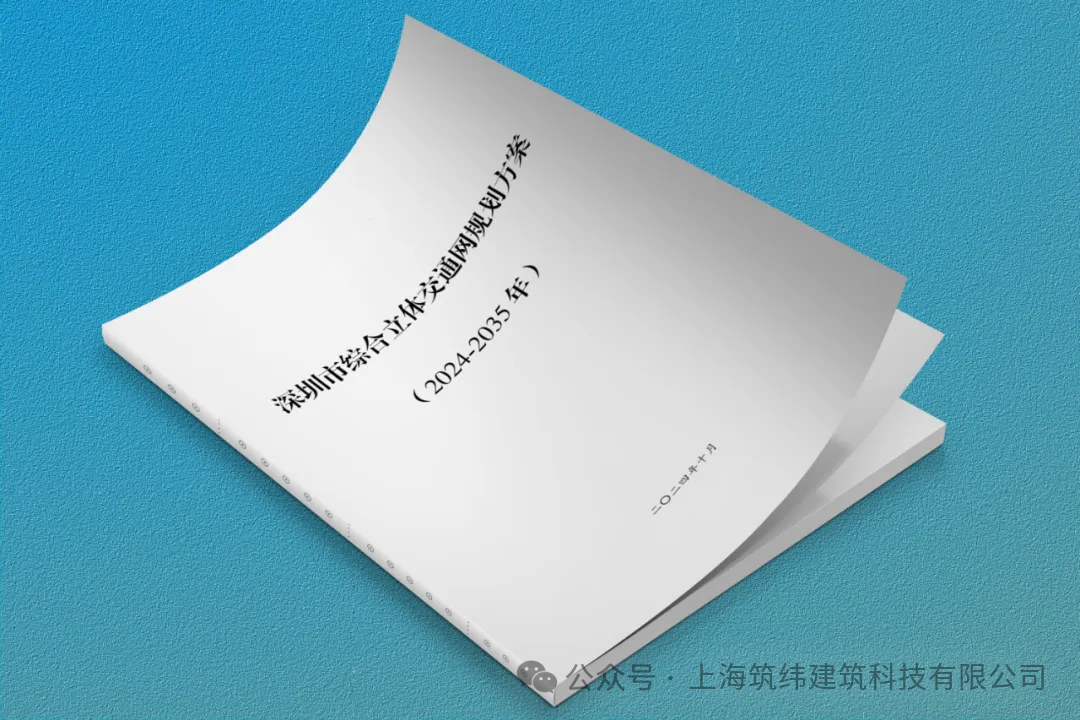
—— Official Notice——
Notice of the General Office of the Shenzhen Municipal People's Government on Printing and Distributing the Shenzhen Comprehensive Multidimensional Transport Network Planning Scheme (2024—2035)
Information source: General Office of the Shenzhen Municipal People's Government

To the people's governments of all districts and relevant municipal units:
The Shenzhen Comprehensive Multidimensional Transport Network Planning Scheme (2024—2035) has been approved by the Municipal Government and is hereby printed and distributed to you. Please conscientiously organize its implementation. Any problems encountered during implementation should be reported directly to the Municipal Transport Bureau.
Attachment download:Shenzhen Comprehensive Multidimensional Transport Network Planning Scheme (2024-2035).pdf
General Office of the Municipal Government
October 21, 2024
Contents
![]()
Policy Interpretation
Policy Interpretation of the Shenzhen Comprehensive Multidimensional Transport Network Planning Scheme (2024-2035)
To thoroughly implement the guiding principles of the Notice of the CPC Central Committee and the State Council on Printing and Distributing the Outline of the National Comprehensive Multidimensional Transport Network Plan and the Notice of the CPC Guangdong Provincial Committee and the Guangdong Provincial People's Government on Printing and Distributing the Outline of the Guangdong Provincial Comprehensive Multidimensional Transport Network Plan, to build a modern, high-quality comprehensive multidimensional transport network, and to support the building of a strong nation and a strong province in transport, the Shenzhen Comprehensive Multidimensional Transport Network Planning Scheme (2024-2035) (hereinafter referred to as the Planning Scheme) has been compiled in light of the actual conditions of our city. The Planning Scheme is interpreted as follows:
I. Background of the Compilation
The CPC Central Committee and the State Council issued the Outline of the National Comprehensive Multidimensional Transport Network Plan, proposing to build a main framework of the comprehensive multidimensional transport network featuring “6 axes, 7 corridors and 8 passages”, and to establish a national comprehensive transport hub system that integrates hub clusters, hub cities and hub ports and stations into a “trinity”. Among these, the plan proposes that Shenzhen should accelerate its development into an international comprehensive transport hub city.
The CPC Guangdong Provincial Committee and the Provincial Government issued the Outline of the Guangdong Provincial Comprehensive Multidimensional Transport Network Plan, proposing to build a main framework of the comprehensive multidimensional transport network featuring “three horizontals, six verticals and two links” and a multi-tier hub city system of “2+3+8+8”. Among these, the plan proposes that Shenzhen, as an international comprehensive transport hub city, should enhance its comprehensive transport functions and capacity, drive the tiered development of hub cities across the province, join hands with Hong Kong and Macao to build a passenger transport hub cluster in the Guangdong-Hong Kong-Macao Greater Bay Area with international influence, and work with Hong Kong to build a world-class international freight hub city.
The Planning Scheme, first, connects with and implements the functional layout of the transport network framework and hub system set out in the national and provincial comprehensive multidimensional transport network plans, as well as the medium- and long-term development tasks of the industry; second, in light of Shenzhen's actual conditions, it plans the medium- and long-term development of external transport and internal-external connecting transport infrastructure, and serves as an important basis for our city to compile relevant special plans, determine major projects and construction plans, and formulate industry policies. The objects of the plan are transport infrastructure such as railways, highways, water transport, civil aviation, postal express and pipelines; the scope of the plan is the Shenzhen municipal area (with guidance provided for the Shenzhen-Shanwei Special Cooperation Zone); the planning period runs from 2024 to 2035, with a long-term vision extending to the middle of this century.
II. Main Content of the Planning Scheme
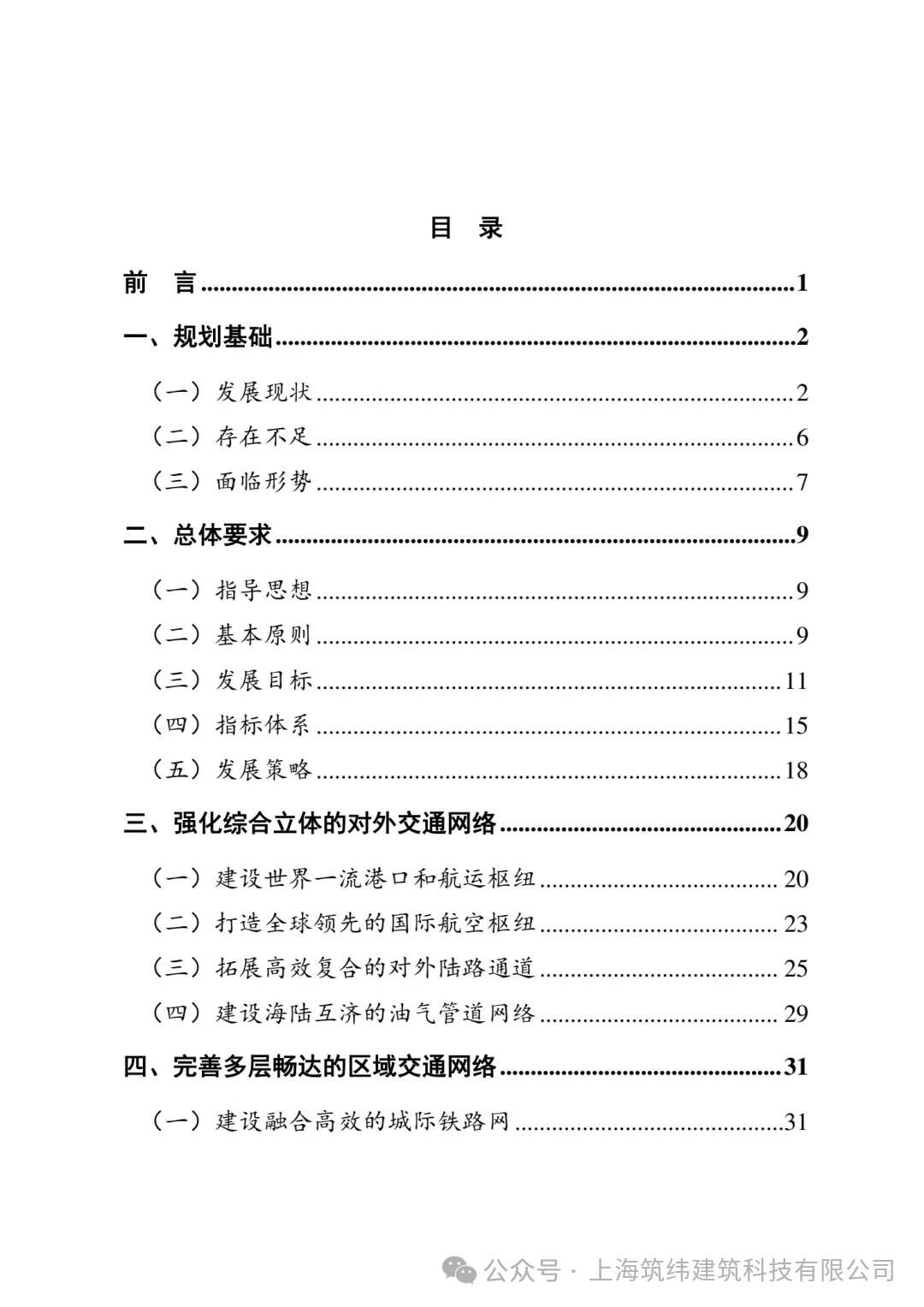
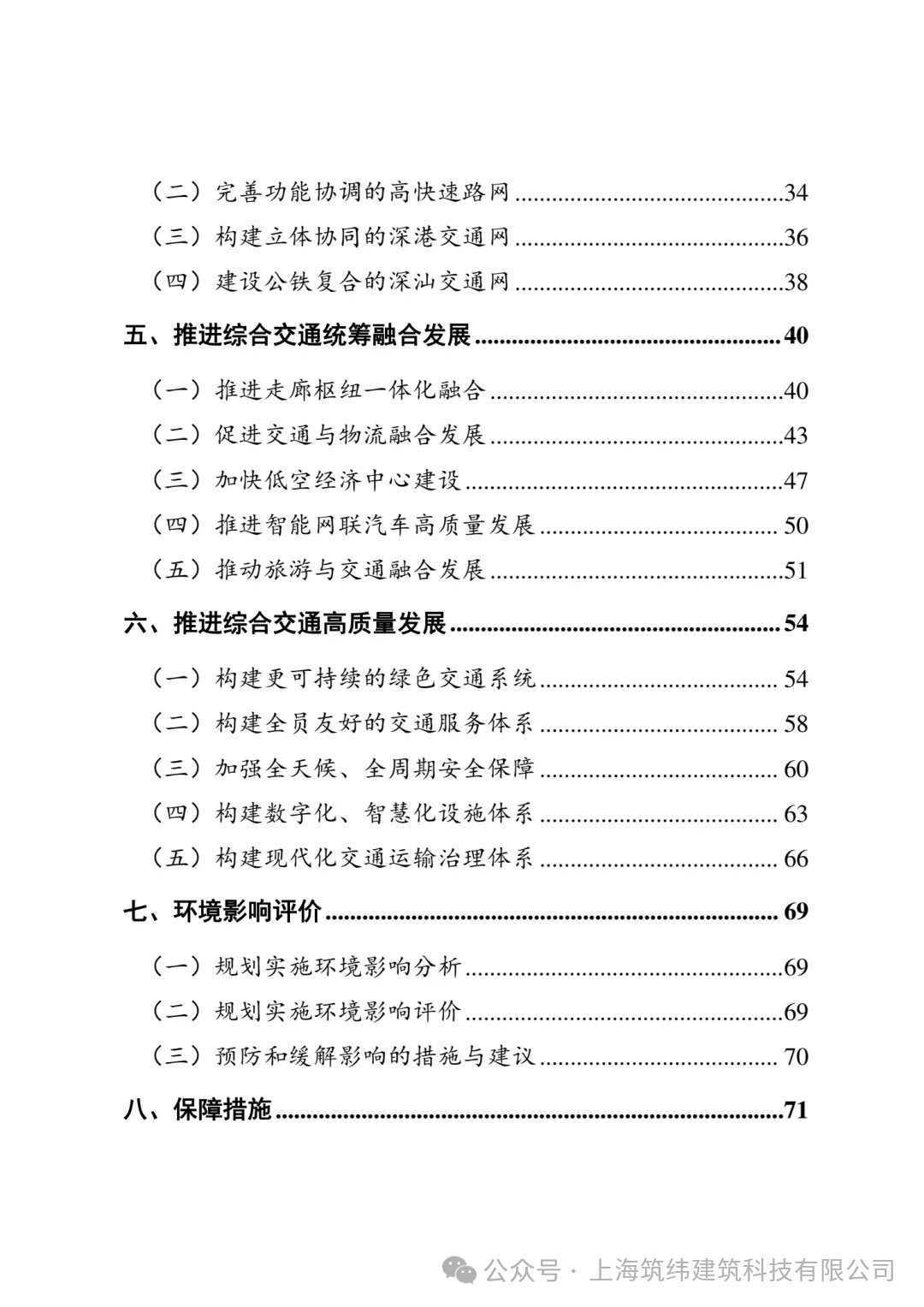
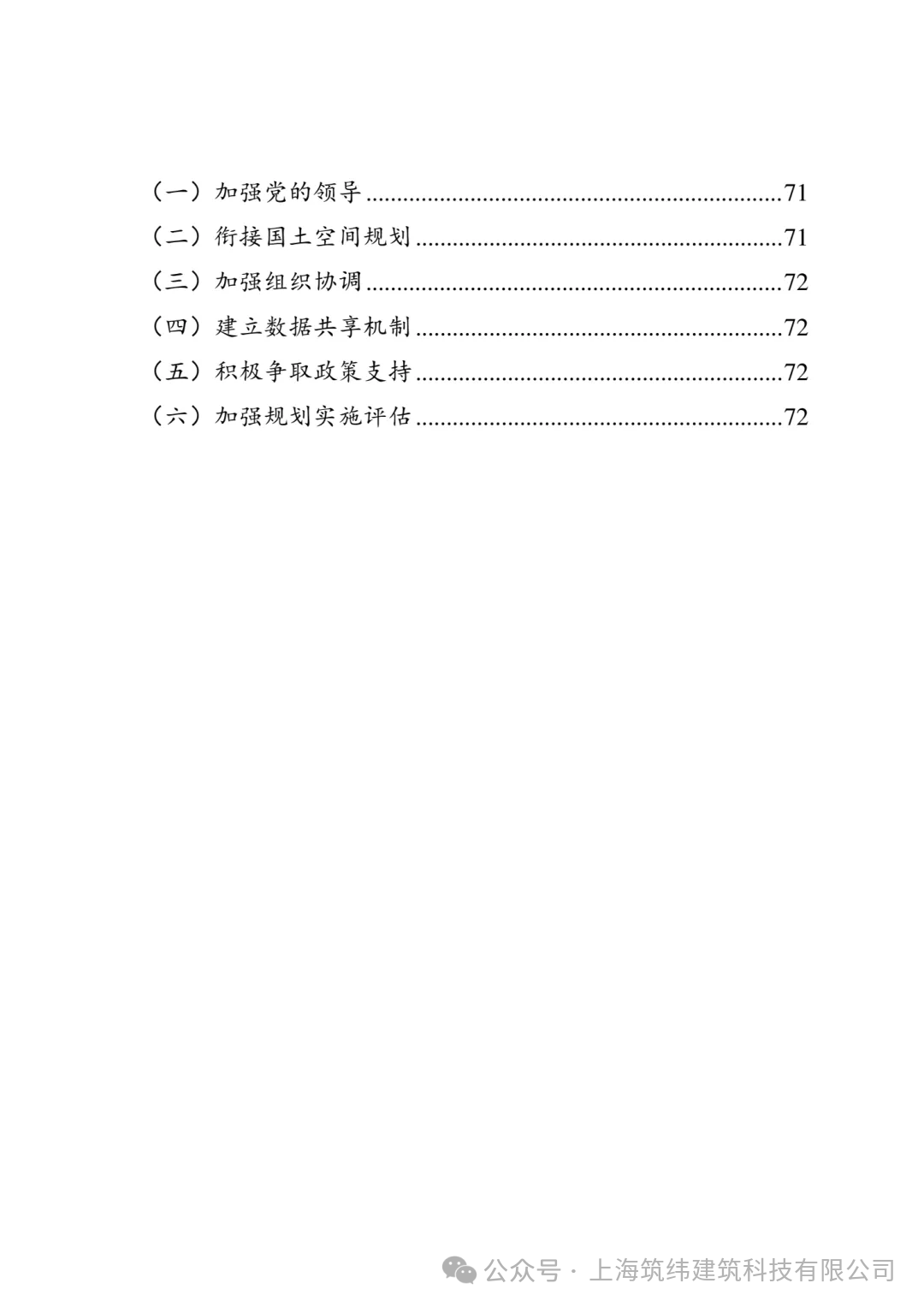
The Planning Scheme consists of a foreword and eight chapters.
Part One (Chapters 1—2) covers the planning basis and overall requirements. It mainly summarizes the development status of Shenzhen's comprehensive transport system as of the end of 2023, analyzes and assesses future trends and requirements, and puts forward the guiding ideology, basic principles, development goals, indicator system and development strategies for Shenzhen's comprehensive multidimensional transport network.
The Planning Scheme proposes that by 2035, our city will build, to a high standard, a modern comprehensive multidimensional transport network that is convenient and smooth, economical and efficient, green and intensive, intelligent and advanced, and safe and reliable; fully establish itself as a logistics center and an international comprehensive transport hub city with significant global influence; fully form the “12312” travel circle and the “123” express freight logistics circle; and achieve the “10-30-60” rapid transport service goals. By the middle of this century, it will fully build a world-leading modern, high-quality comprehensive multidimensional transport network and become a model of sustainable transport development.
The Planning Scheme follows two major principles—combining inheritance with innovation and giving equal importance to scale and quality—and carries forward the overall framework of the comprehensive multidimensional transport network indicators of the nation and Guangdong Province. It is divided into 36 indicators in two broad categories: scale and layout, and development quality. Among these, the scale and layout indicators are divided into five parts—ports, aviation, railways, highways and logistics—focusing on strengthening the advantages of transport facilities and shoring up their weaknesses; the development quality indicators are divided into five parts—convenient and smooth, economical and efficient, green and intensive, intelligent and advanced, and safe and reliable—focusing on shifting Shenzhen's comprehensive multidimensional transport network from pursuing speed and scale to placing greater emphasis on quality and efficiency.
Part Two (Chapters 3—6) covers the main tasks. Following the development approach of strengthening functions through network optimization, adding momentum through cross-boundary integration, and improving efficiency through high-quality development, and taking hub upgrading, Greater Bay Area integration, diversified convergence and quality leadership as the main directions, it outlines 18 specific tasks around four aspects: “strengthening the comprehensive multidimensional external transport network, improving the multi-tiered and smooth regional transport network, promoting the coordinated and integrated development of comprehensive transport, and promoting the high-quality development of comprehensive transport”.
First, from the perspective of external transport, with the goal of advancing our city's transformation from an international comprehensive transport hub into a world-class international comprehensive transport hub, it puts forward tasks such as building world-class ports and shipping hubs, creating a globally leading international aviation hub, expanding efficient and composite external land corridors, and constructing an oil and gas pipeline network in which sea and land complement each other, so as to build international transport corridors that connect smoothly with the world and integrate sea, land and air, and to form “5 axes and 9 directions” of external transport corridors integrated into the national transport framework.
Second, from the perspective of regional transport, at a critical juncture when the various modes of transport inside and outside the city are entering a period of networked connectivity, it promotes the shift of these modes from relatively independent development toward development that places greater emphasis on the spatial intensification, functional synergy and service integration of infrastructure. It puts forward tasks such as building an integrated and efficient intercity railway network, improving a functionally coordinated expressway and highway network, constructing a three-dimensionally coordinated Shenzhen-Hong Kong transport network, and building a highway-railway composite Shenzhen-Shanwei transport network, so as to continuously improve the integrated rapid transport network of the Guangdong-Hong Kong-Macao Greater Bay Area and form a “1-hour Greater Bay Area, half-hour inner bay” transport circle.
Third, from the perspective of coordinated integration, with the goal of innovating an integrated development model of spatial intensification and industrial synergy, it puts forward tasks such as promoting the integrated convergence of corridors and hubs, fostering the integrated development of transport and logistics, accelerating the building of a low-altitude economy center, promoting the high-quality development of intelligent connected vehicles, and advancing the integrated development of tourism and transport, so as to explore new models for the composite and shared use of comprehensive transport space, create new examples of the deep integrated development of transport and logistics, and move the integrated development of transport and related industries onto a new level.
Fourth, from the perspective of high-quality development, with the goal of creating high-quality development that is safe, green, intelligent and shared, it puts forward tasks such as building a more sustainable green transport system, establishing a transport service system that is friendly to all, strengthening all-weather and full-life-cycle safety assurance, and constructing a digital and intelligent facility system, so as to create a model of safe, green and sustainable transport development and build a benchmark for the intelligent development of comprehensive transport and a paradigm of equitable and inclusive transport development. Part Three (Chapters 7—8) covers environmental impact assessment and safeguard measures. The environmental impact assessment part includes three aspects: analysis of the environmental impact of plan implementation, evaluation of the environmental impact of plan implementation, and measures and recommendations for preventing and mitigating impacts. The safeguard measures put forward initiatives in six aspects: strengthening the leadership of the Party, connecting with territorial spatial planning, strengthening organizational coordination, establishing a data-sharing mechanism, actively seeking policy support, and strengthening the evaluation of plan implementation.
III. Main Features of the Planning Scheme
First, systematic planning and steady advancement. The planning and layout of the comprehensive multidimensional transport network should be moderately advanced, while excessive advance in construction and implementation is strictly controlled. Grasping the two keys of “comprehensive” and “multidimensional”, it adheres to taking the optimization of existing assets as the main thread, focuses on promoting the physical interconnection of the comprehensive transport network layout and the coordinated integration of its functional effects, and works to realize the “integration of all modes, three-dimensional spatial layout, and integrated transport services”.
Second, coordinated linkage and integrated convergence. Greater emphasis is placed on the coordinated and integrated development of new transport business models, accelerating the improvement of new infrastructure networks, operational standards and rules, and multi-party collaborative management mechanisms suited to new business models such as unmanned aviation, intelligent connected vehicles, shared mobility and integrated energy replenishment, so as to promote the vigorous development of the new economy.
Third, people first and quality leadership. It fully implements the new development philosophy of innovation, coordination, green development, openness and sharing, adheres to a people-centered approach, and builds transport that satisfies the people. It highlights the central position of innovation, upholds the concept that lucid waters and lush mountains are invaluable assets, coordinates development and security, puts forward requirements for promoting the high-quality development of comprehensive transport, and enhances the quality and comprehensive benefits of transport development.
❖ END ❖
END
The views expressed are the author's own Copyright © Zhuwei Architectural Technology
Reproduction without authorization is prohibited
Please credit the source when reposting: Zhuwei Architectural Technology
Zhuwei Architectural Technology is a new-type technical services company specializing in integrated design optimization, BIM consulting and prefabricated construction design consulting. Our team brings together senior engineers from leading design institutes, former executives of real-estate companies, BIM engineers and prefabrication engineers, delivering integrated design optimization, refined drawing review, BIM consulting with MEP detailing, and prefabricated design services.
Design optimization consulting: Positioned as an extension and complement to the design management of real-estate developers, we focus on consulting and optimization for civil buildings. Across the whole process — or at key stages required by the client — we control the economy, rationality and safety of the design, eliminating unnecessary cost while measurably improving drawing quality, achieving "lower cost, higher efficiency".
BIM consulting: Through digital construction technology we help designers reduce errors and improve quality in the design phase, help contractors save cost and plan high-quality MEP installation in the construction phase, and extend BIM models into facility management for the operation phase — in collaboration with mainstream software vendors.
Prefabricated design consulting: Whole-process design on BIM platforms, using Revit and Tekla for PC detailing. Component geometry and reinforcement are linked parametrically — what you see is what you get. We deliver Industry 4.0-ready drawings with cut-length data for every rebar, and IoT-enabled support for production, storage, transport and installation of PC components.
Our expert team comes from leading design institutes, with deep technical grounding and extensive experience in dual-track design and optimization; its technical capability and control are industry-leading.
—— This article is auto-synced from the WeChat Official Account “Zhuwei Architectural Technology”. Read the original ——