Major News! Ten Departments Jointly Issue Document: Full National Support for BIM and Smart Construction! "Implementation Guidelines for Coordinated Digital and Green Transformation and Development" Released
WeChat Sync · Xiaowei · 2024-09-06
The following article is sourced from the Chinese Government Website, authorBIM Daily Tip
This article is published by the Brand Operations Center of Baimu Lianchuang
■ Source | Chinese Government Website

DocumentOverview
According to the Chinese Government Website, in order to better guide government departments, local authorities, social organizations, and enterprises in carrying out the coordinated digital and green transformation, recently the General Secretariat of the Cyberspace Administration of China, the General Office of the National Development and Reform Commission, the General Office of the Ministry of Housing and Urban-Rural Development, and other 10 departments jointly issued the Implementation Guide for Coordinated Digital and Green Transformation (hereinafter referred to as the Guide).
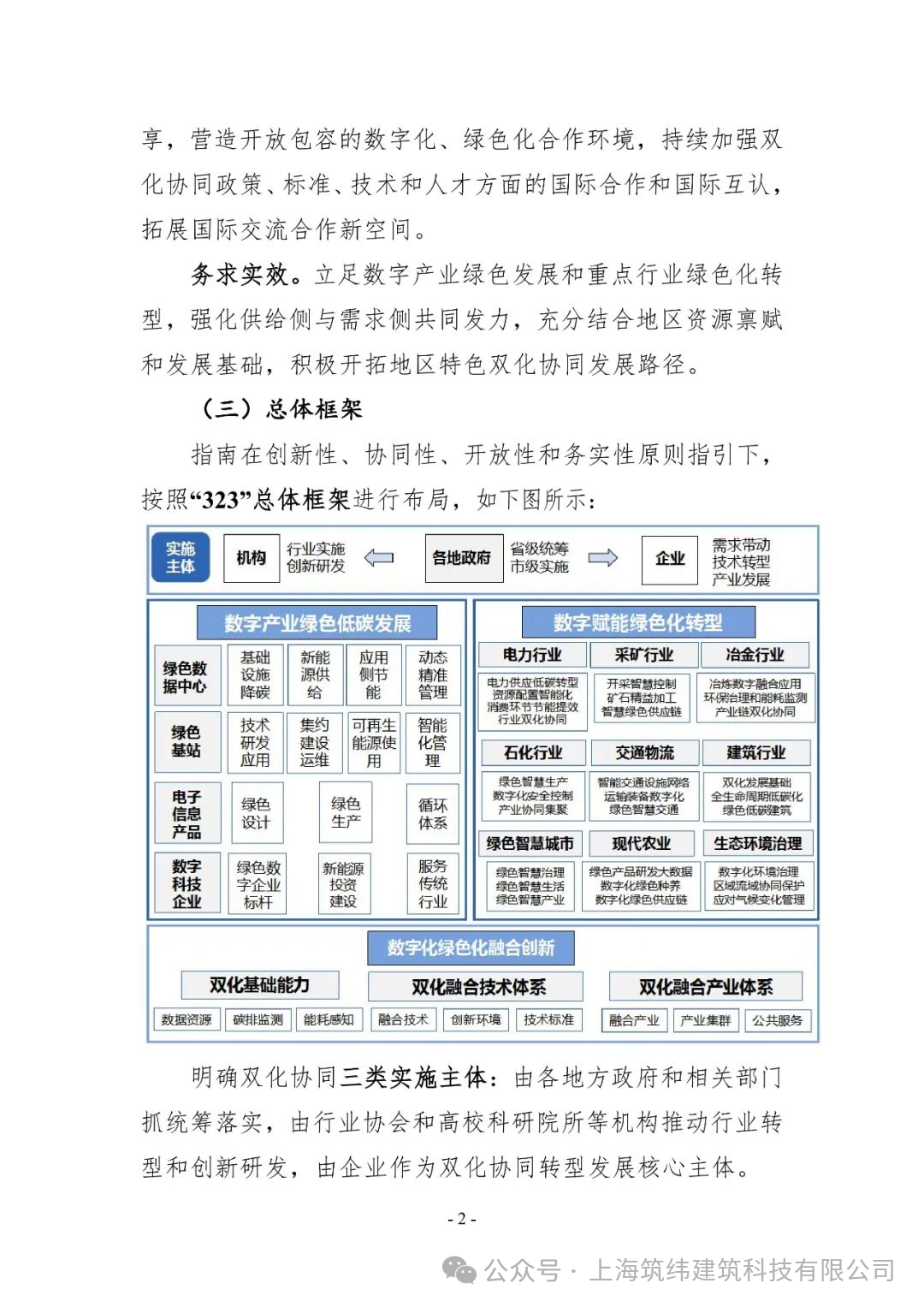
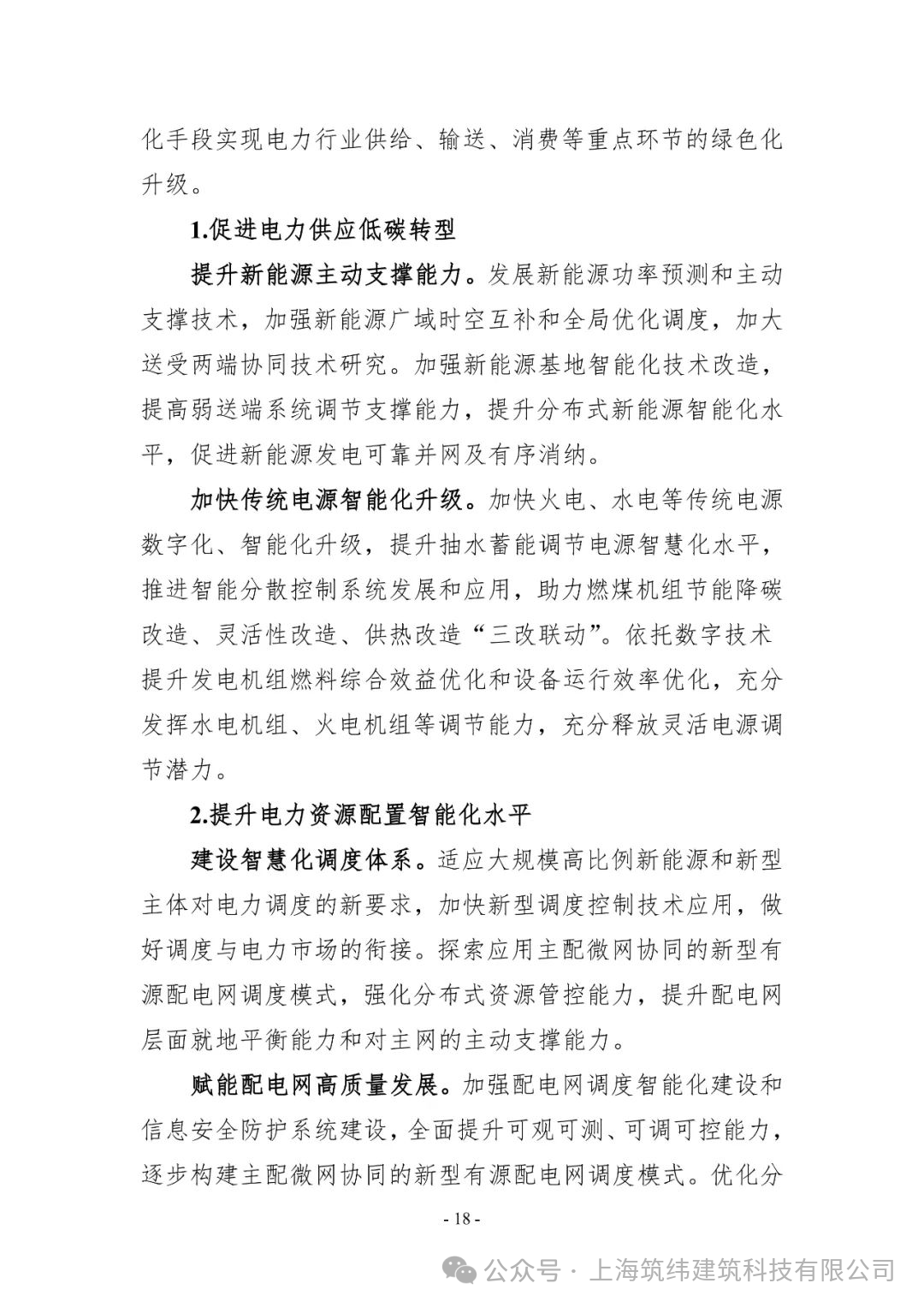
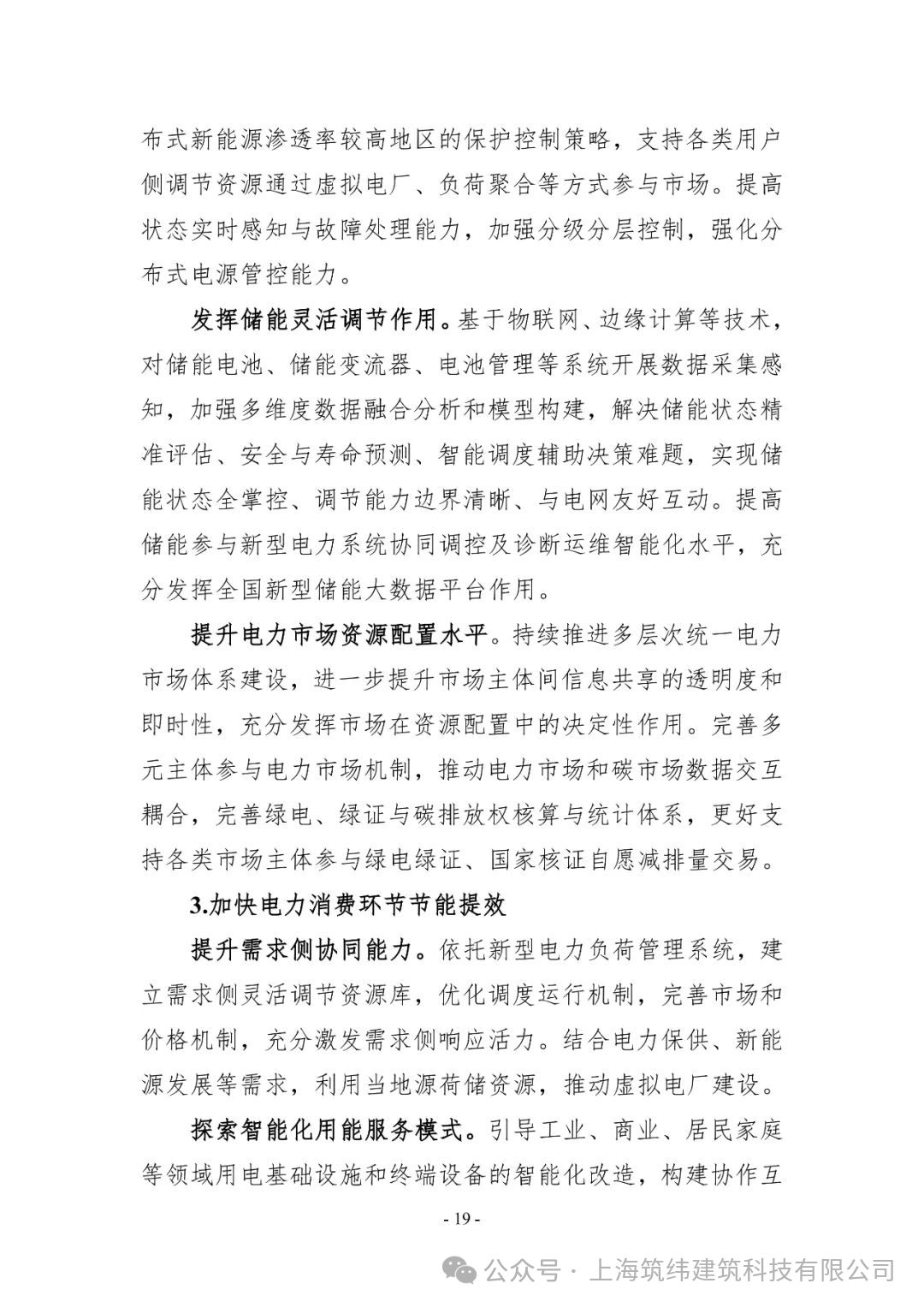
The Guide points out that, under the guidance of the principles of innovation, coordination, openness, and pragmatism, the layout follows the “323” overall framework, namely three types of implementing entities, two major focus directions, and three aspects of layout. The Guide proposes enabling green transformation with digital technologies. This part focuses on nine major sectors, covering electric power, mining, metallurgy, petrochemicals, transportation and logistics, construction, green smart cities, modern agriculture, and ecological environment governance, and clarifies the green transformation paths for key links such as facilities, technologies, and applications enabled by digital technologies.
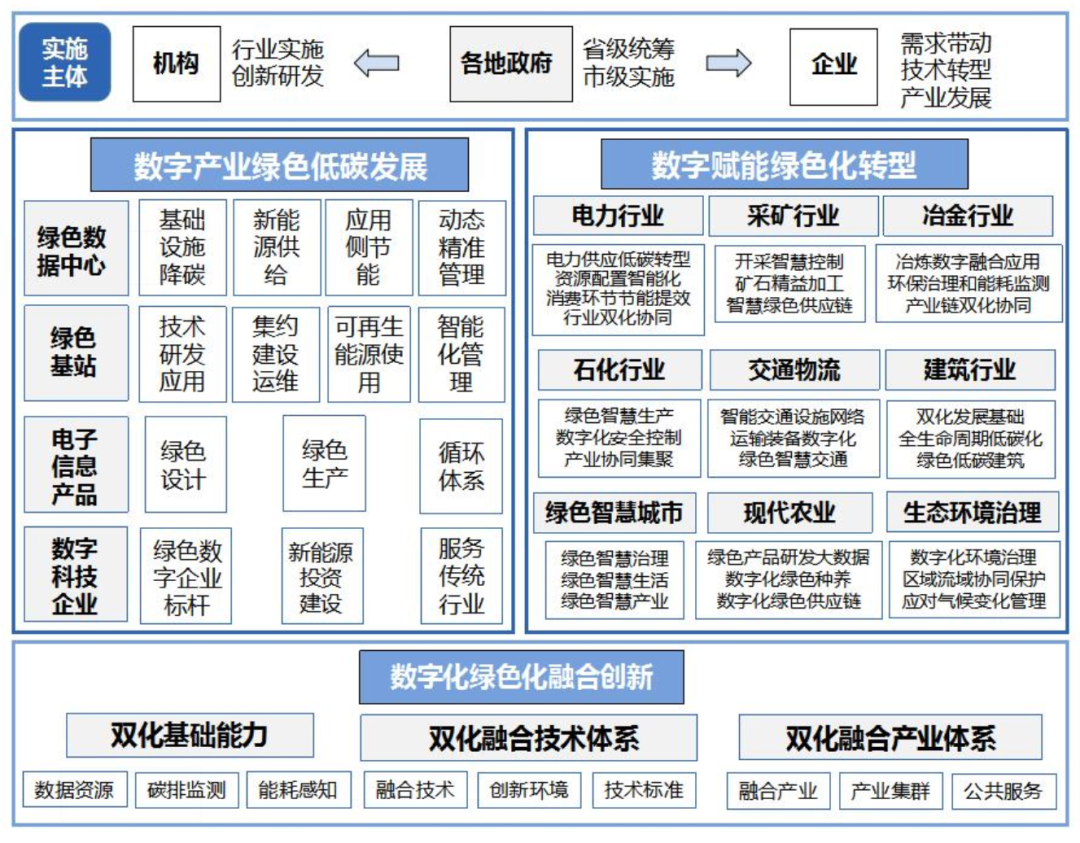
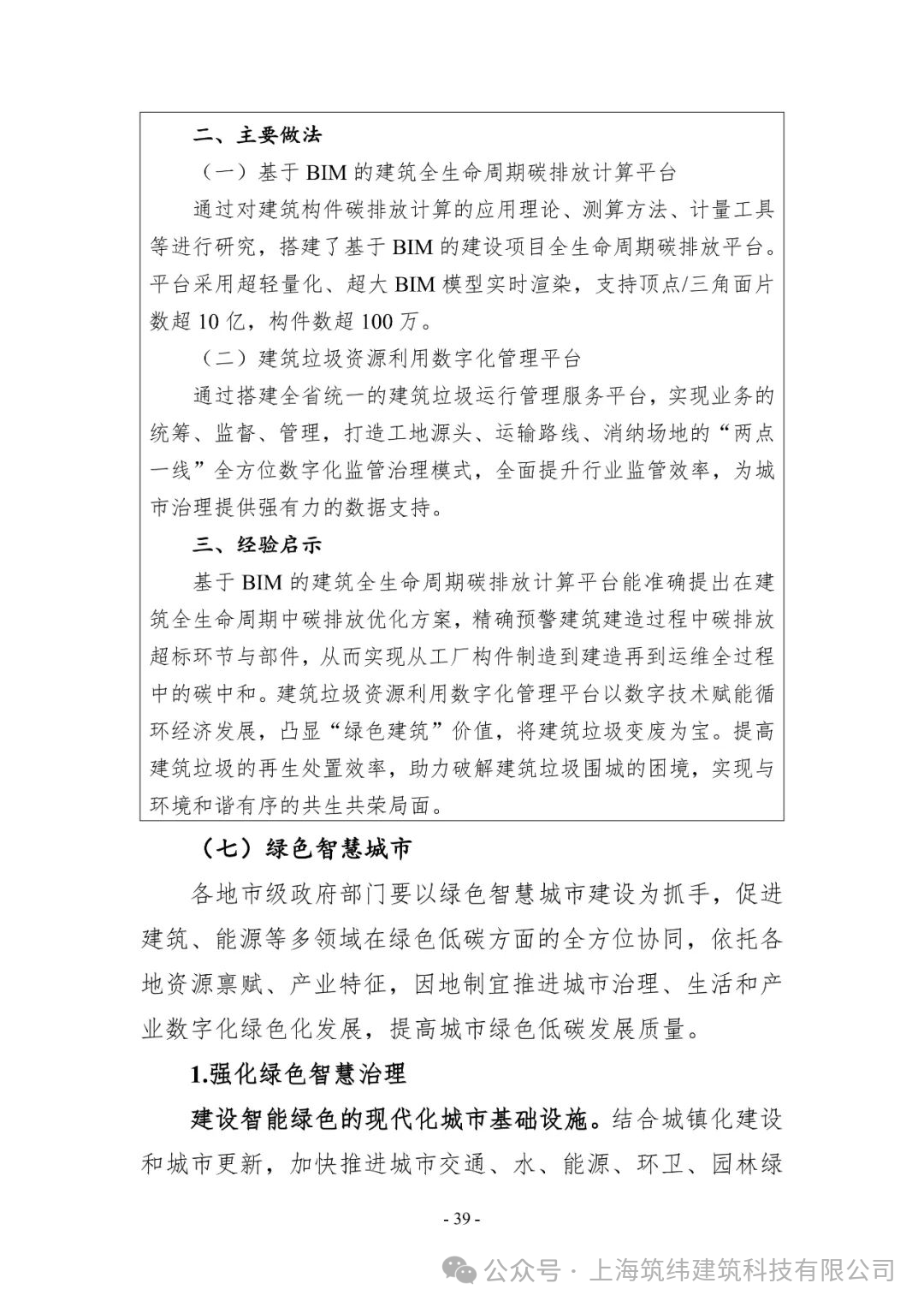
Among these, for the construction industry, the Guide proposes that local governments and relevant departments should strengthen inter-departmental coordination, and industry associations and relevant enterprises should strengthen collaboration. By improving the foundation for coordinated digital and green development in the construction industry, promoting low-carbon construction across the whole building life cycle, and accelerating the development of the green low-carbon building industry, the green development level of the construction industry will be comprehensively raised, and the coordinated development of buildings with cities, transportation, and energy will be strengthened. From the aspects of improving the foundation for coordinated digital and green development in the construction industry, promoting low-carbon development across the whole building life cycle, and accelerating the development of the green low-carbon building industry — 3 aspects in total — the Guide puts forward 7 specific measures.
The Guide explicitly proposes:
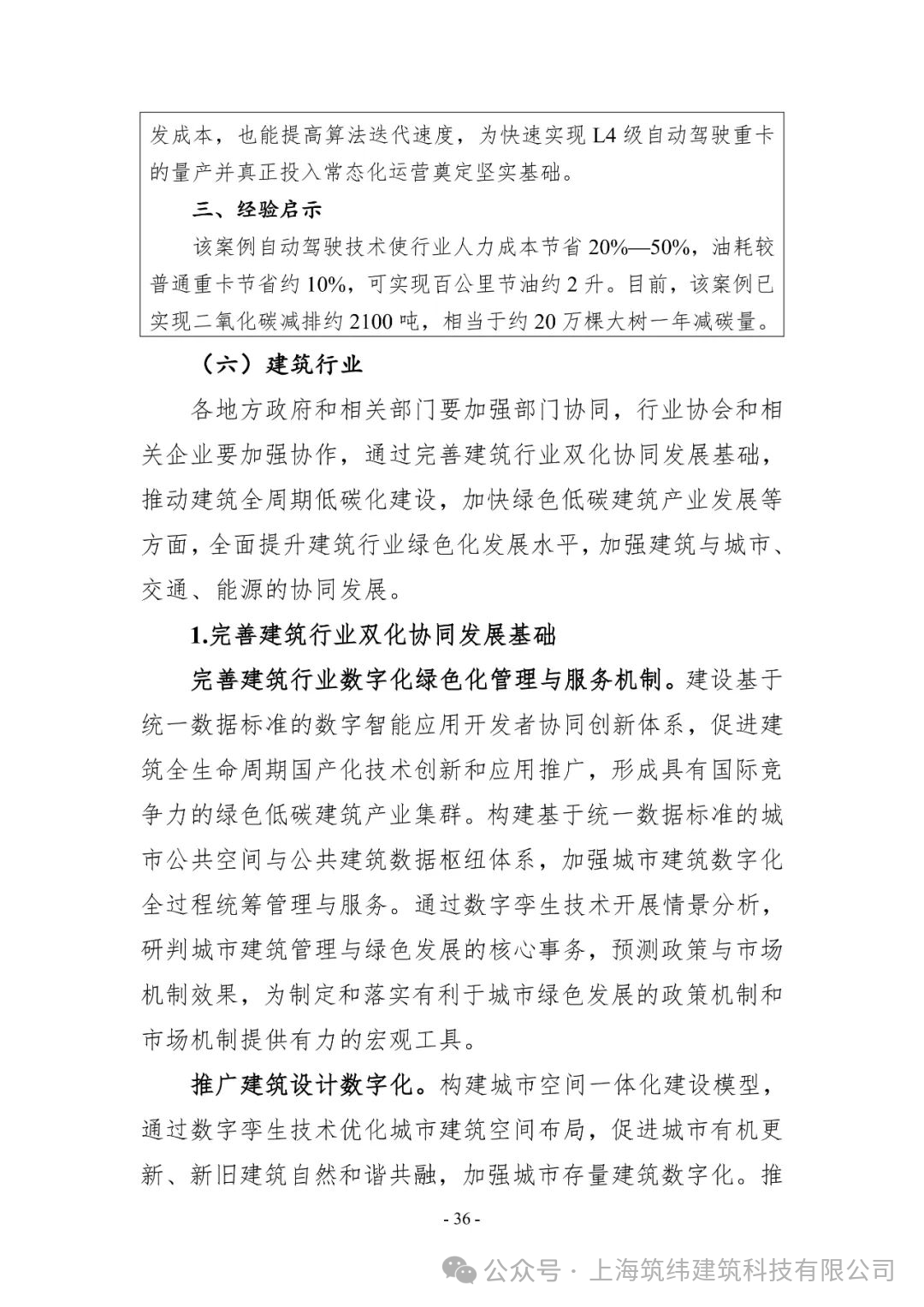
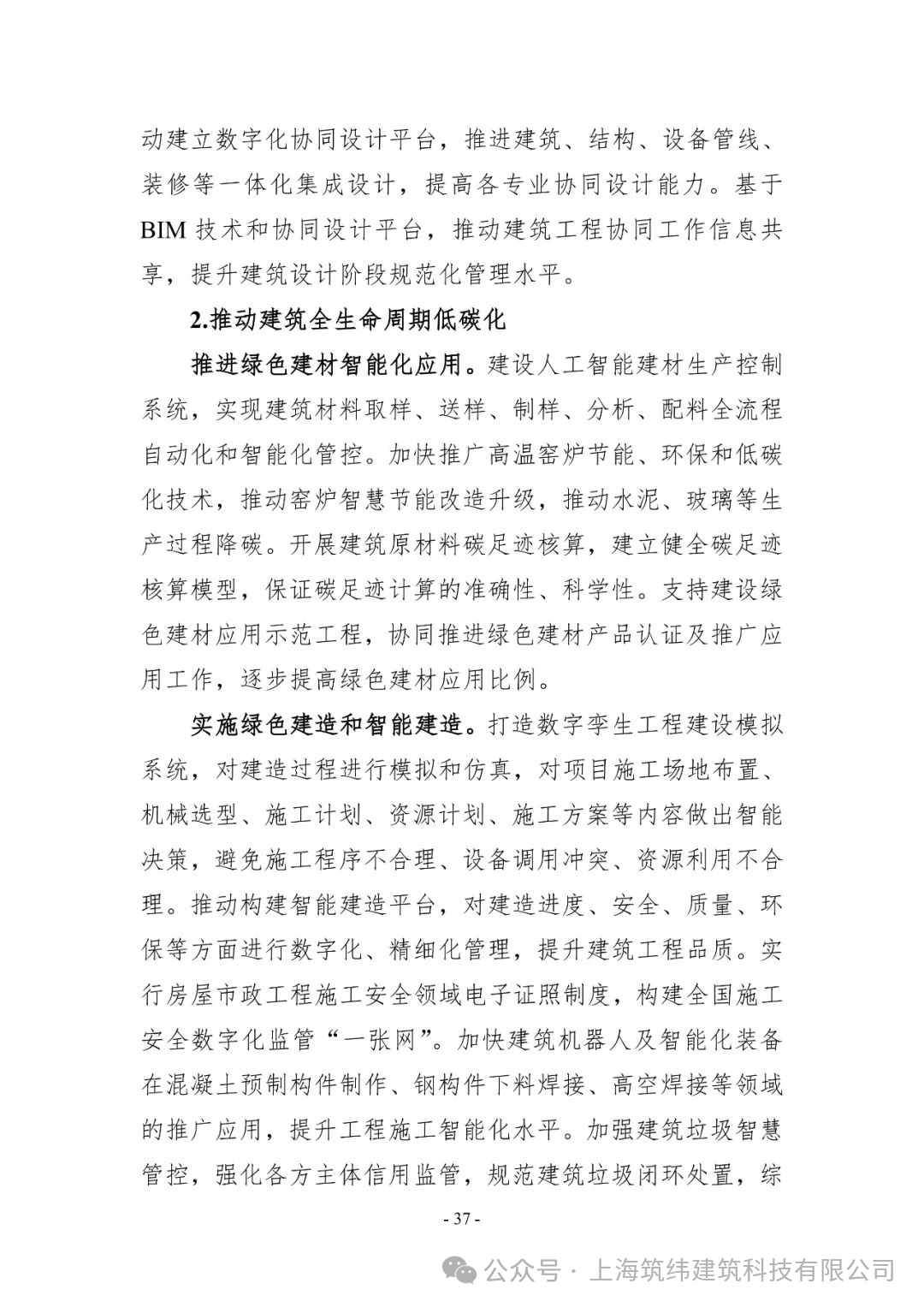
Promoting the digitalization of building design. Build an integrated urban space development model and optimize the layout of urban building spaces through digital twin technology to promote organic urban renewal and the natural and harmonious integration of old and new buildings, and strengthen the digitalization of the existing building stock in cities. Promote the establishment of digital collaborative design platforms to advance the integrated design of architecture, structure, equipment and pipelines, interior fit-out, etc., and improve multi-disciplinary collaborative design capabilities.Based on BIM technology and collaborative design platforms, promote information sharing for collaborative work in building projects and enhance standardized management during the building design stage.
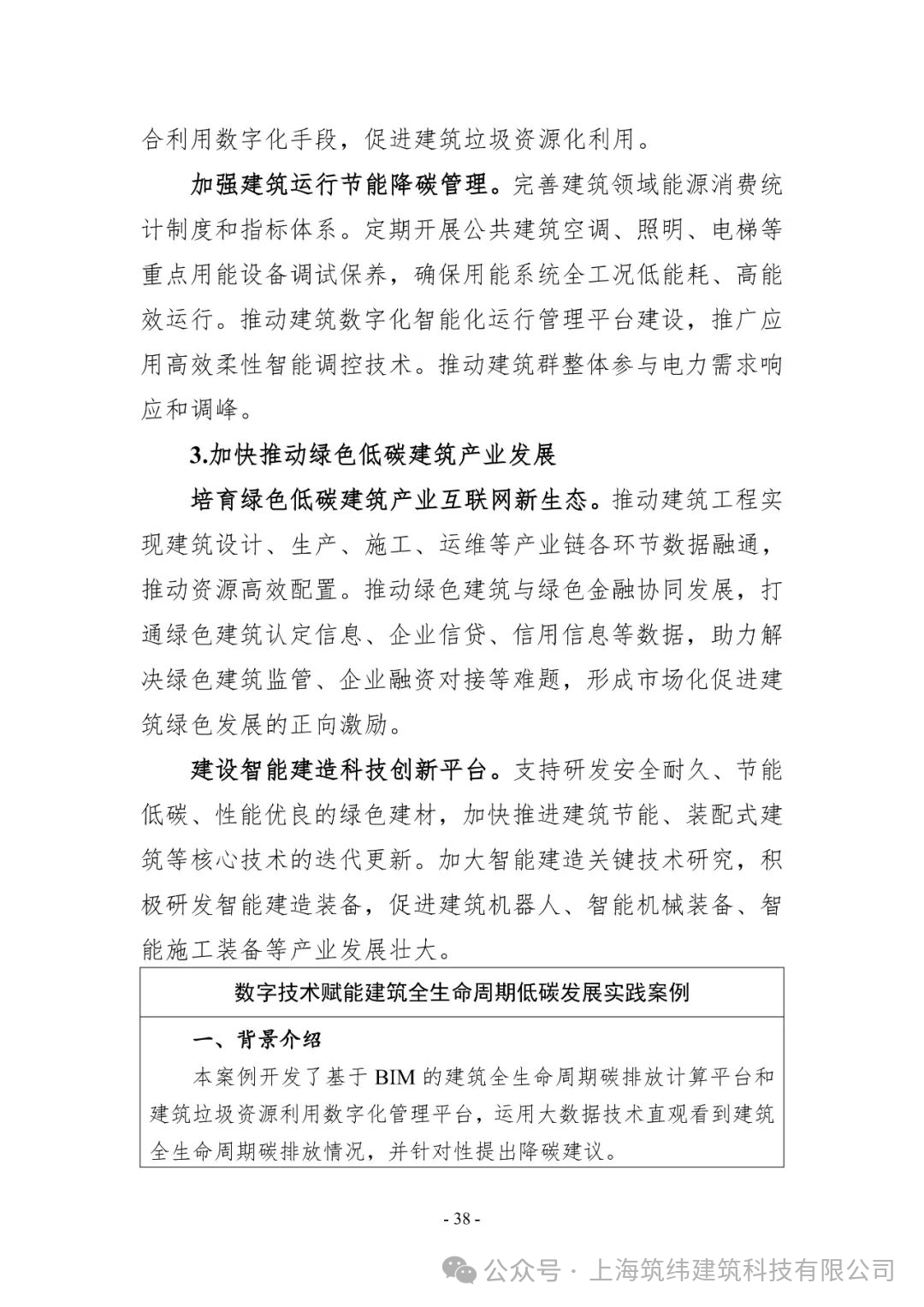
Implementing green construction and smart construction. Build a digital twin construction simulation system to simulate and emulate the construction process, and make intelligent decisions on construction site layout, machinery selection, construction planning, resource planning, and construction schemes, so as to avoid unreasonable construction procedures, equipment dispatch conflicts, and irrational resource utilization. Promote the development of smart construction platforms to manage construction progress, safety, quality, and environmental protection in a digital and refined manner, thereby improving the quality of building projects. Implement an electronic certificate system in the field of construction safety for housing and municipal projects, and build a nationwide digital supervision “single network” for construction safety. Accelerate the promotion and application of construction robots and intelligent equipment in fields such as the fabrication of concrete precast components, cutting and welding of steel components, and high-altitude welding, so as to raise the intelligent level of construction. Strengthen the smart control of construction waste, reinforce credit-based supervision of all parties involved, standardize the closed-loop disposal of construction waste, and comprehensively apply digital means to promote the resource utilization of construction waste.
Building a science and technology innovation platform for smart construction. Support the R&D of green building materials that are safe and durable, energy-efficient and low-carbon, and high-performing, and accelerate the iterative upgrading of core technologies such as building energy conservation and prefabricated buildings. Increase research on key technologies for smart construction, actively develop smart construction equipment, and promote the growth and expansion of industries such as construction robots, intelligent machinery, and intelligent construction equipment.
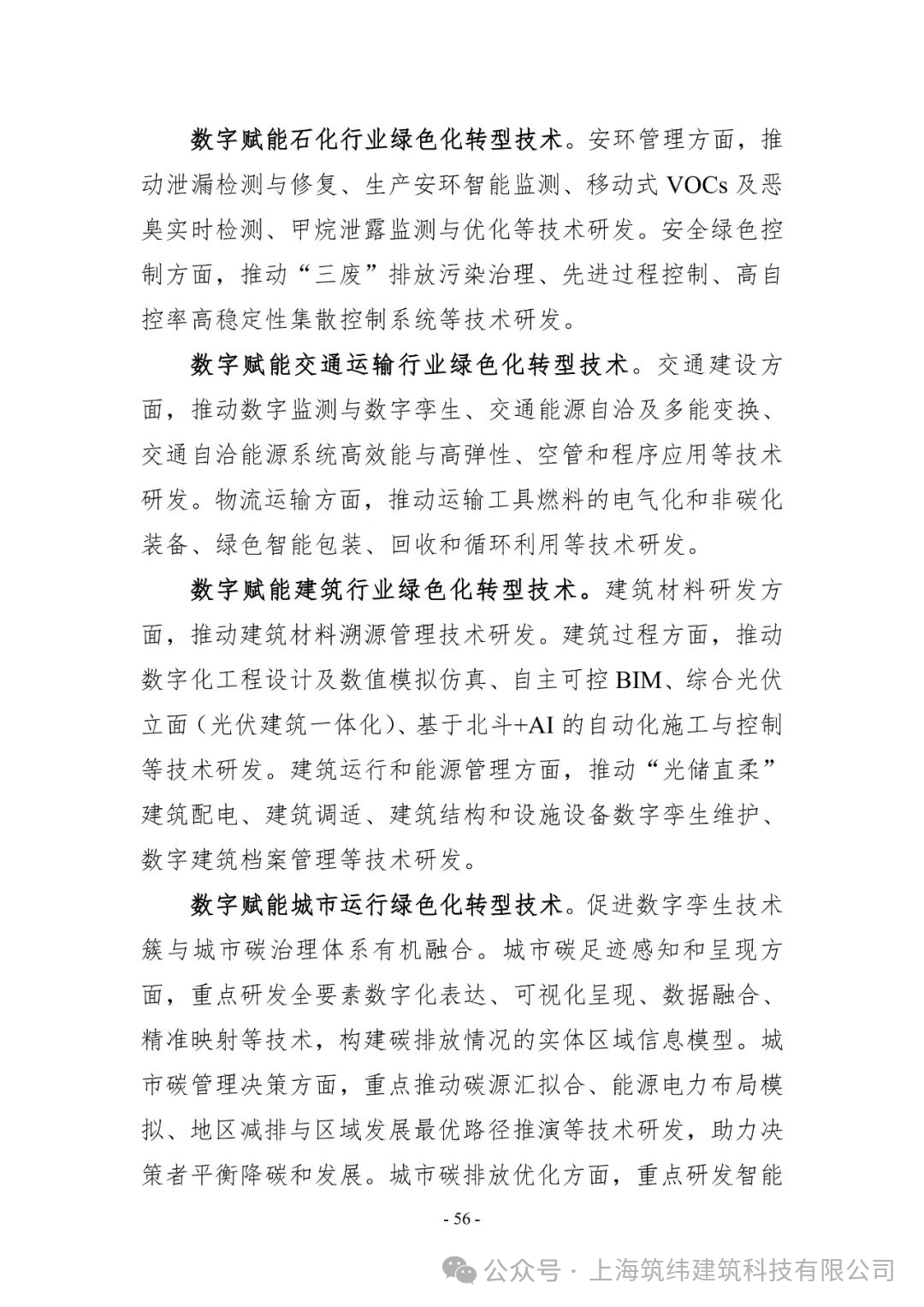
Technologies for digital empowerment of green transformation in the construction industry. In terms of building materials R&D, promote the development of traceability management technologies for building materials. In terms of the construction process, promote R&D in digital engineering design and numerical simulation, autonomous and controllable BIM, integrated photovoltaic facades (building-integrated photovoltaics), and BeiDou+AI-based automated construction and control. In terms of building operation and energy management, promote R&D in “PV-storage-DC-flex” building power distribution, building commissioning, digital twin maintenance of building structures, facilities and equipment, and digital building archive management.
Official Notice
Notice on Issuing the Implementation Guide for Coordinated Digital and Green Transformation
To the cyber affairs offices of the Party committees, development and reform commissions, industry and information technology authorities, natural resources authorities, ecology and environment departments (bureaus), housing and urban-rural development departments (bureaus, commissions), transport departments (bureaus, commissions), agriculture and rural affairs (agriculture and animal husbandry) departments (bureaus, commissions), market supervision administrations (departments, commissions), and data administrations of all provinces, autonomous regions, municipalities directly under the Central Government, cities with special planning status, and the Xinjiang Production and Construction Corps:
To better guide government departments, local authorities, social organizations, and enterprises in carrying out the coordinated digital and green transformation, the Cyberspace Administration of China, the National Development and Reform Commission, the Ministry of Industry and Information Technology, the Ministry of Natural Resources, the Ministry of Ecology and Environment, the Ministry of Housing and Urban-Rural Development, the Ministry of Transport, the Ministry of Agriculture and Rural Affairs, the State Administration for Market Regulation, and the National Data Administration jointly organized the compilation of the Implementation Guide for Coordinated Digital and Green Transformation (hereinafter the Implementation Guide). The Implementation Guide is hereby issued to you for reference in advancing the coordinated digital and green transformation.
When using this Guide, all regions should focus on promoting high-quality development and accelerating the development of new quality productive forces, fully grasp their own positioning in regional and industrial development, build on their own resource endowments, actively foster distinctive industries and functional advantages, accelerate coordinated digital and green development, advance the transformation and upgrading of energy resources, industrial structure, and consumption structure, and promote the green development of the economy and society.
General Secretariat of the Office of the Central Cyberspace Affairs Commission
General Office of the National Development and Reform Commission
General Office of the Ministry of Industry and Information Technology; General Office of the Ministry of Natural Resources
General Office of the Ministry of Ecology and Environment; General Office of the Ministry of Housing and Urban-Rural Development
General Office of the Ministry of Transport; General Office of the Ministry of Agriculture and Rural Affairs
General Office of the State Administration for Market Regulation
General Department of the National Data Administration
Attachment
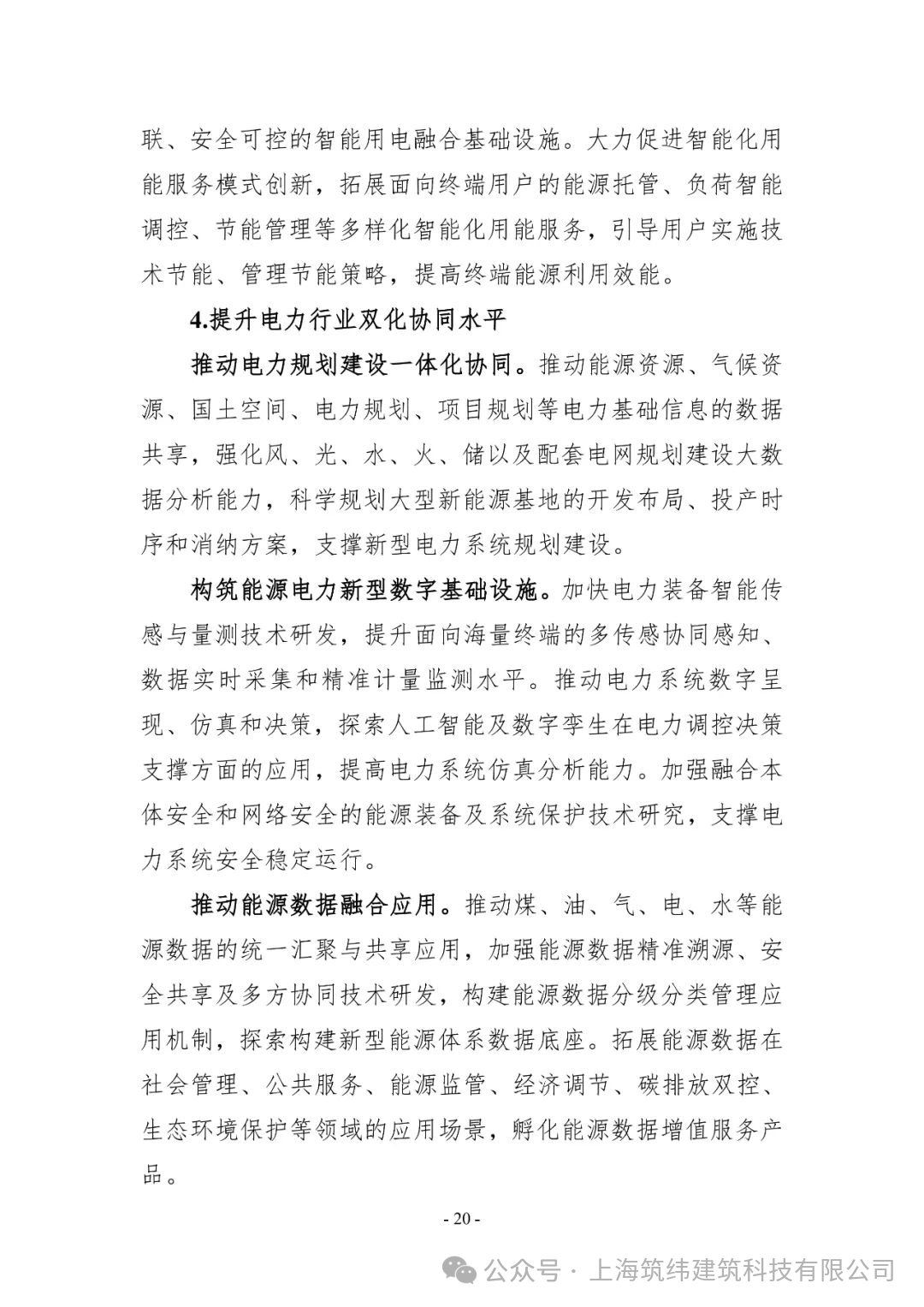
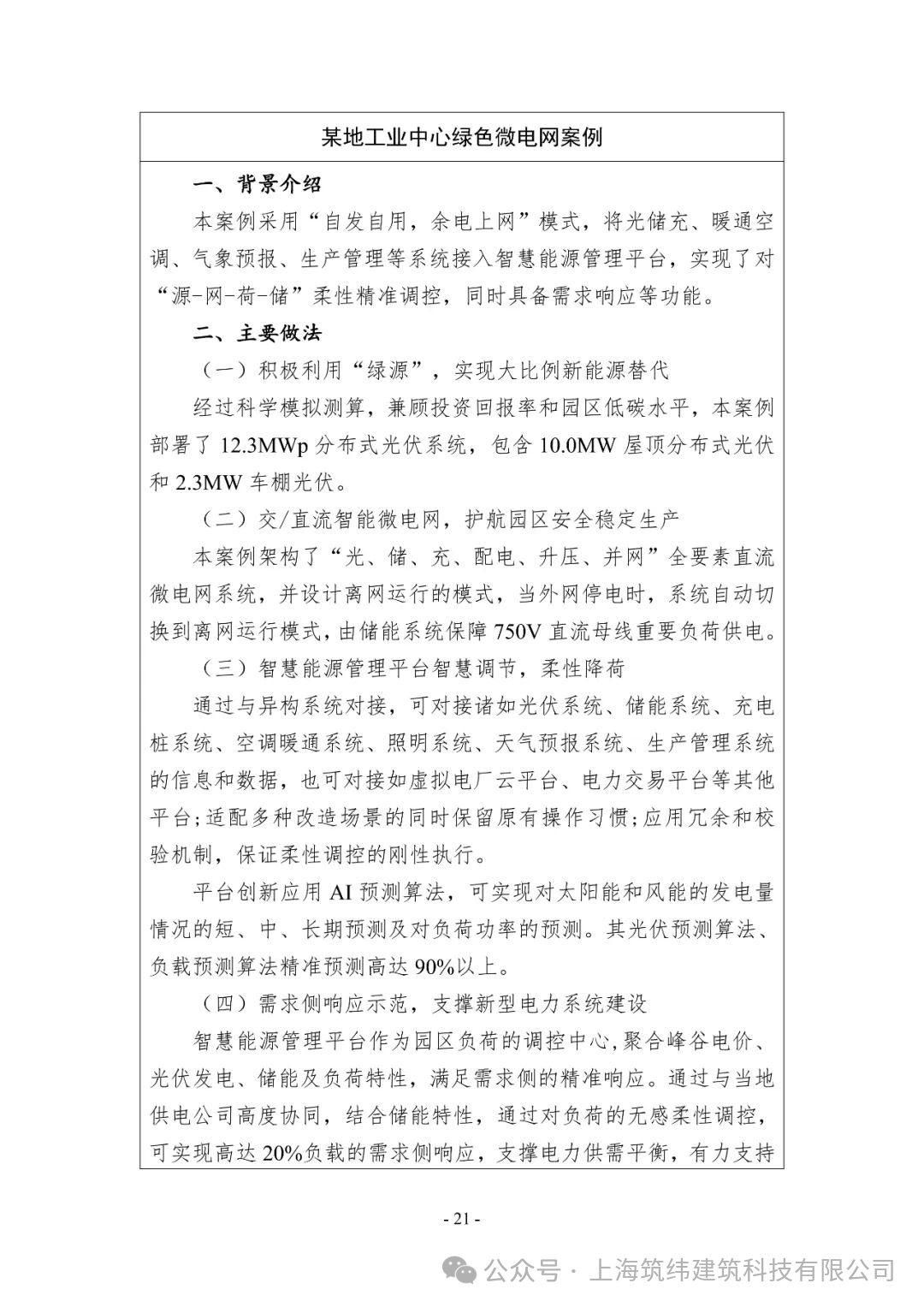
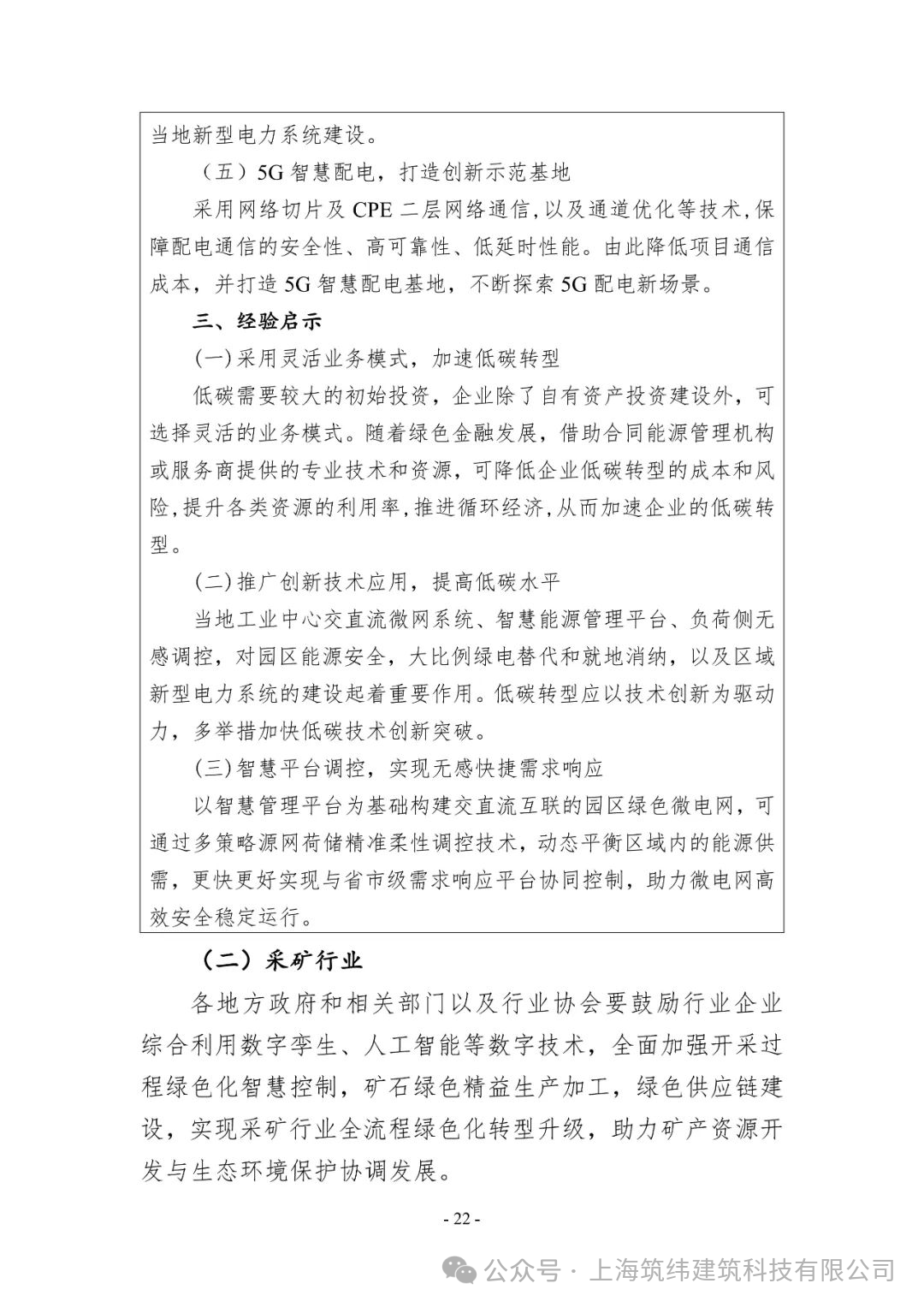
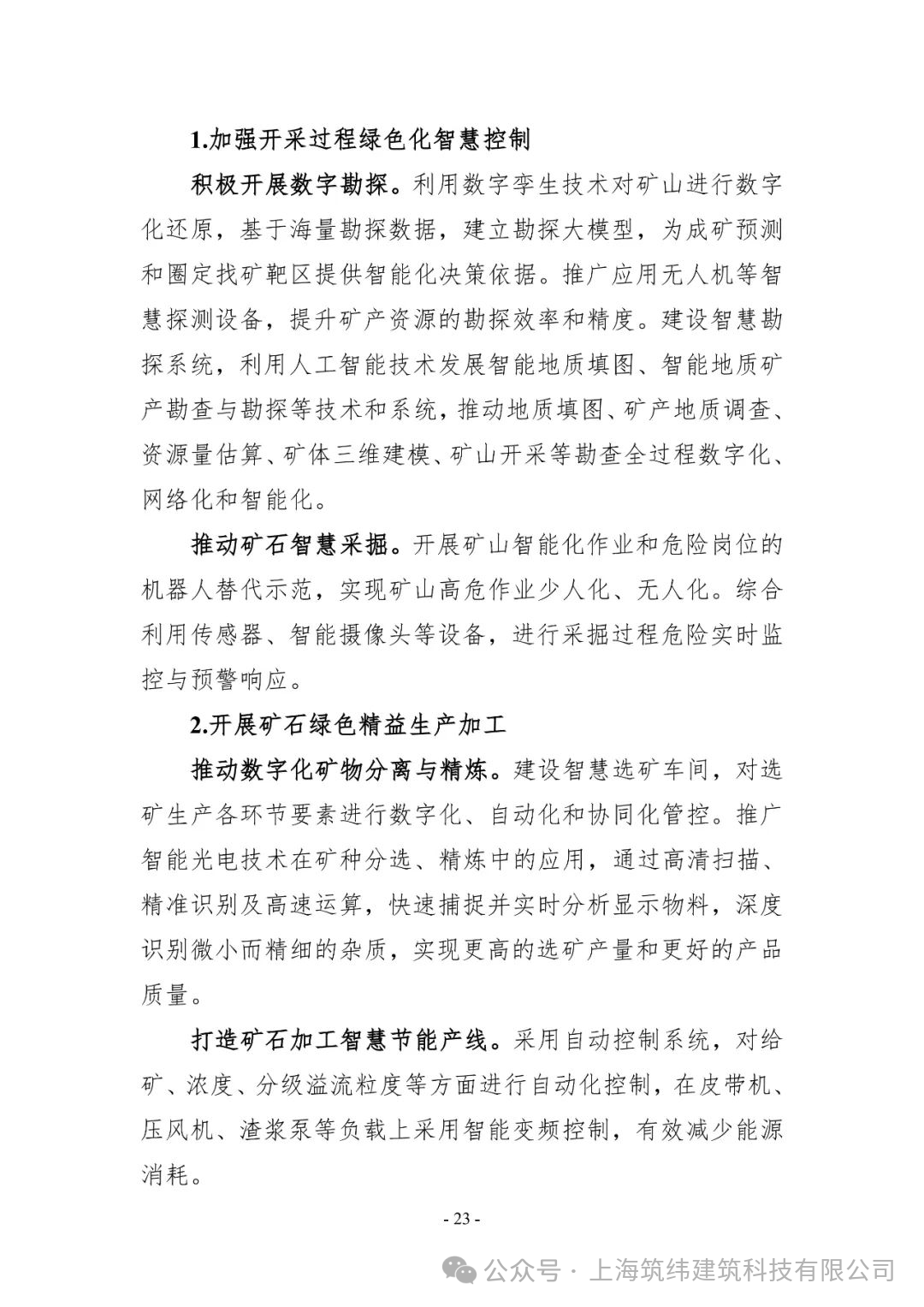
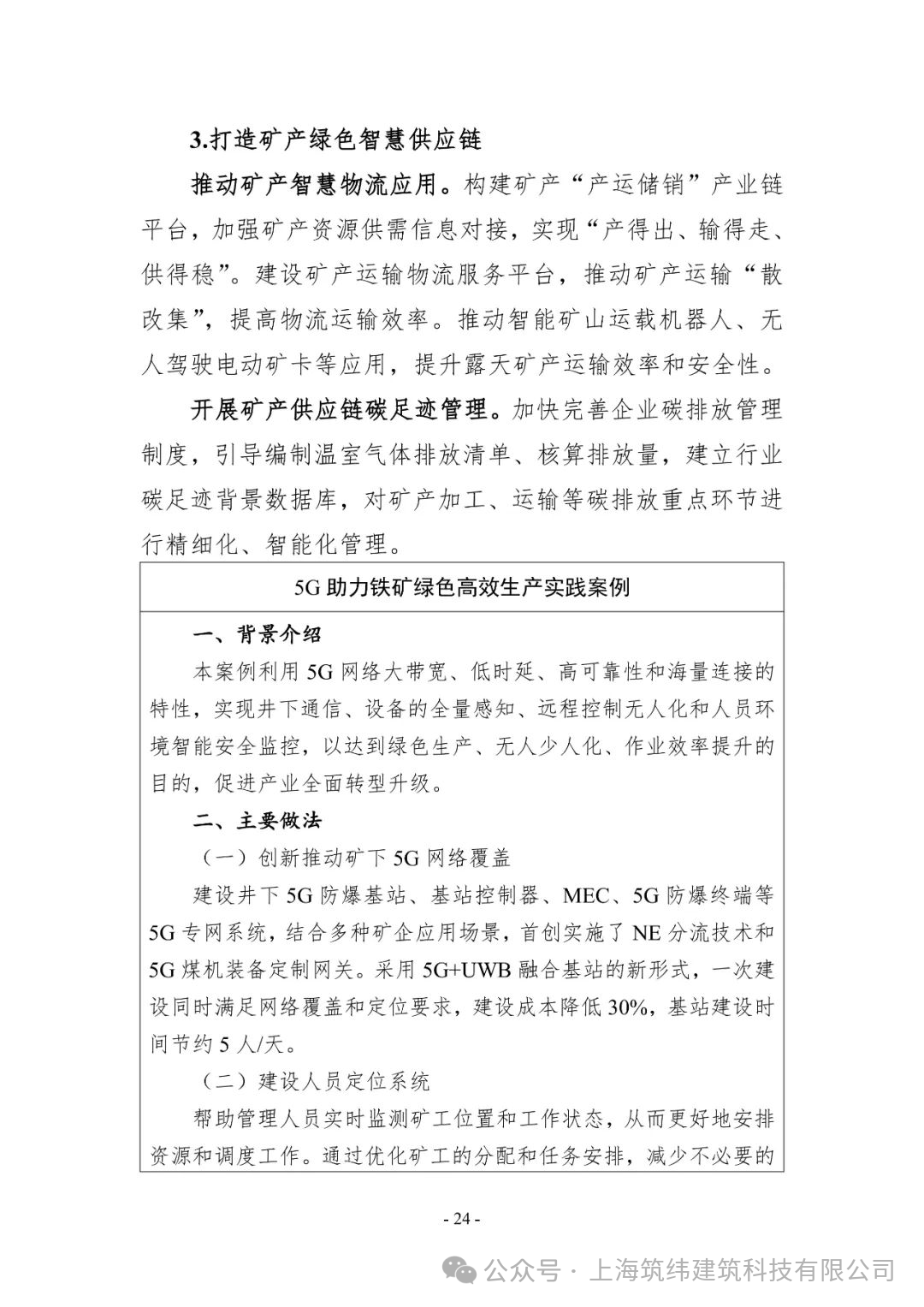
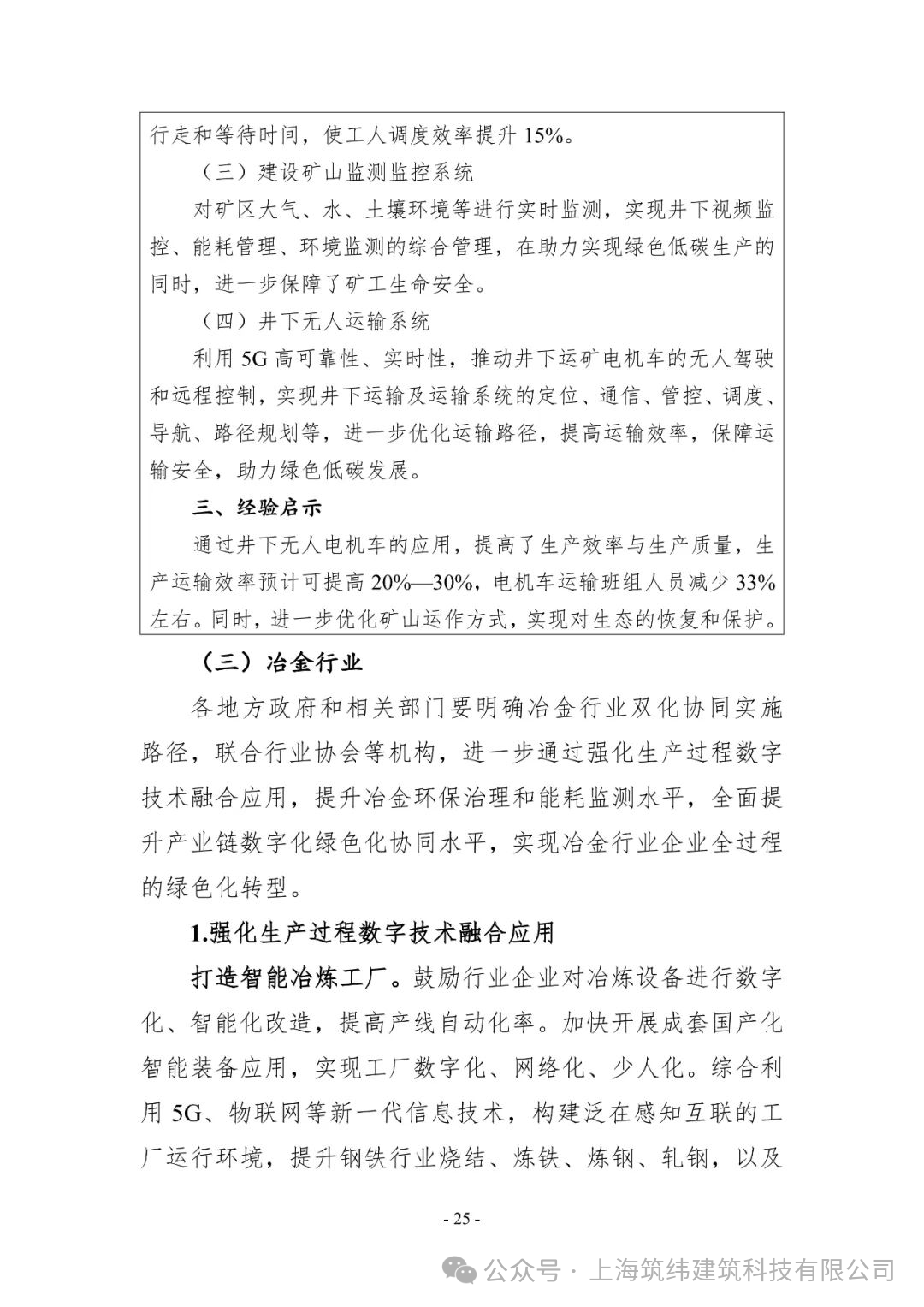
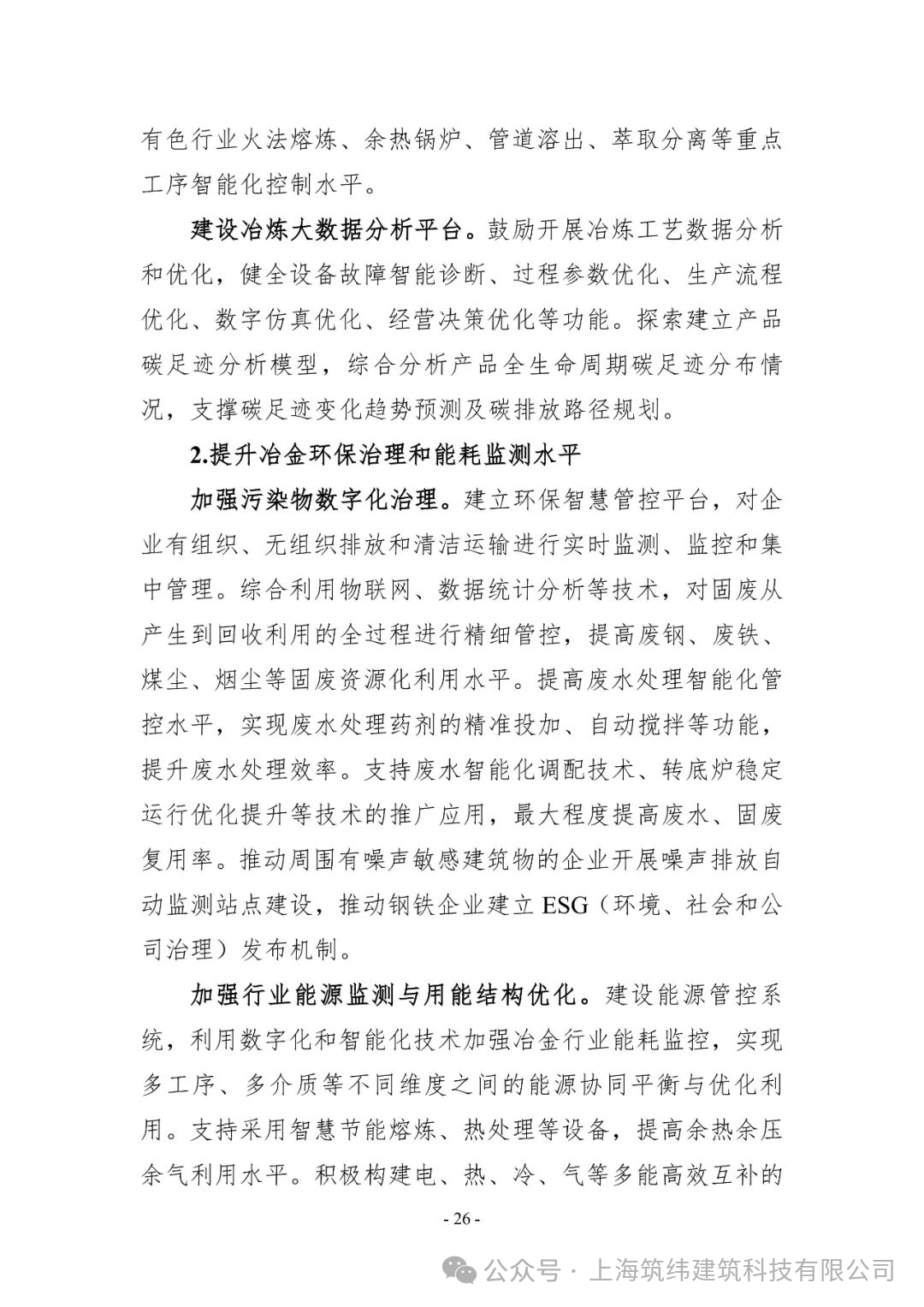
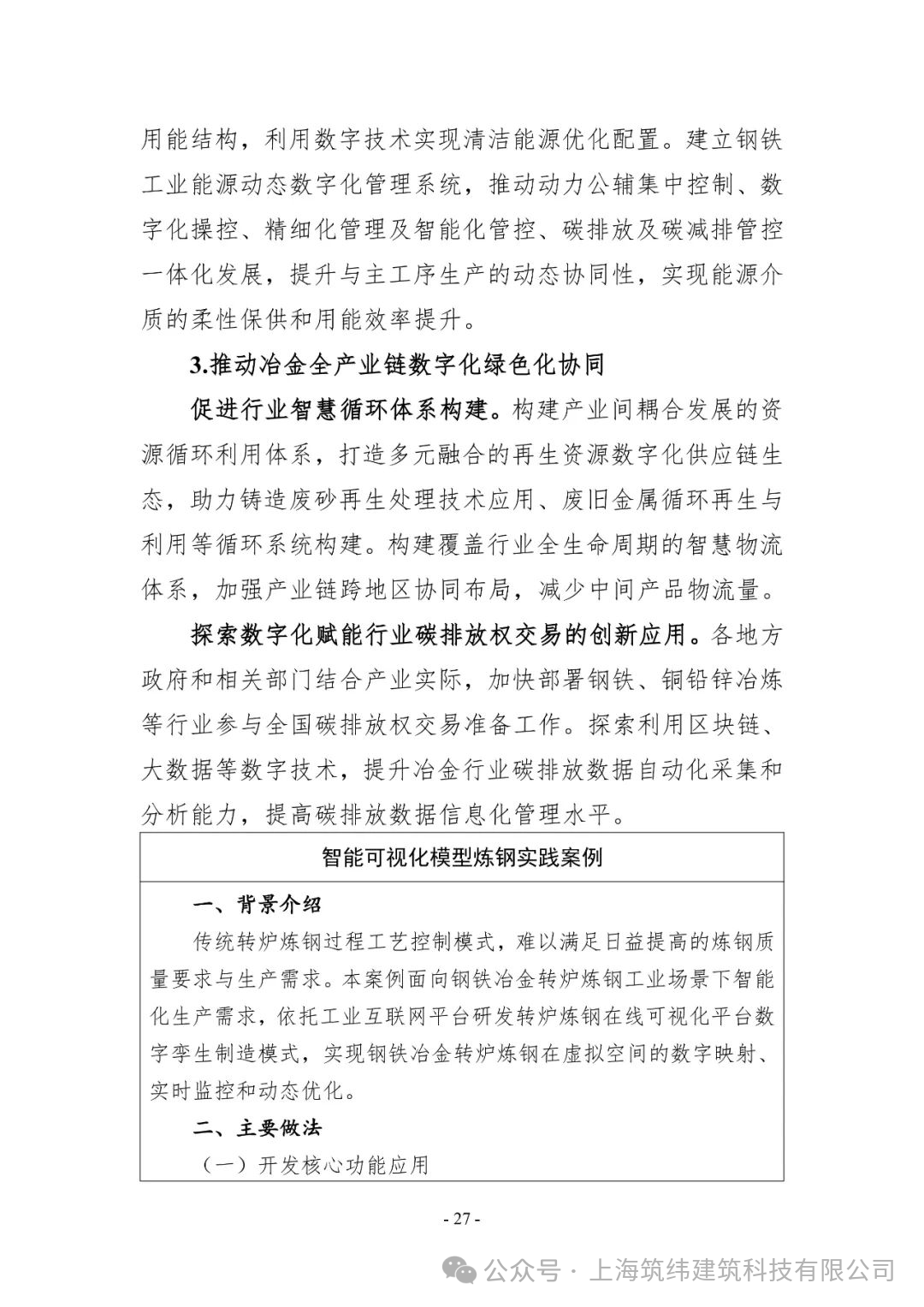
Implementation Guide for Coordinated Digital and Green Transformation
Fore word
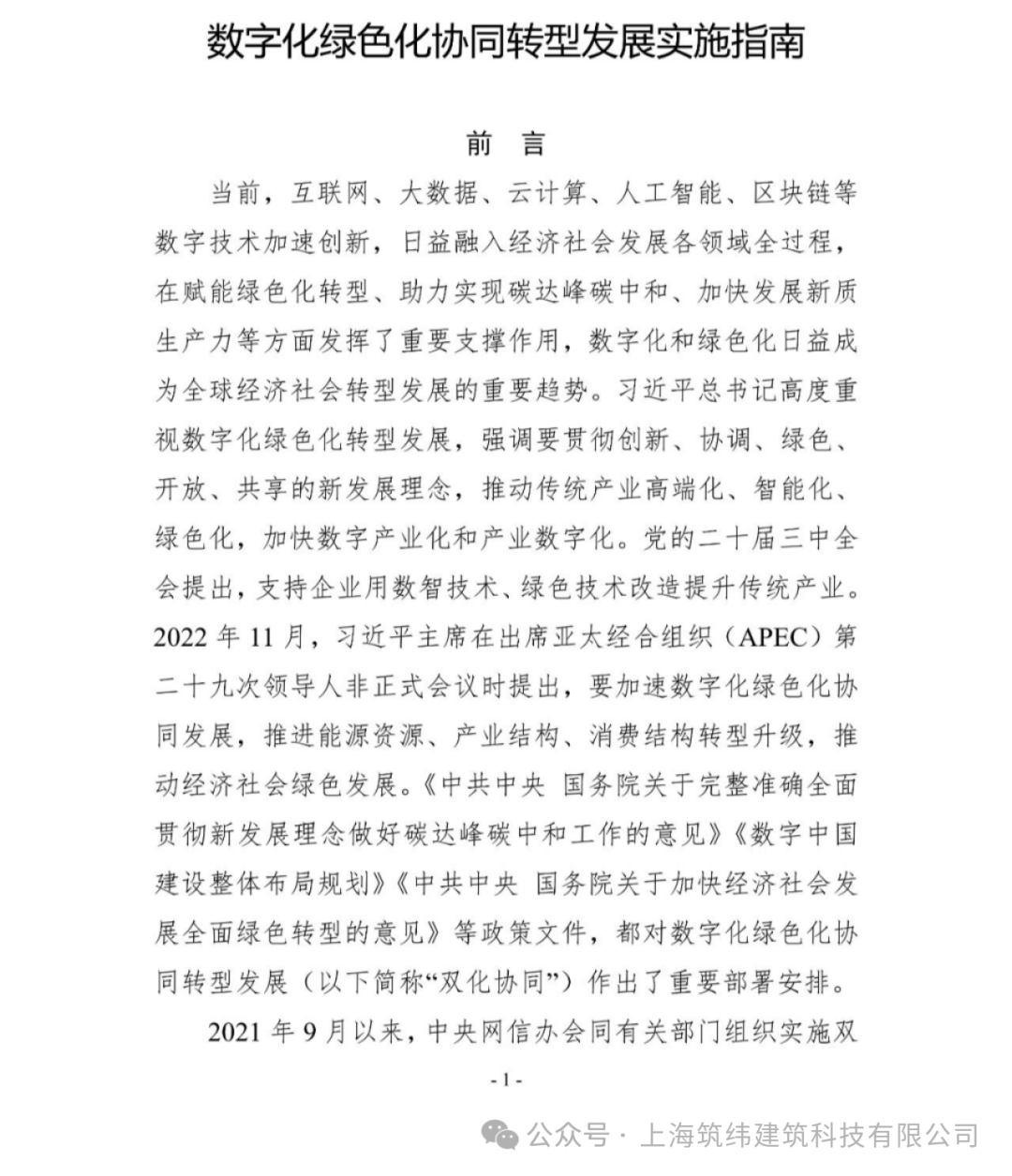
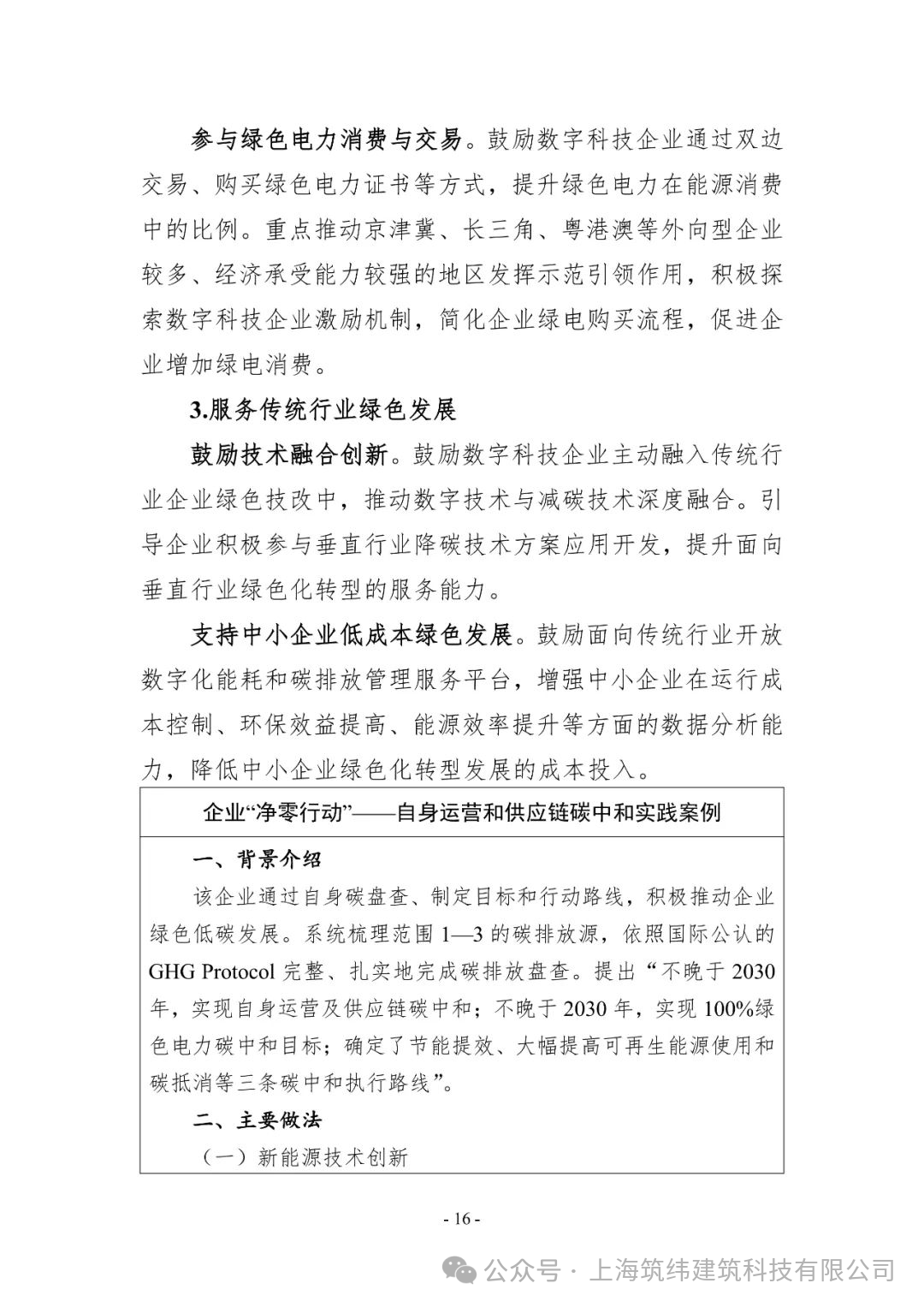
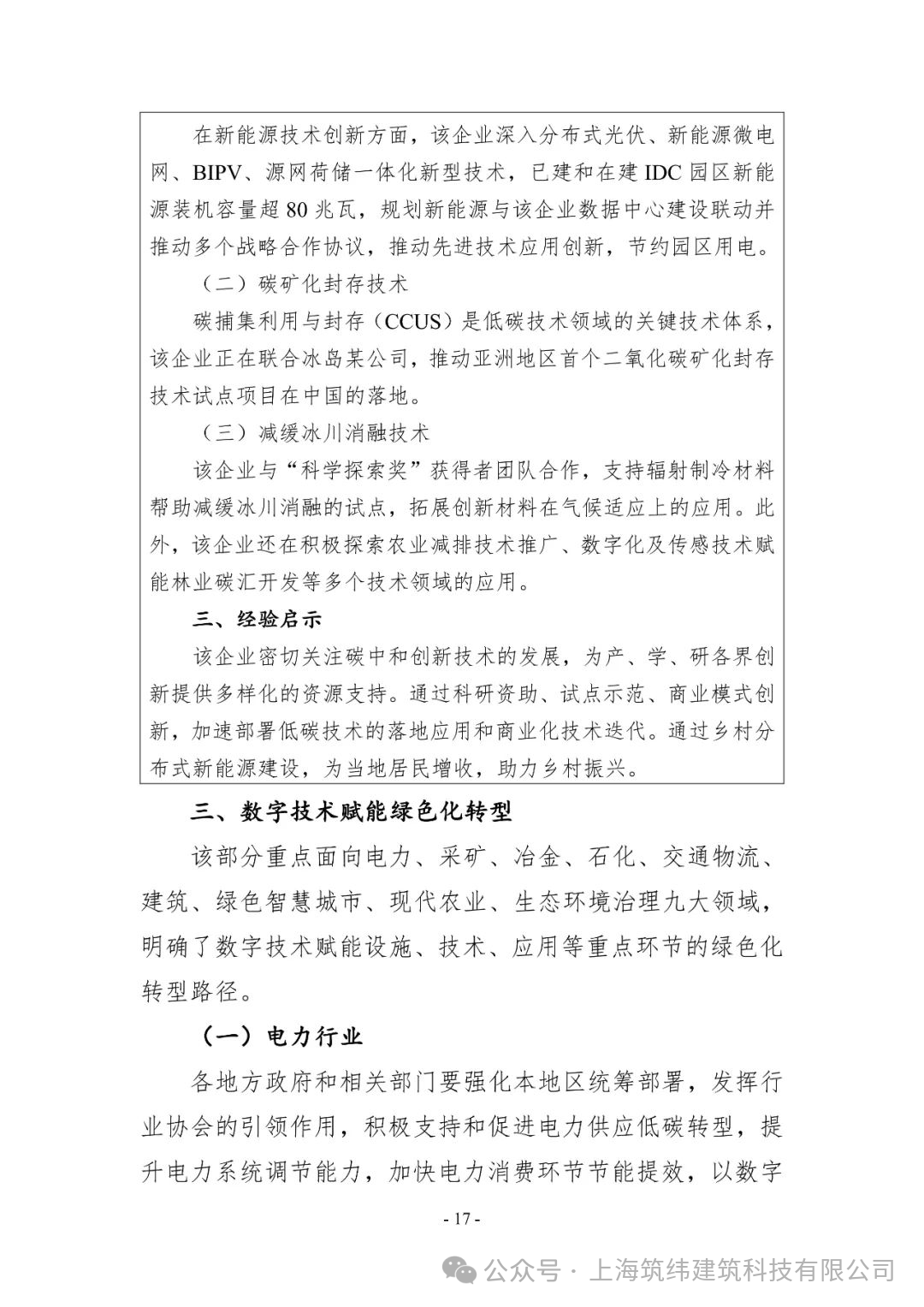
Currently, digital technologies such as the internet, big data, cloud computing, artificial intelligence, and blockchain are innovating at an accelerating pace and are increasingly integrated into all fields and the entire process of economic and social development. They play an important supporting role in enabling green transformation, helping achieve carbon peaking and carbon neutrality, and accelerating the development of new quality productive forces. Digitalization and greening are increasingly becoming important trends in the transformation and development of the global economy and society. General Secretary Xi Jinping attaches great importance to digital and green transformation, emphasizing the need to implement the new development philosophy of innovation, coordination, green development, openness, and sharing, to promote the high-end, intelligent, and green upgrading of traditional industries, and to accelerate the digitalization of industries and the industrialization of digital technologies. The Third Plenary Session of the 20th CPC Central Committee proposed supporting enterprises in using digital-intelligent and green technologies to transform and upgrade traditional industries.In November 2022, when attending the 29th Asia-Pacific Economic Cooperation (APEC) Economic Leaders' Informal Meeting, President Xi Jinping proposed accelerating coordinated digital and green development, advancing the transformation and upgrading of energy resources, industrial structure, and consumption structure, and promoting the green development of the economy and society. Policy documents such as the Opinions of the CPC Central Committee and the State Council on Doing a Good Job in Carbon Peaking and Carbon Neutrality Under the Guidance of the Complete, Accurate and Comprehensive Implementation of the New Development Philosophy, the Overall Layout Plan for Building a Digital China, and the Opinions of the CPC Central Committee and the State Council on Accelerating the Comprehensive Green Transformation of Economic and Social Development have all made important arrangements for the coordinated digital and green transformation (hereinafter “dual transformation coordination”).
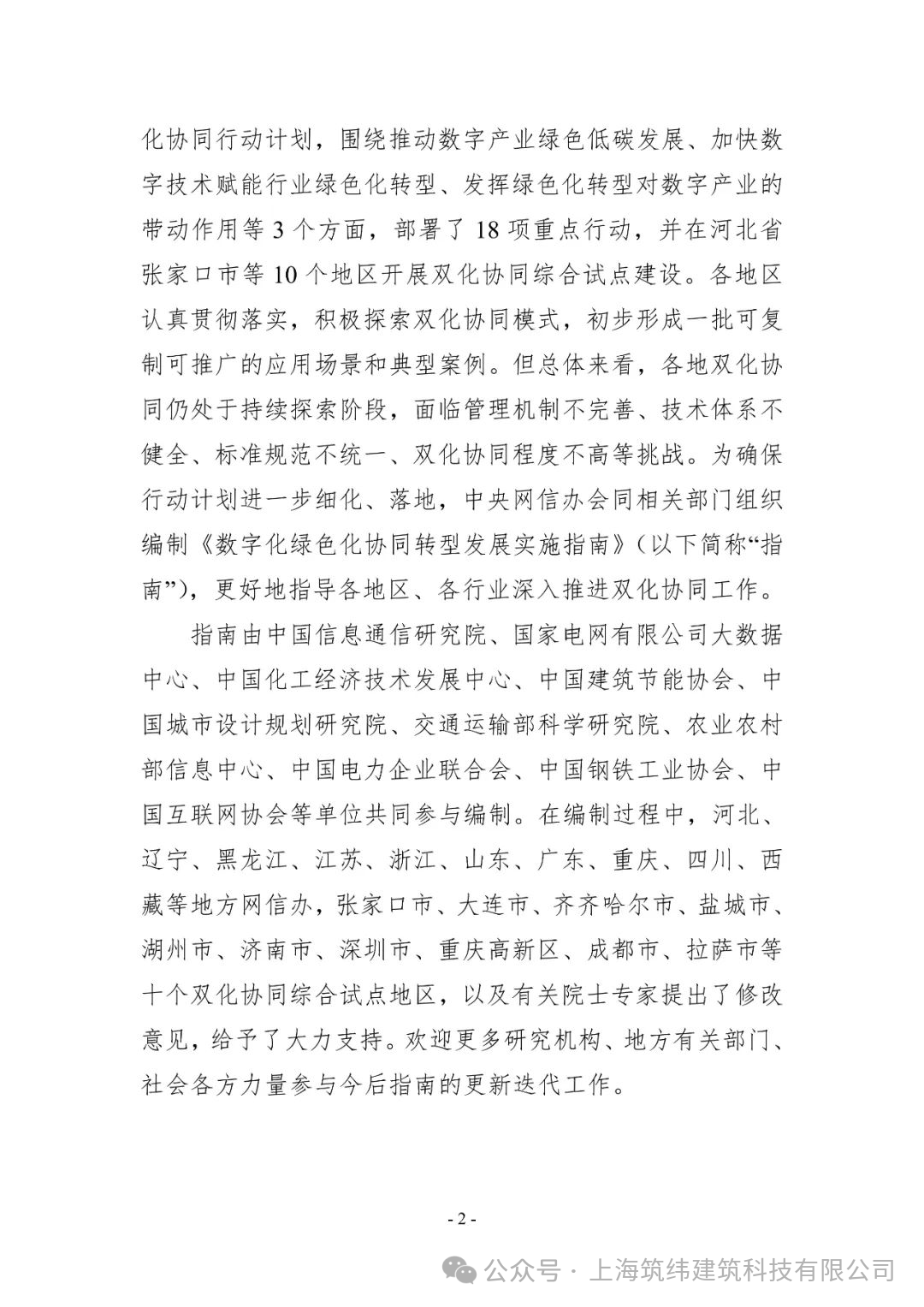
Since September 2021, the Cyberspace Administration of China, together with relevant departments, has organized and implemented the dual transformation coordination action plan, deploying 18 key actions around 3 aspects: promoting the green and low-carbon development of digital industries, accelerating the empowerment of green transformation in various industries by digital technologies, and giving play to the driving role of green transformation for digital industries. Comprehensive pilot projects for dual transformation coordination were also launched in 10 regions including Zhangjiakou, Hebei Province. All regions have earnestly implemented the plan, actively explored dual transformation coordination models, and preliminarily formed a batch of replicable and scalable application scenarios and typical cases. Overall, however, dual transformation coordination across regions is still in a stage of continuous exploration, facing challenges such as imperfect management mechanisms, unsound technology systems, inconsistent standards and specifications, and a low degree of digital-green coordination. To ensure further refinement and implementation of the action plan, the Cyberspace Administration of China, together with relevant departments, organized the compilation of the Implementation Guide for Coordinated Digital and Green Transformation (hereinafter “the Guide”) to better guide all regions and industries in advancing the dual transformation coordination work.
The Guide was jointly compiled by the China Academy of Information and Communications Technology, the Big Data Center of State Grid Corporation of China, the China National Chemical Economic and Technological Development Center, the China Association of Building Energy Efficiency, the China Urban Planning and Design Research Institute, the China Academy of Transportation Sciences, the Information Center of the Ministry of Agriculture and Rural Affairs, the China Electricity Council, the China Iron and Steel Association, the Internet Society of China, and other institutions. During the compilation, the cyber affairs offices of Hebei, Liaoning, Heilongjiang, Jiangsu, Zhejiang, Shandong, Guangdong, Chongqing, Sichuan, and Tibet; the ten comprehensive dual transformation coordination pilot regions of Zhangjiakou, Dalian, Qiqihar, Yancheng, Huzhou, Jinan, Shenzhen, the Chongqing High-Tech Zone, Chengdu, and Lhasa; as well as relevant academicians and experts put forward revision suggestions and gave strong support. More research institutions, relevant local departments, and all sectors of society are welcome to participate in the future updates and iterations of the Guide.
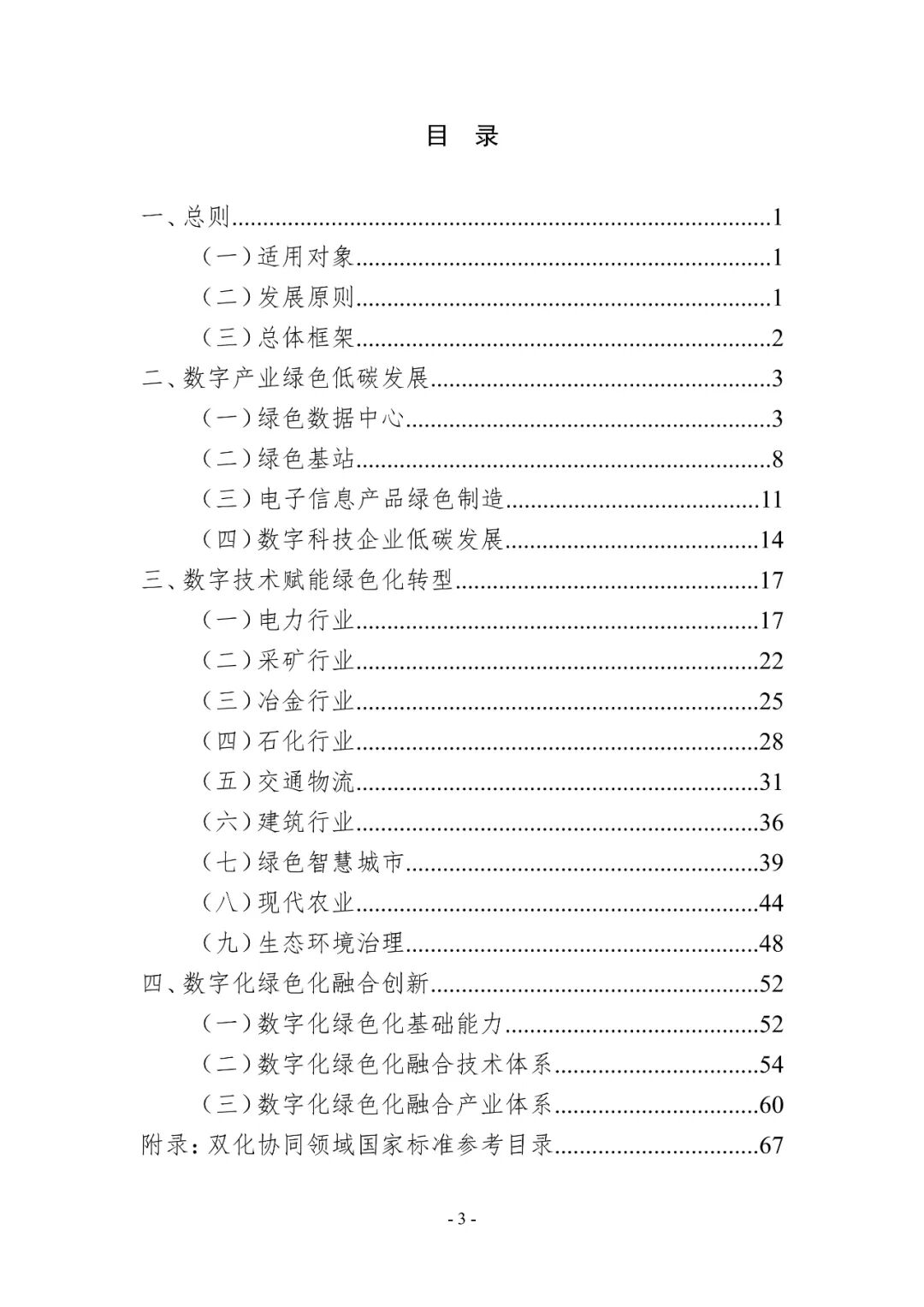
Con tents
1. General Provisions
(1) Applicable Subjects
(2) Development Principles
(3) Overall Framework
2. Green and Low-Carbon Development of Digital Industries
(1) Green Data Centers
(2) Green Base Stations
(3) Green Manufacturing of Electronic Information Products
(4) Low-Carbon Development of Digital Technology Enterprises
3. Digital Technologies Empowering Green Transformation
(1) Electric Power Industry
(2) Mining Industry
(3) Metallurgical Industry
(4) Petrochemical Industry
(5) Transportation and Logistics
(6) Construction Industry
(7) Green Smart Cities
(8) Modern Agriculture
(9) Ecological Environment Governance
4. Integrated Innovation of Digitalization and Greening
(1) Foundational Capabilities for Digital and Green Integration
(2) Integrated Digital-Green Technology System
(3) Integrated Digital-Green Industrial System
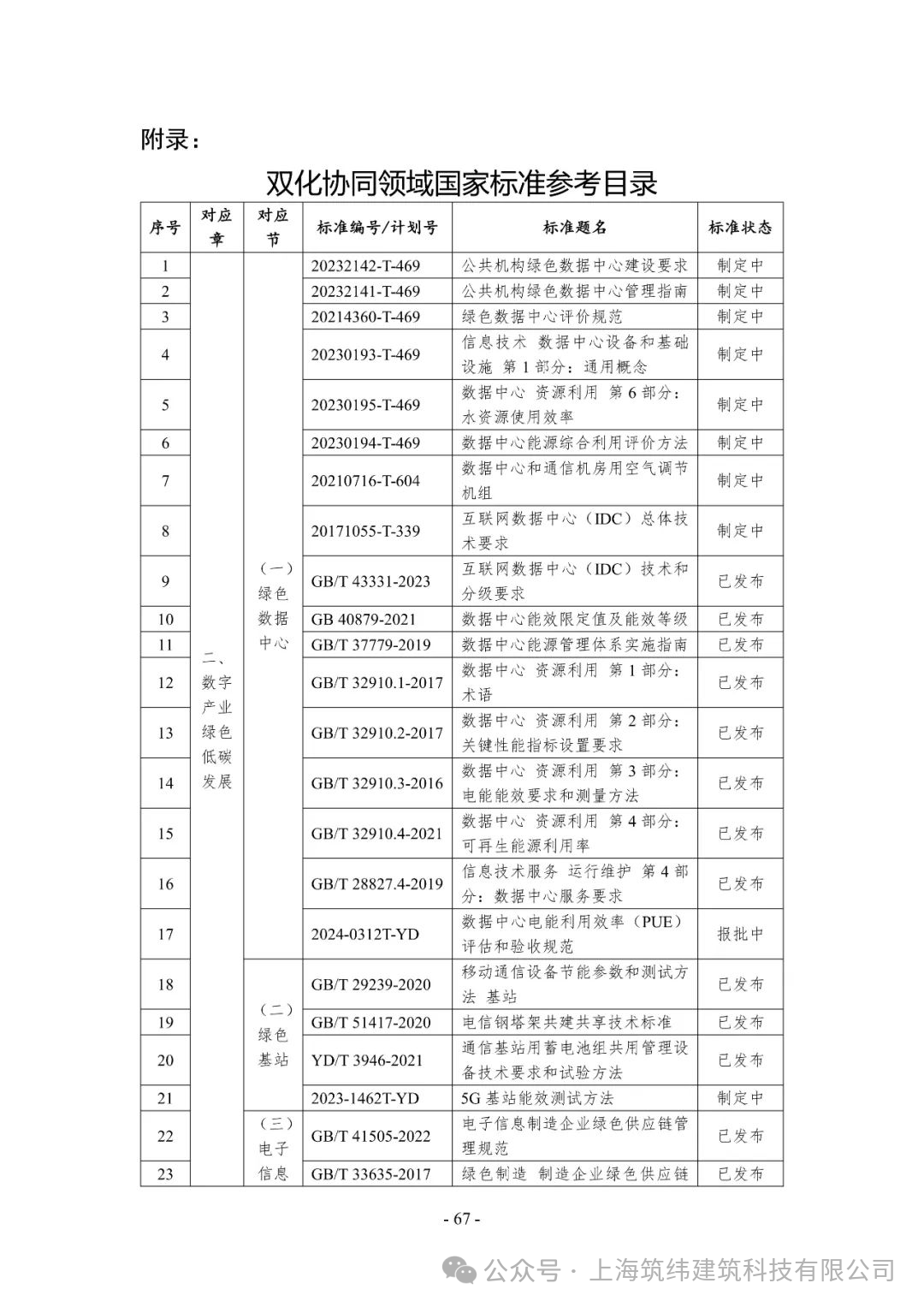
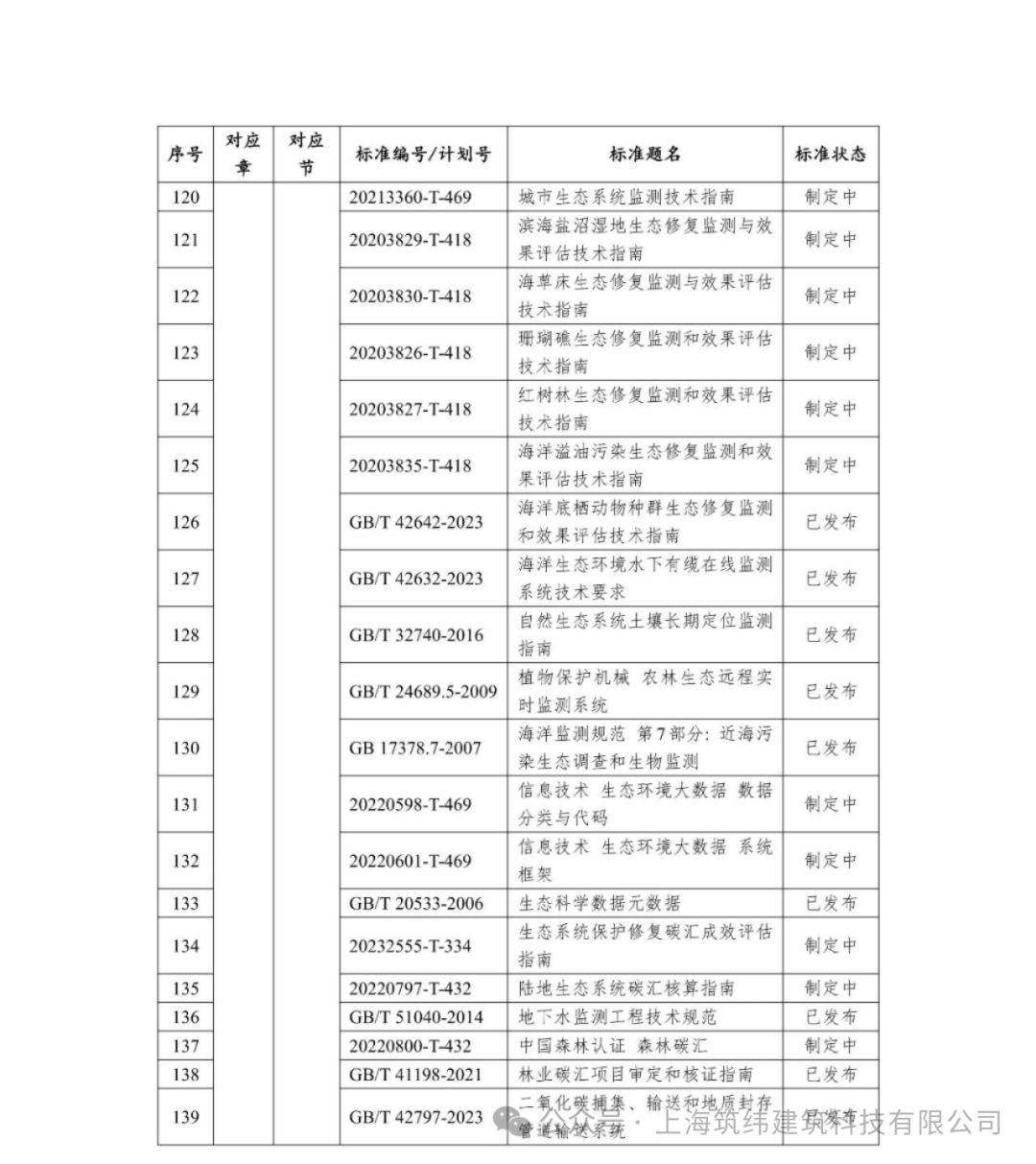
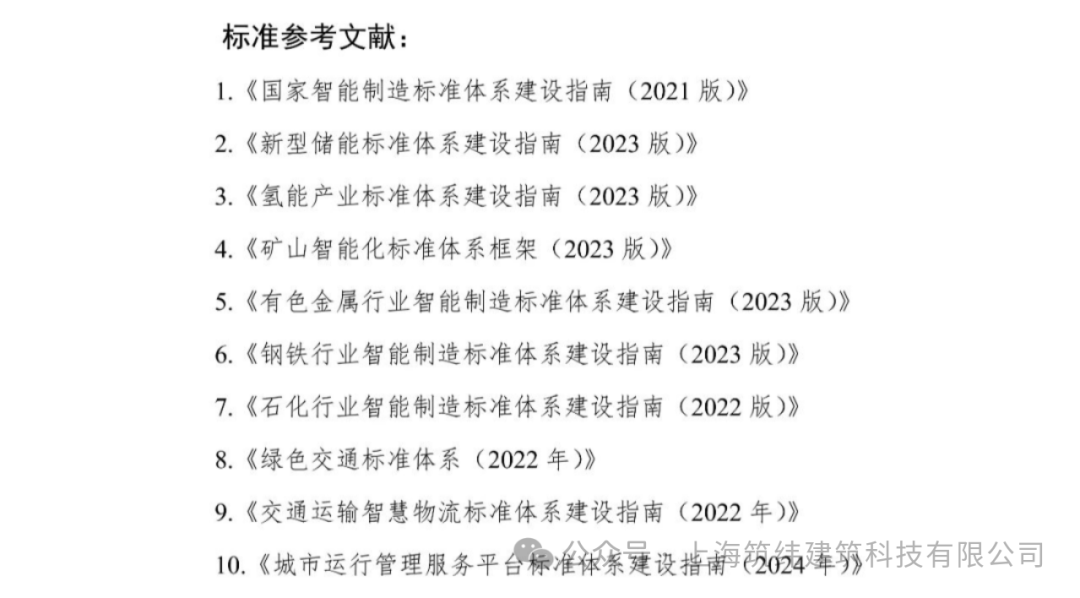
Appendix: Reference Catalog of National Standards in the Field of Coordinated Digital and Green Transformation
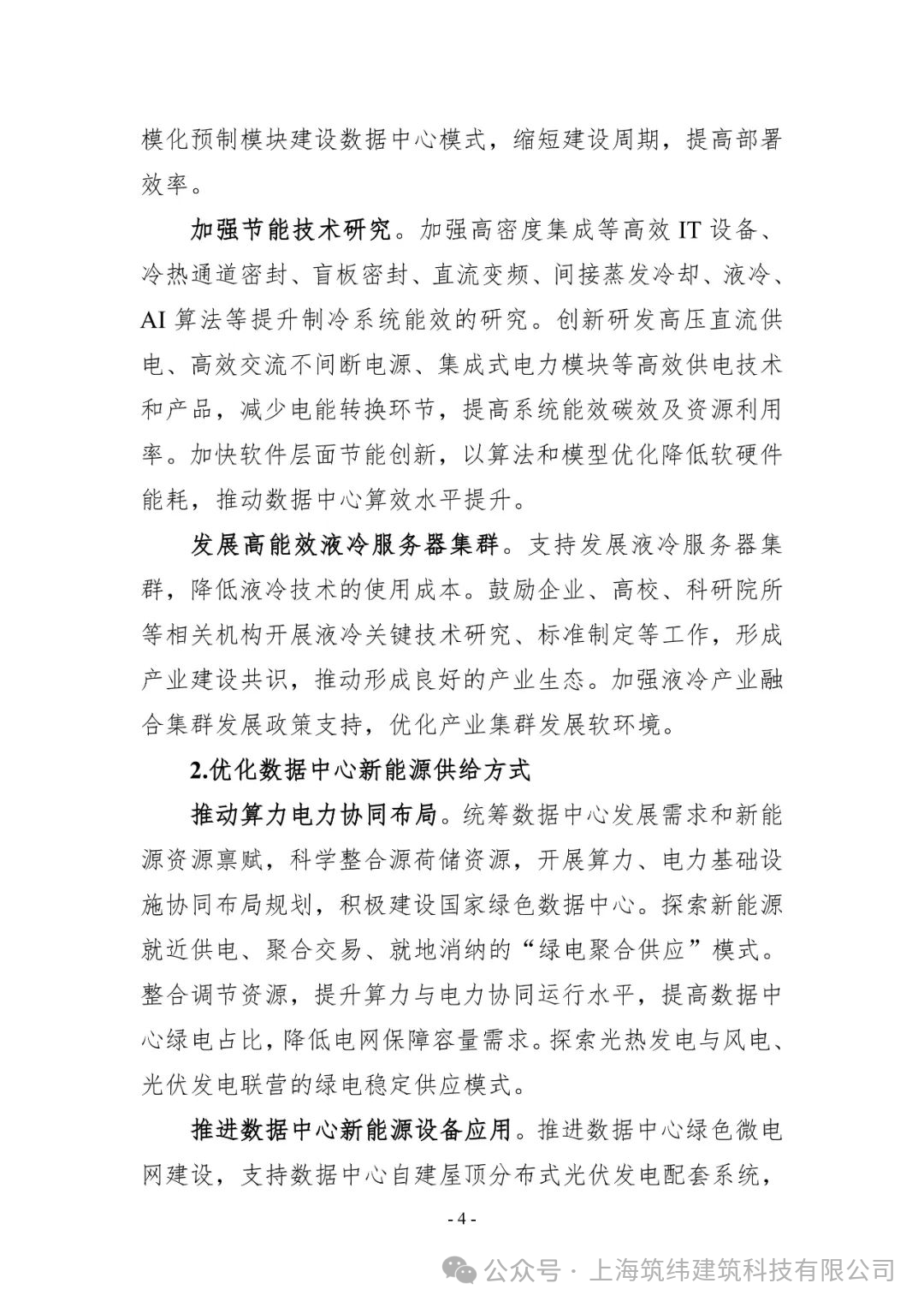
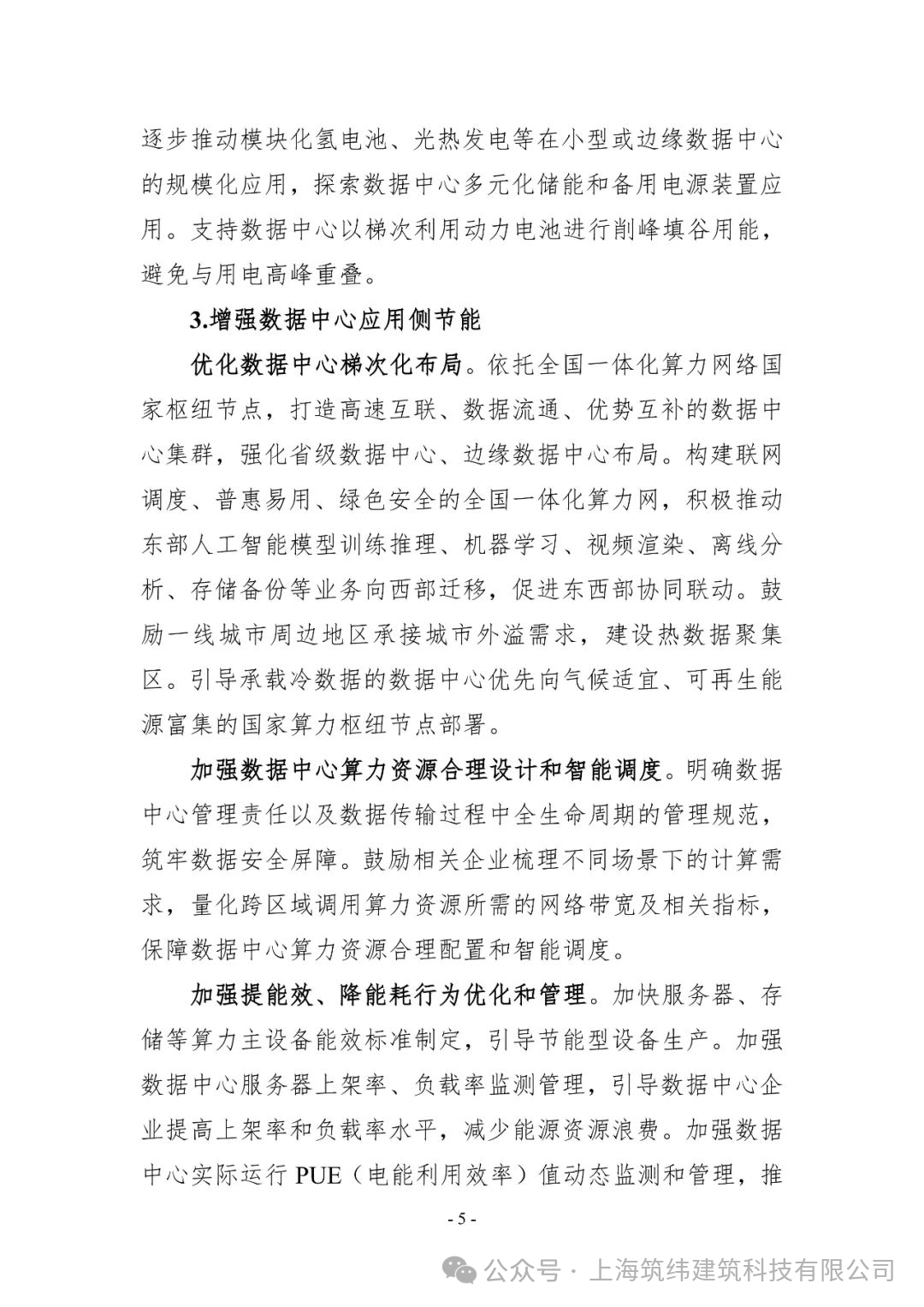
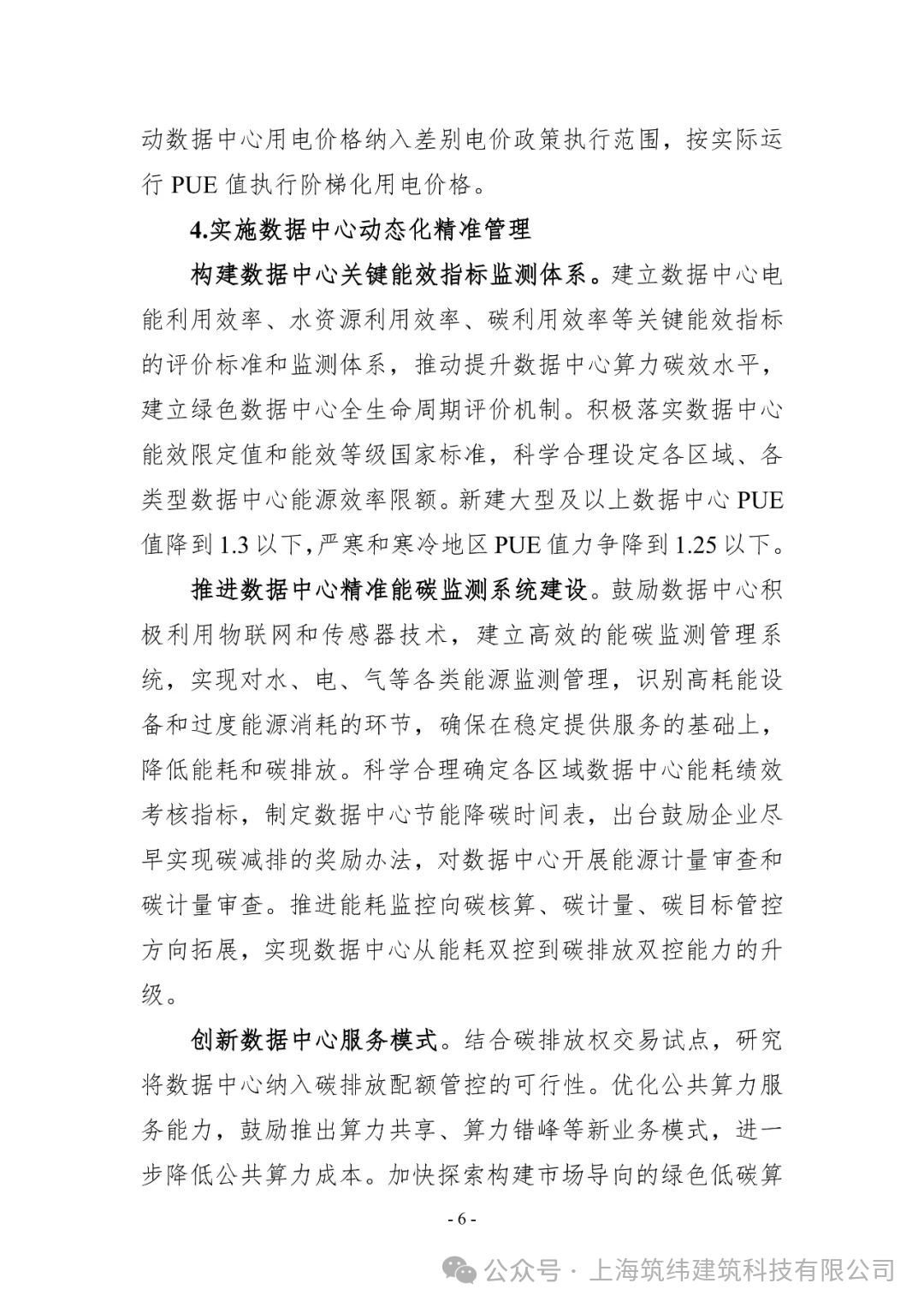
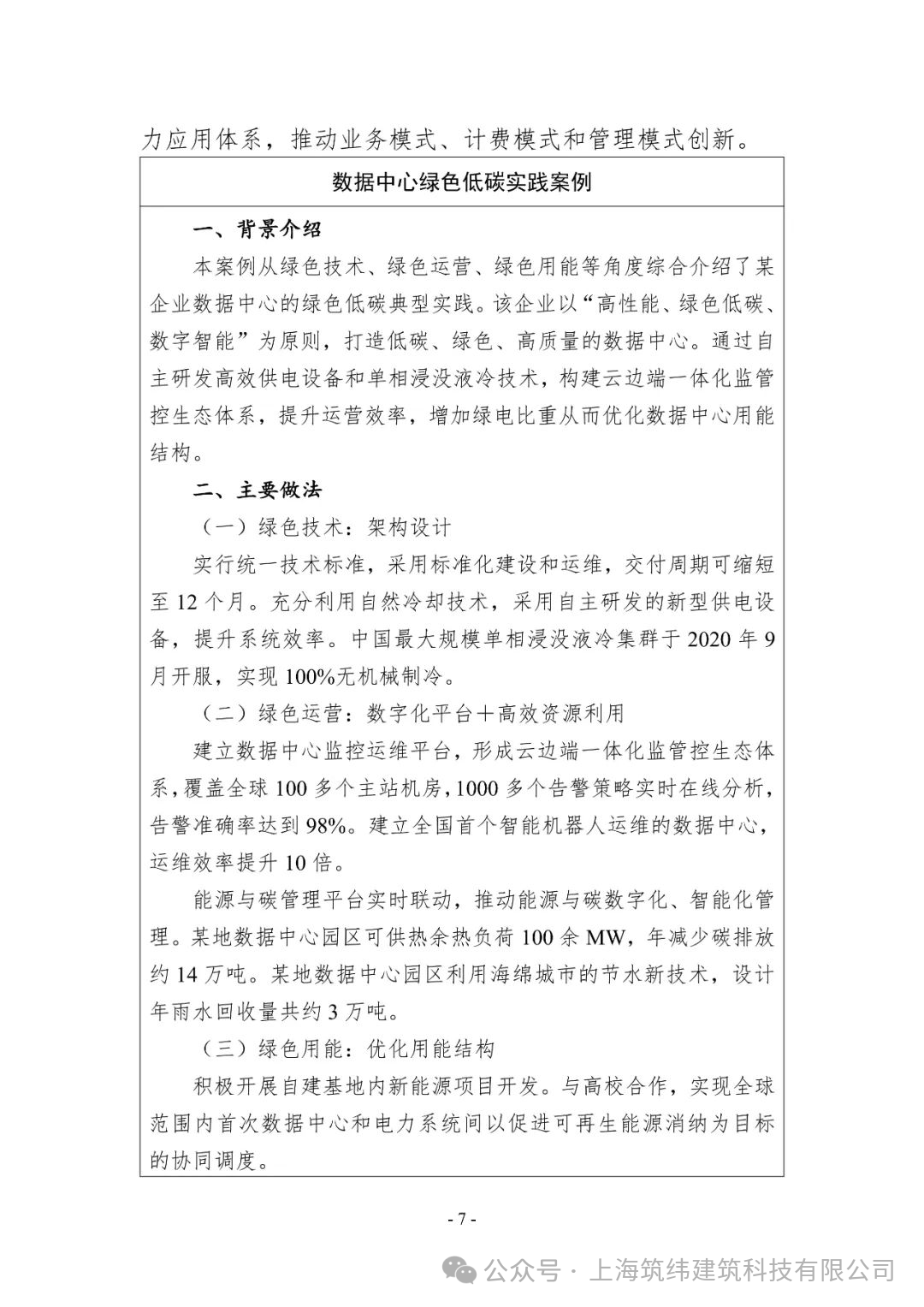
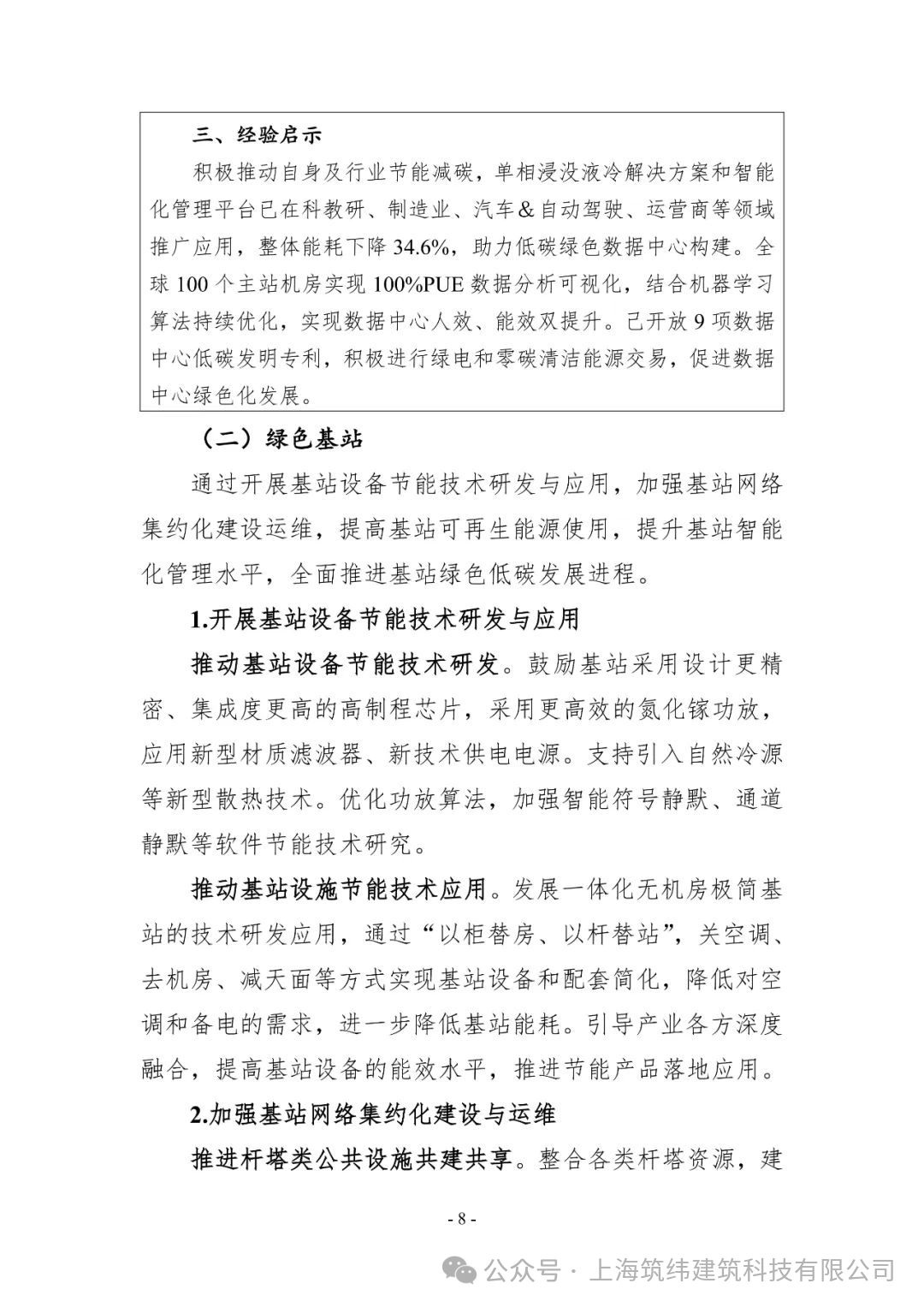
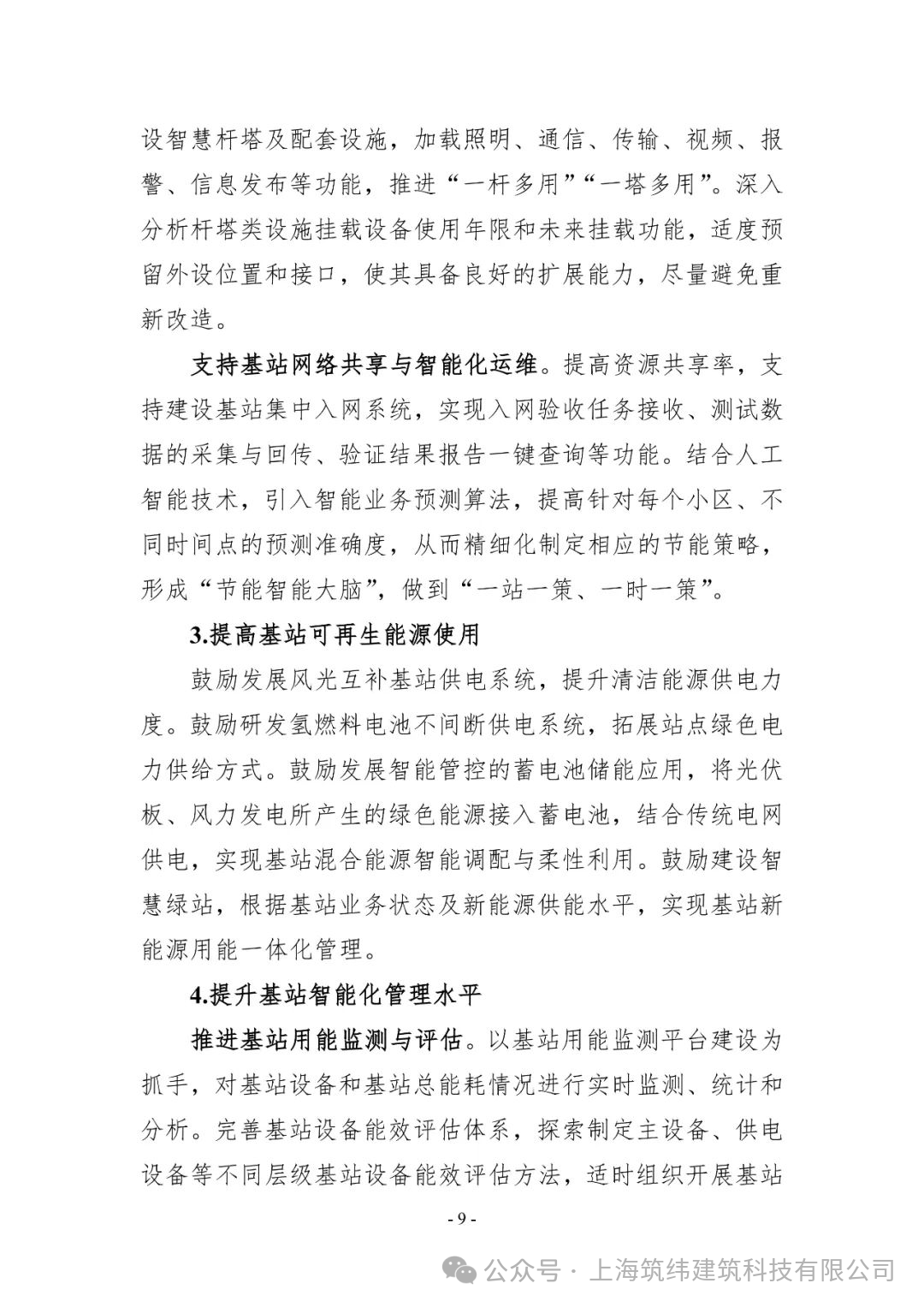
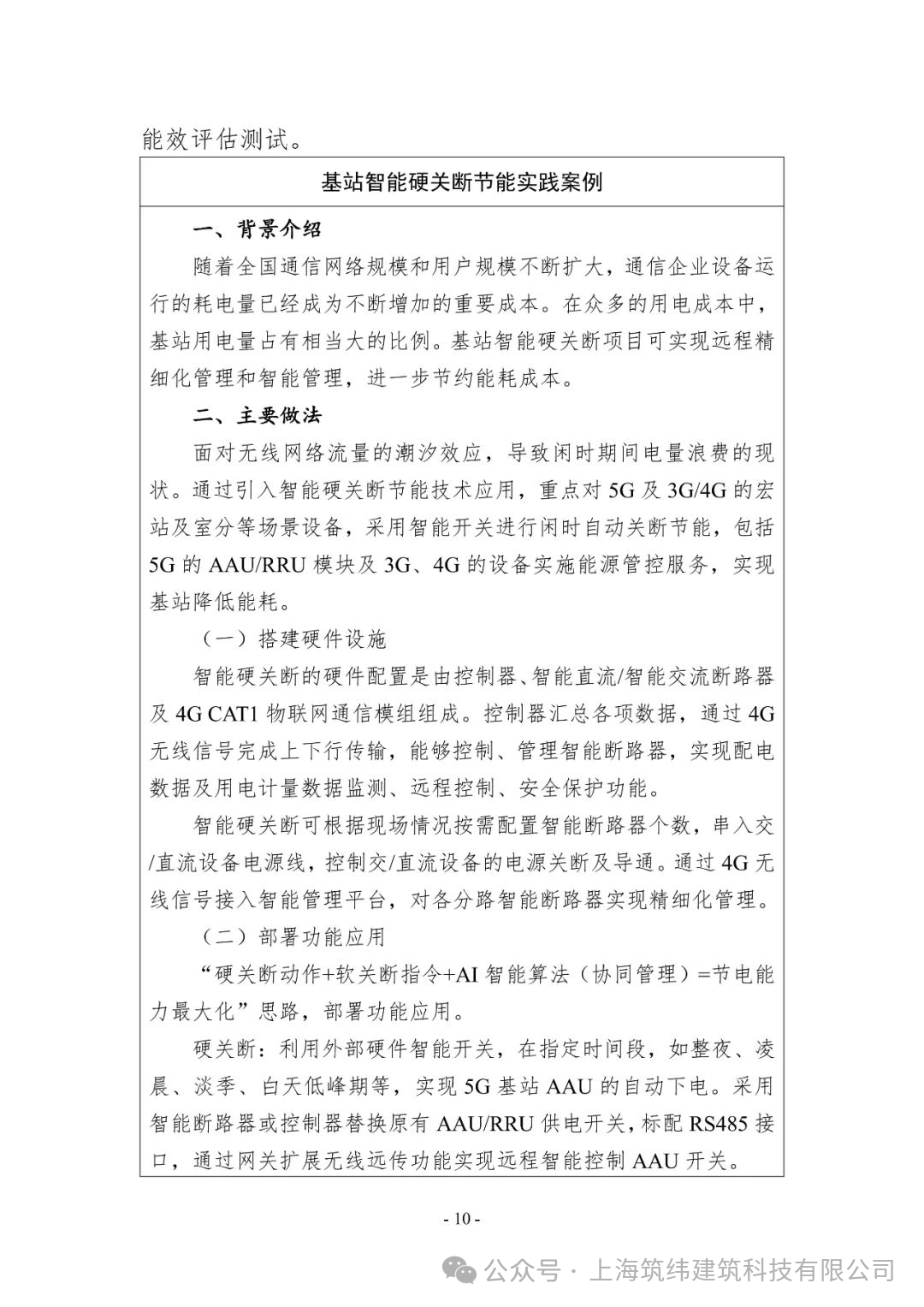
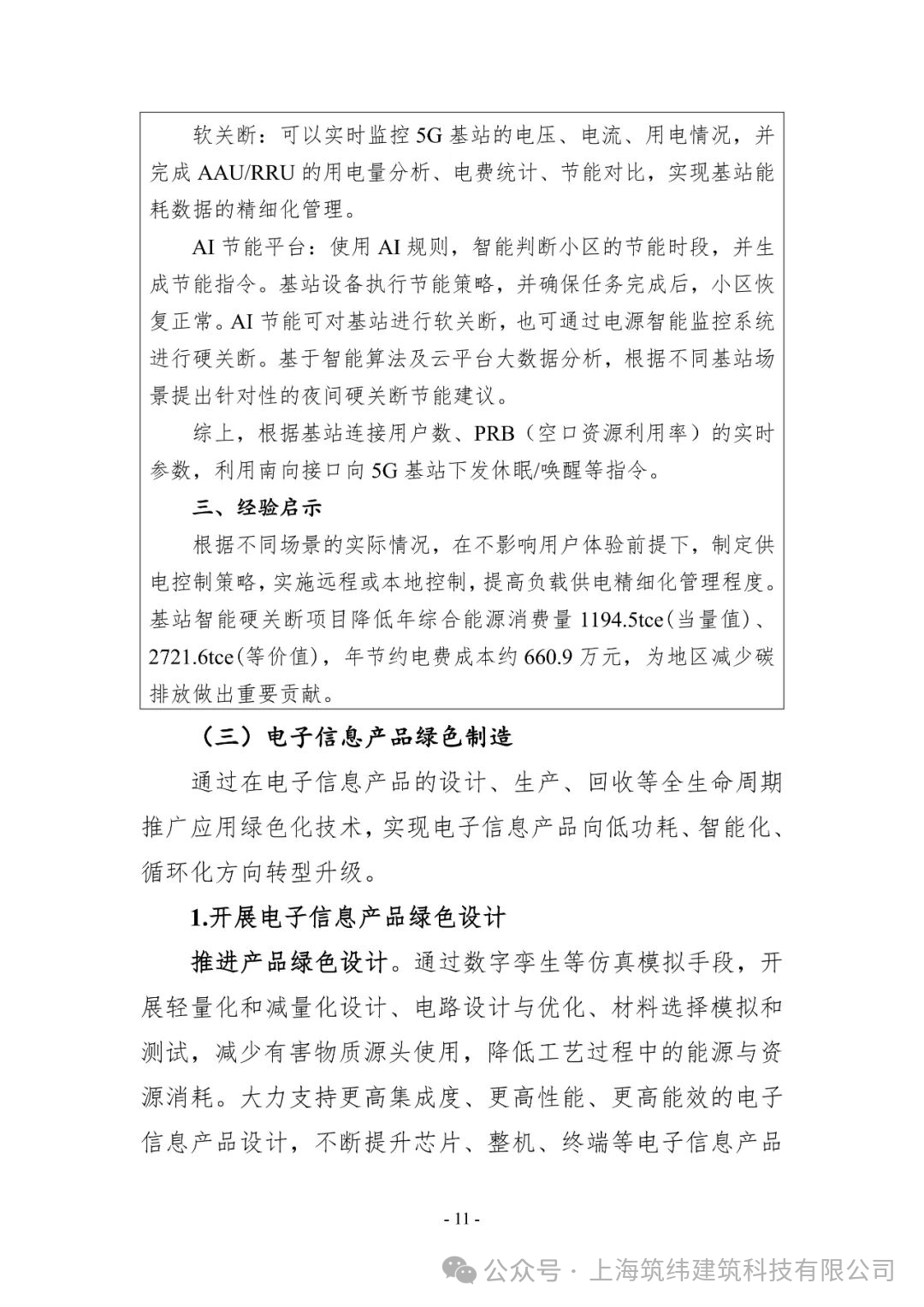
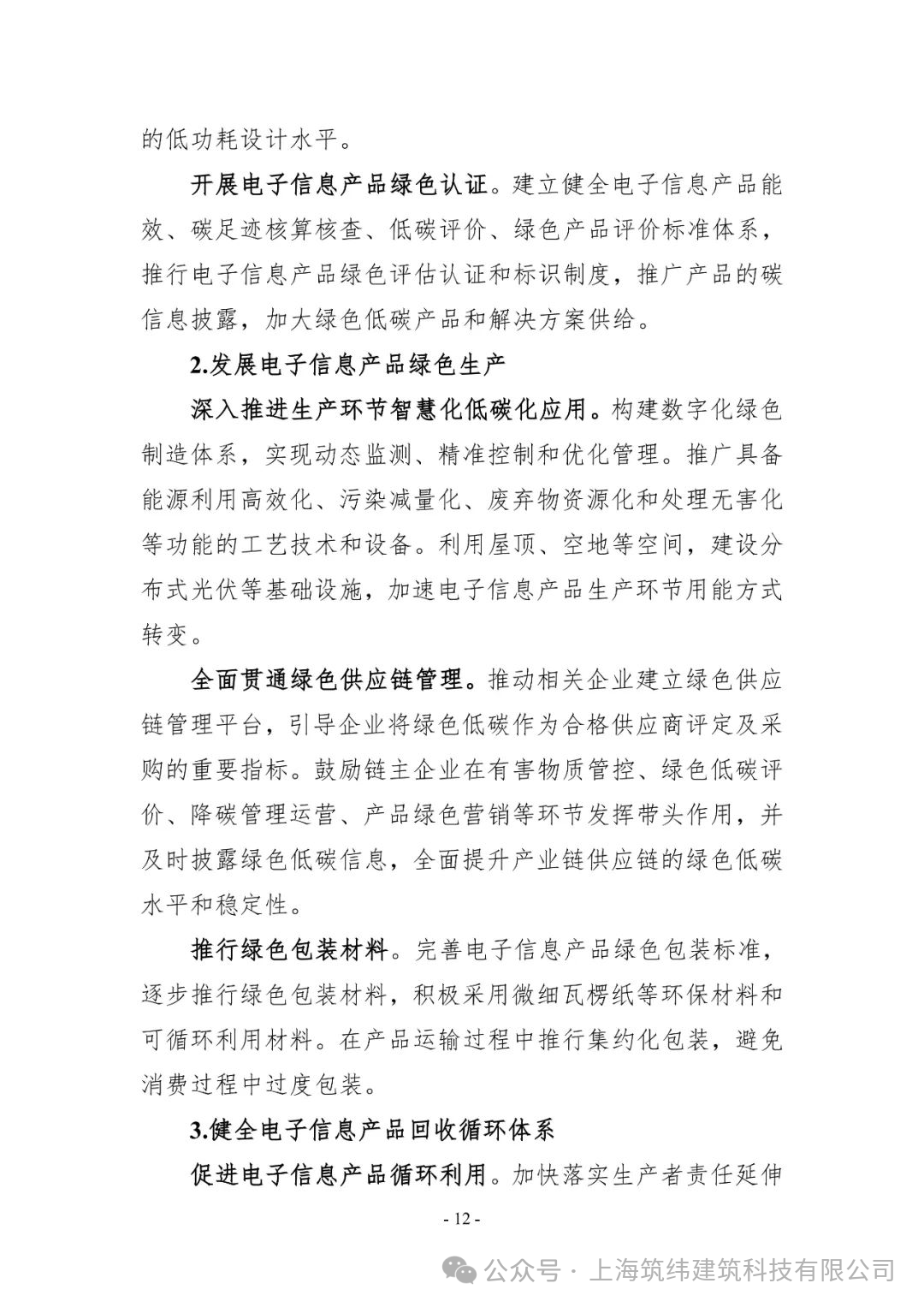
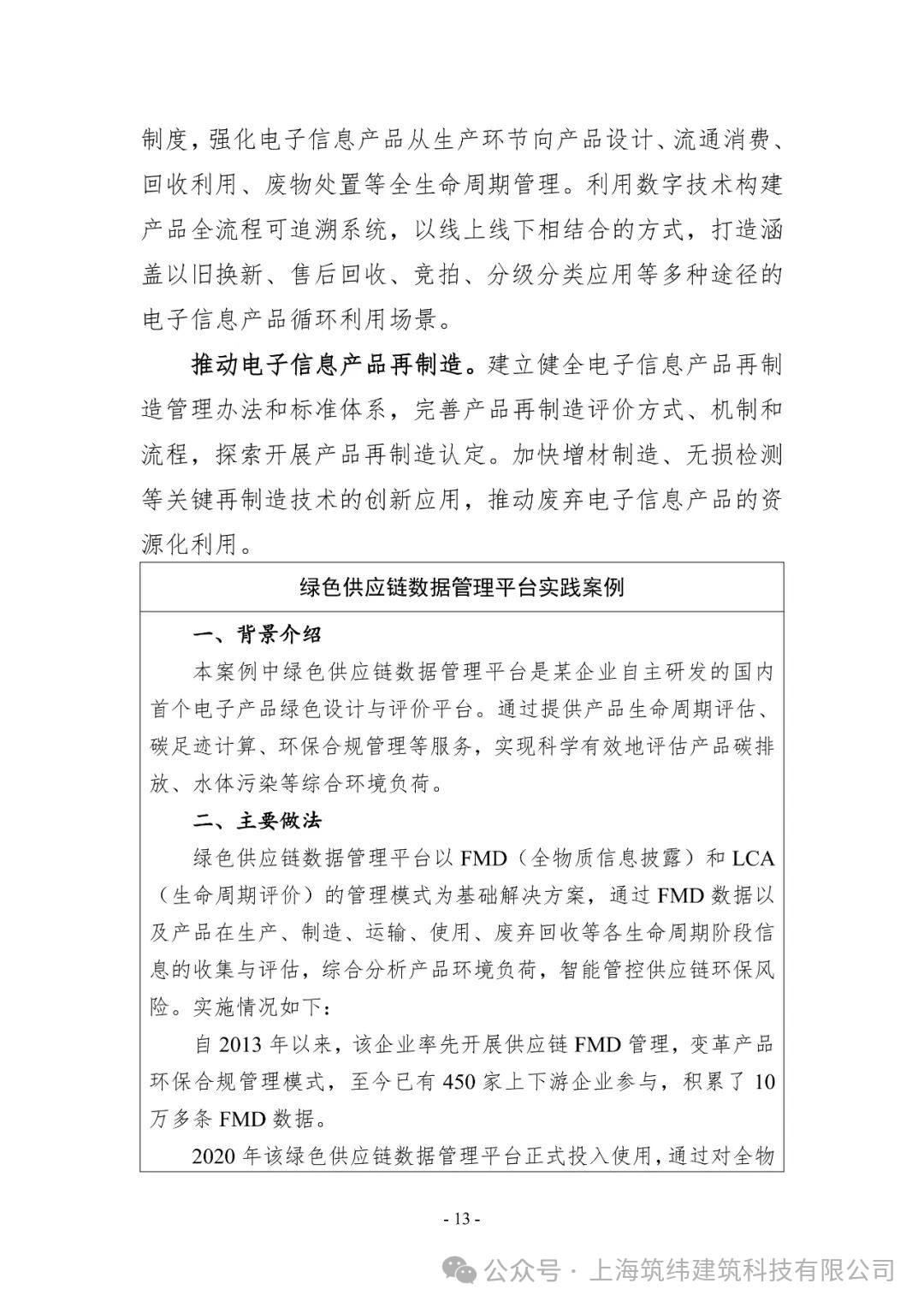
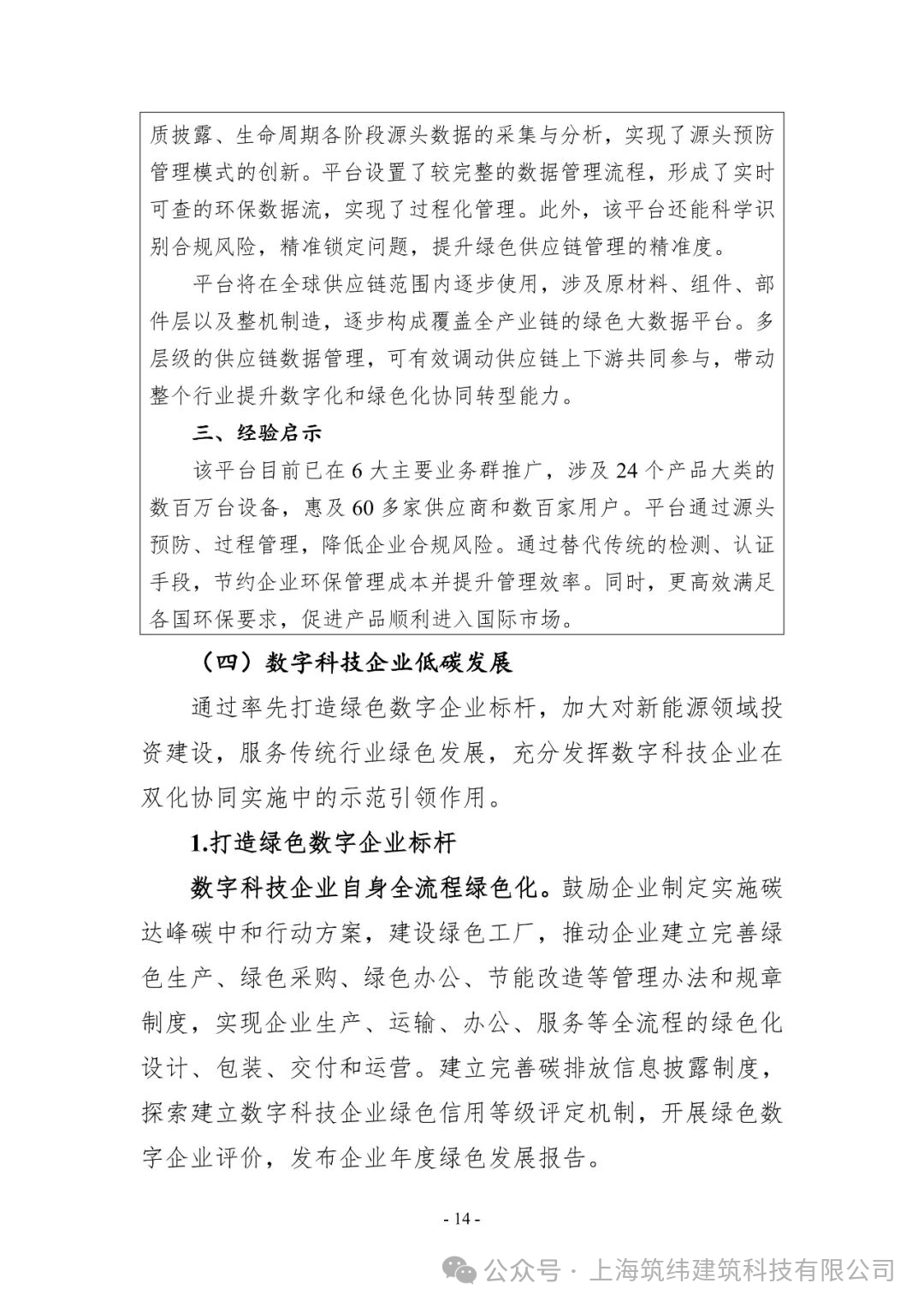
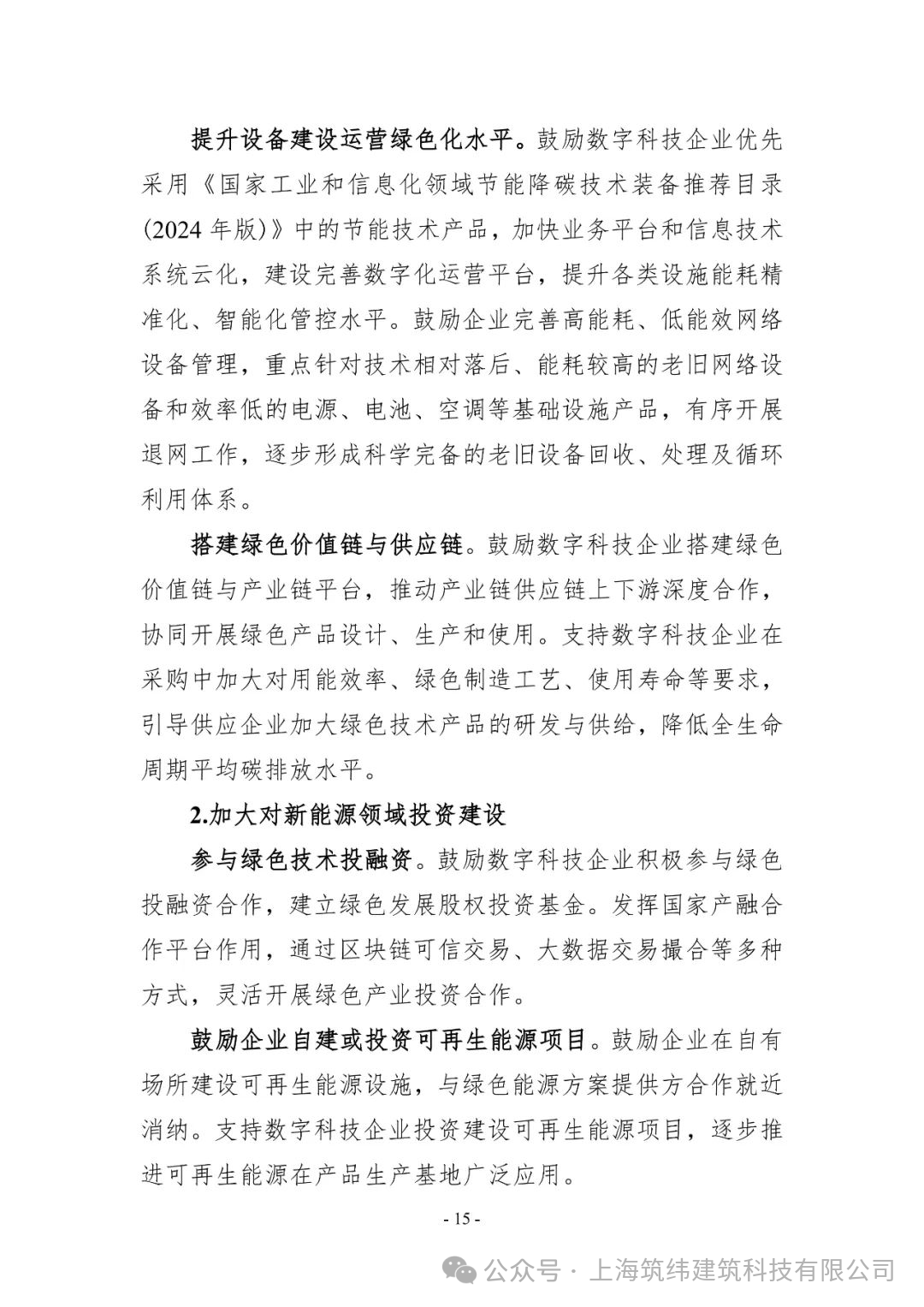
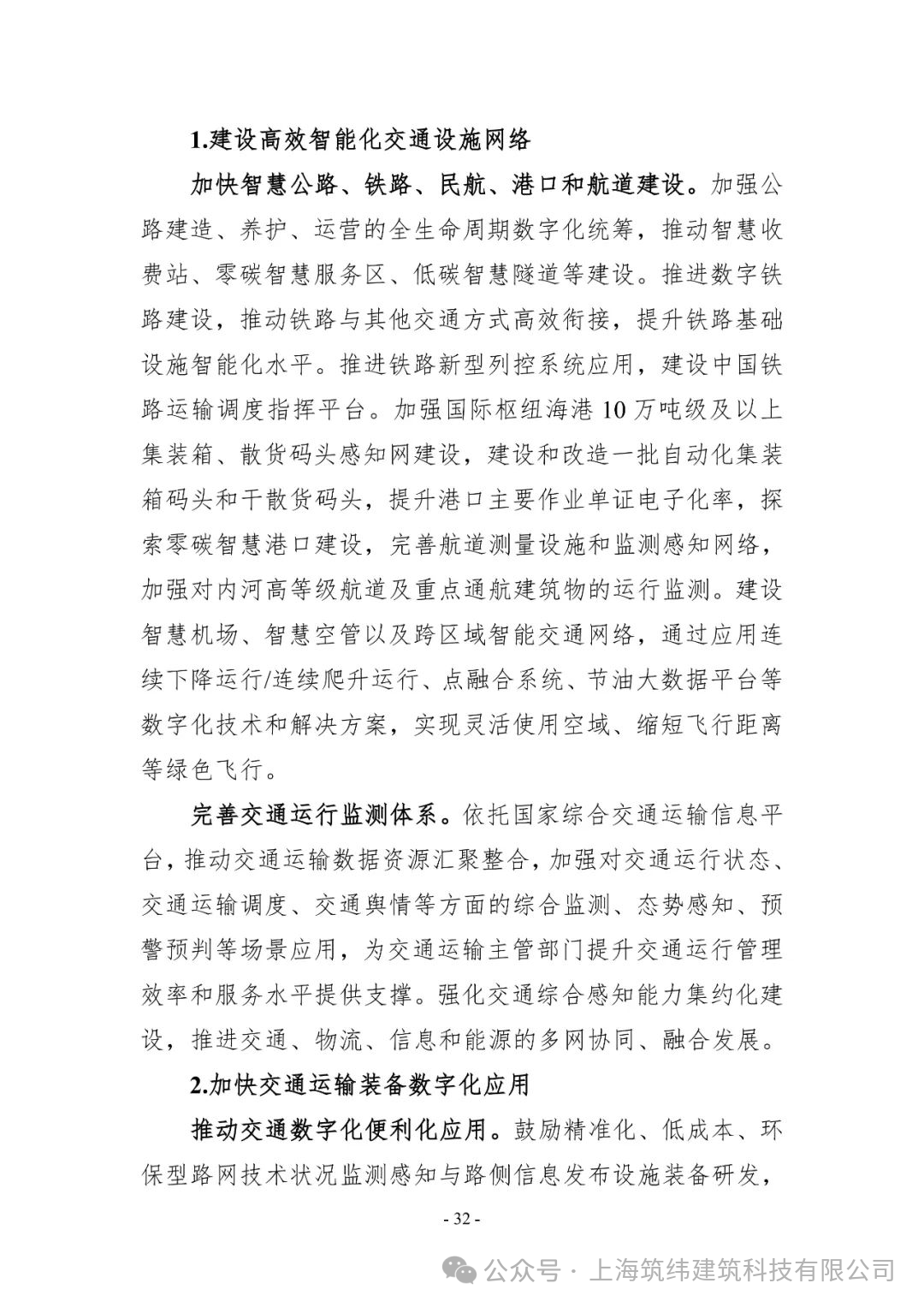
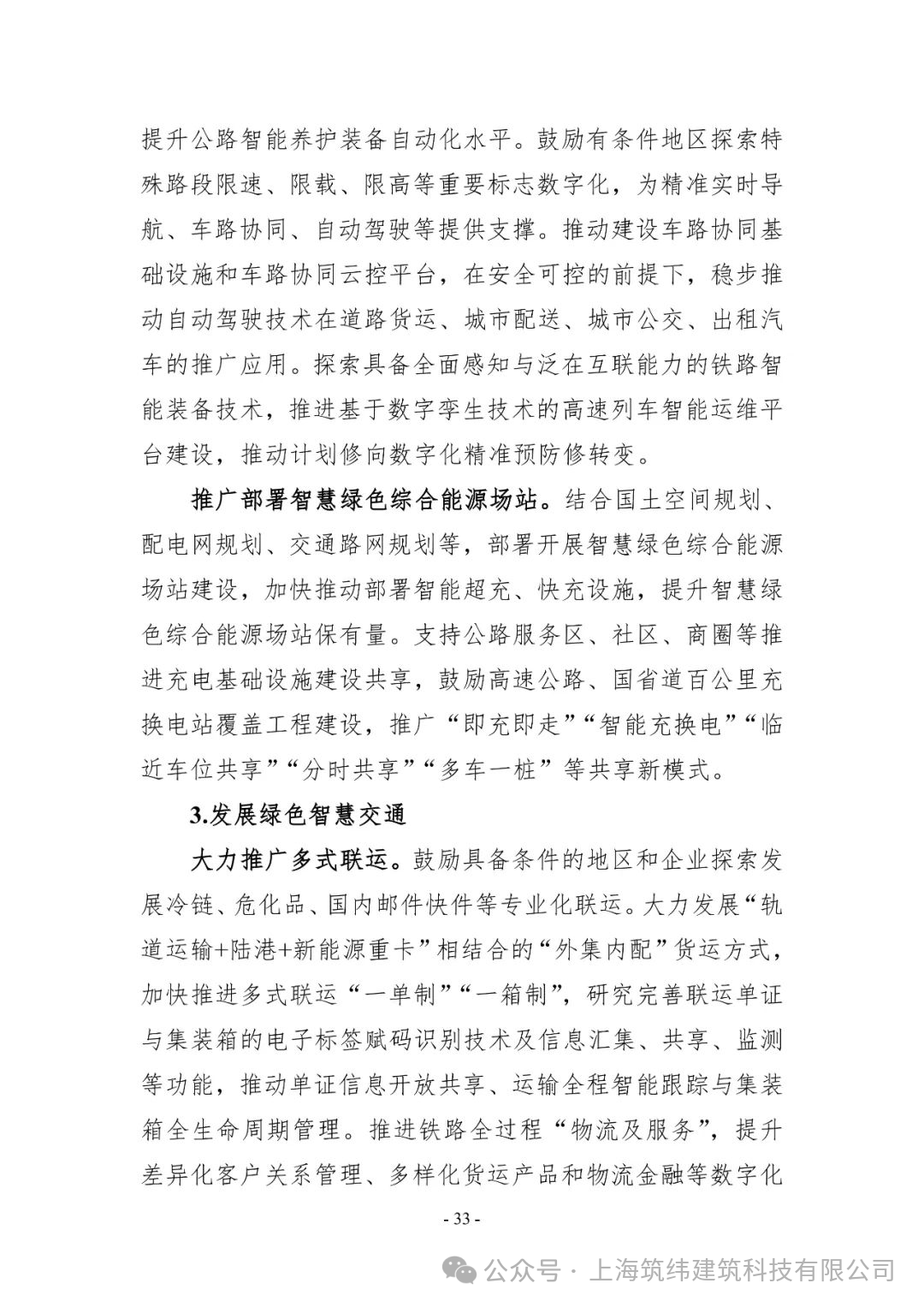
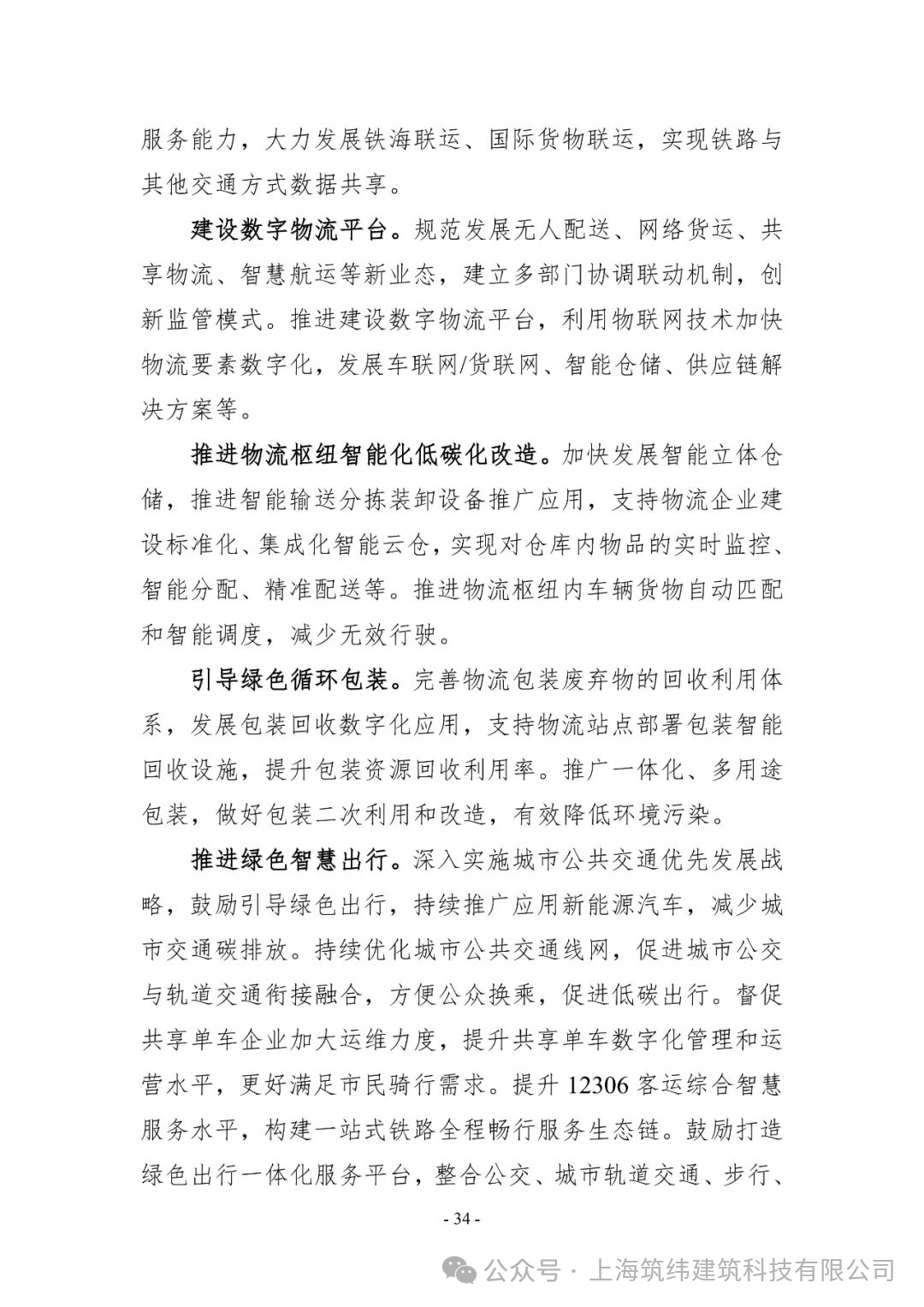
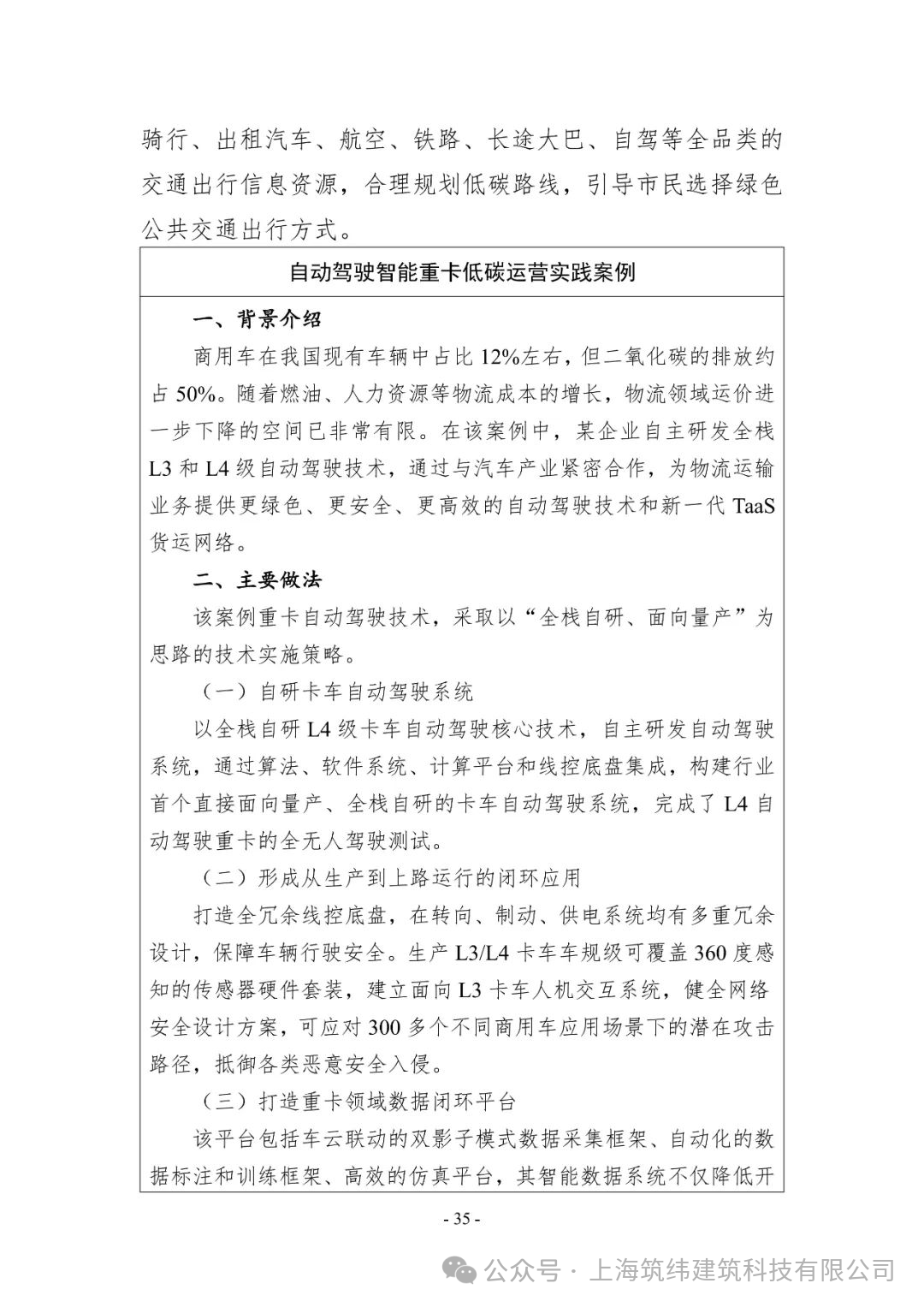
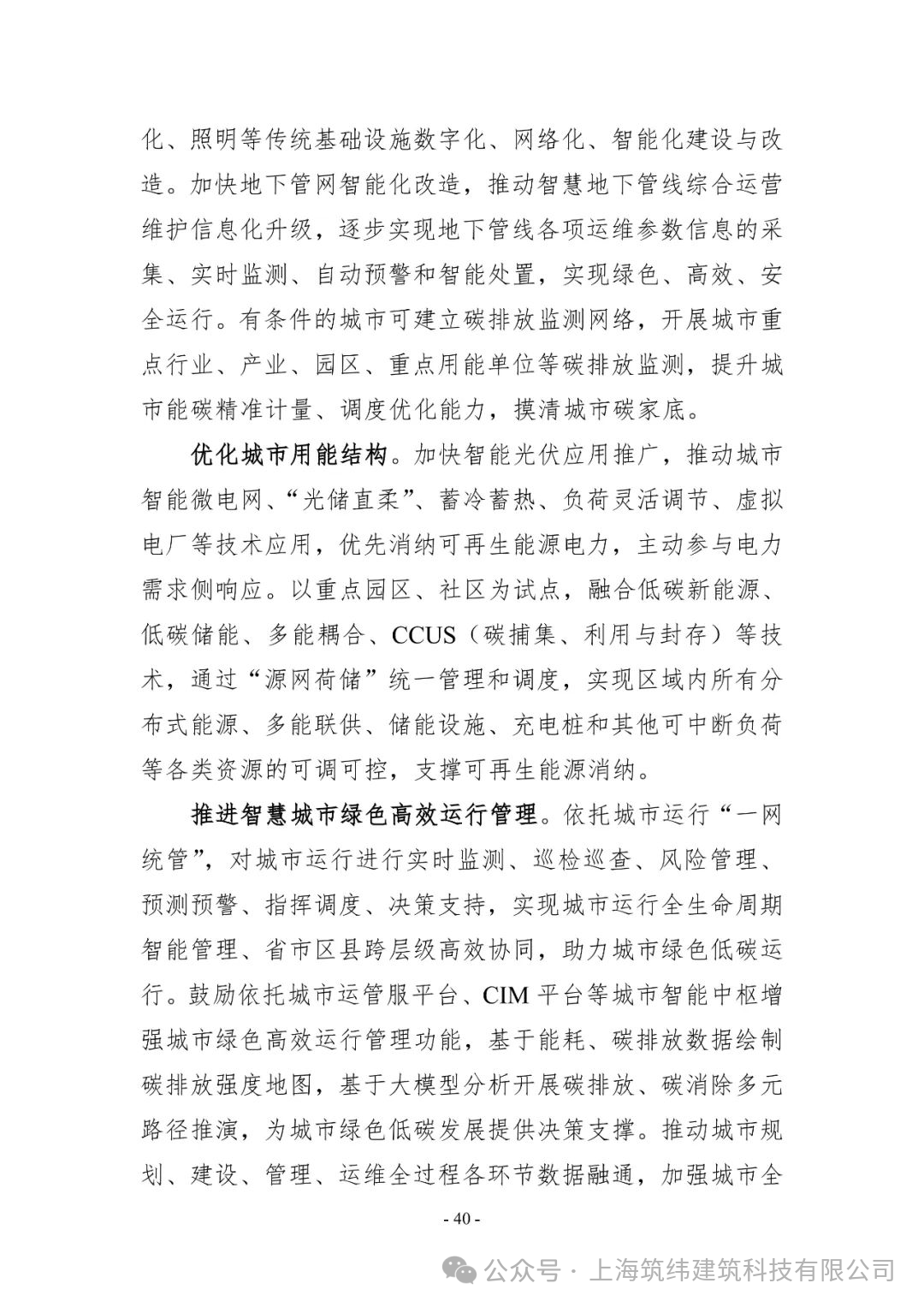
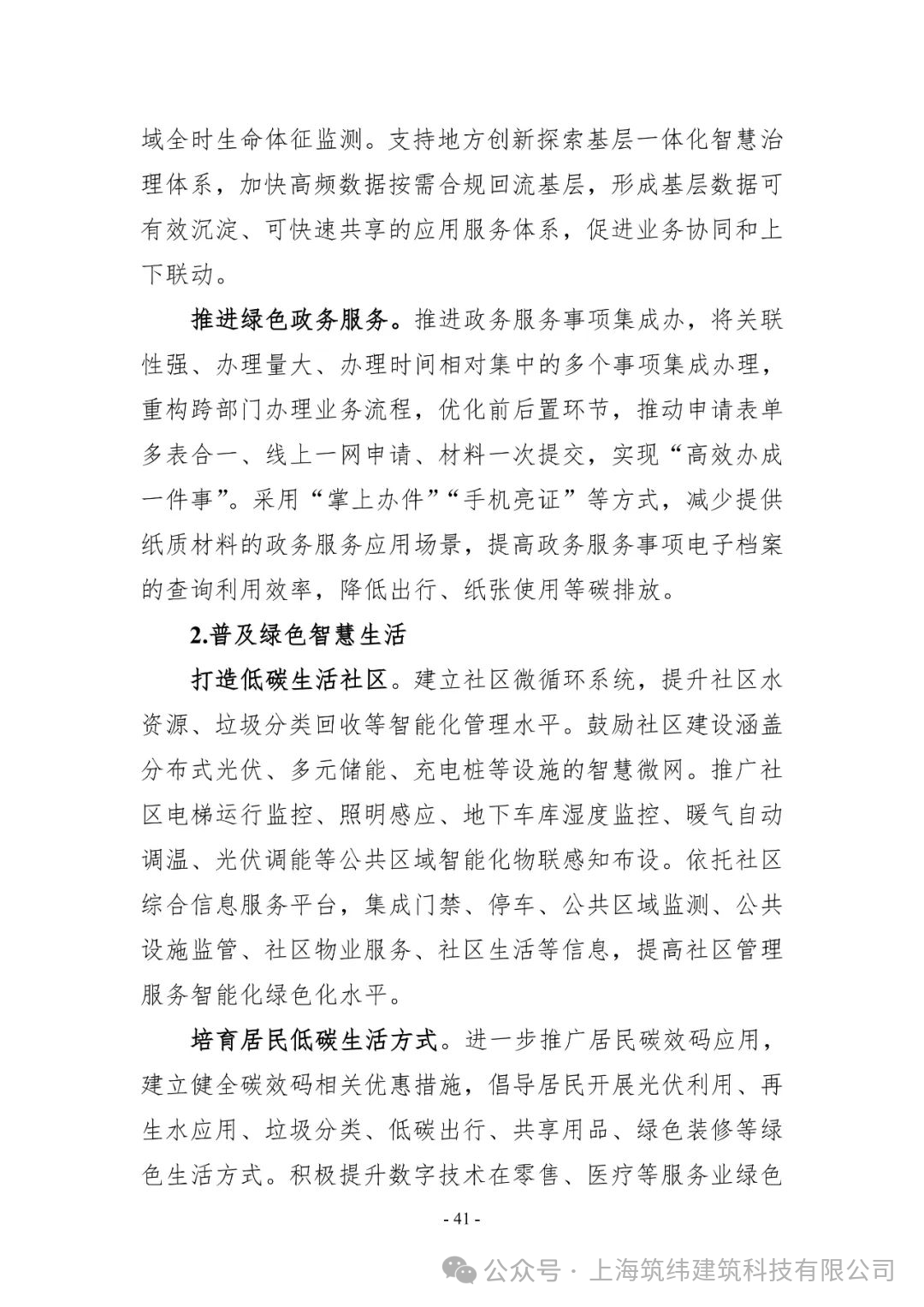
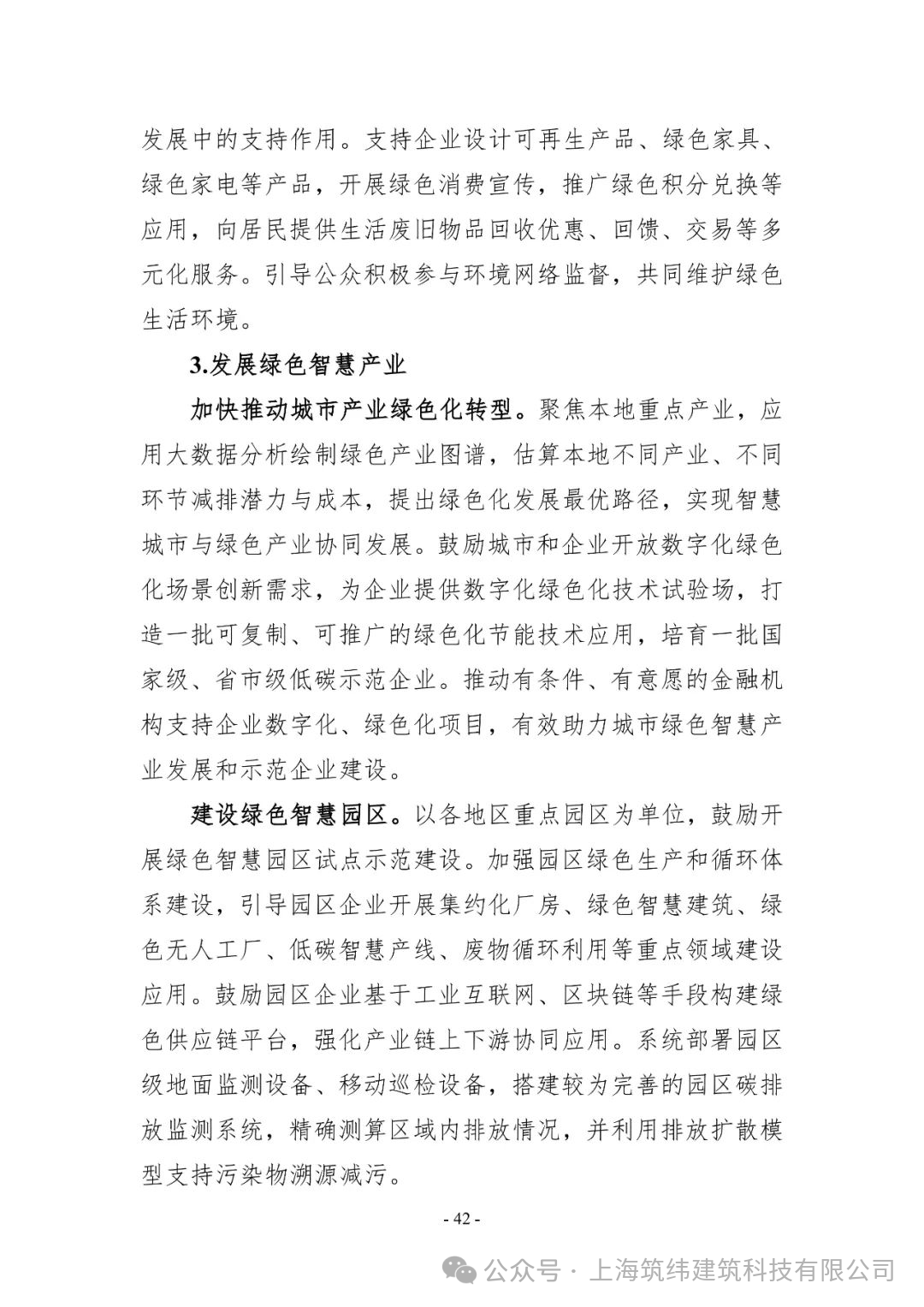
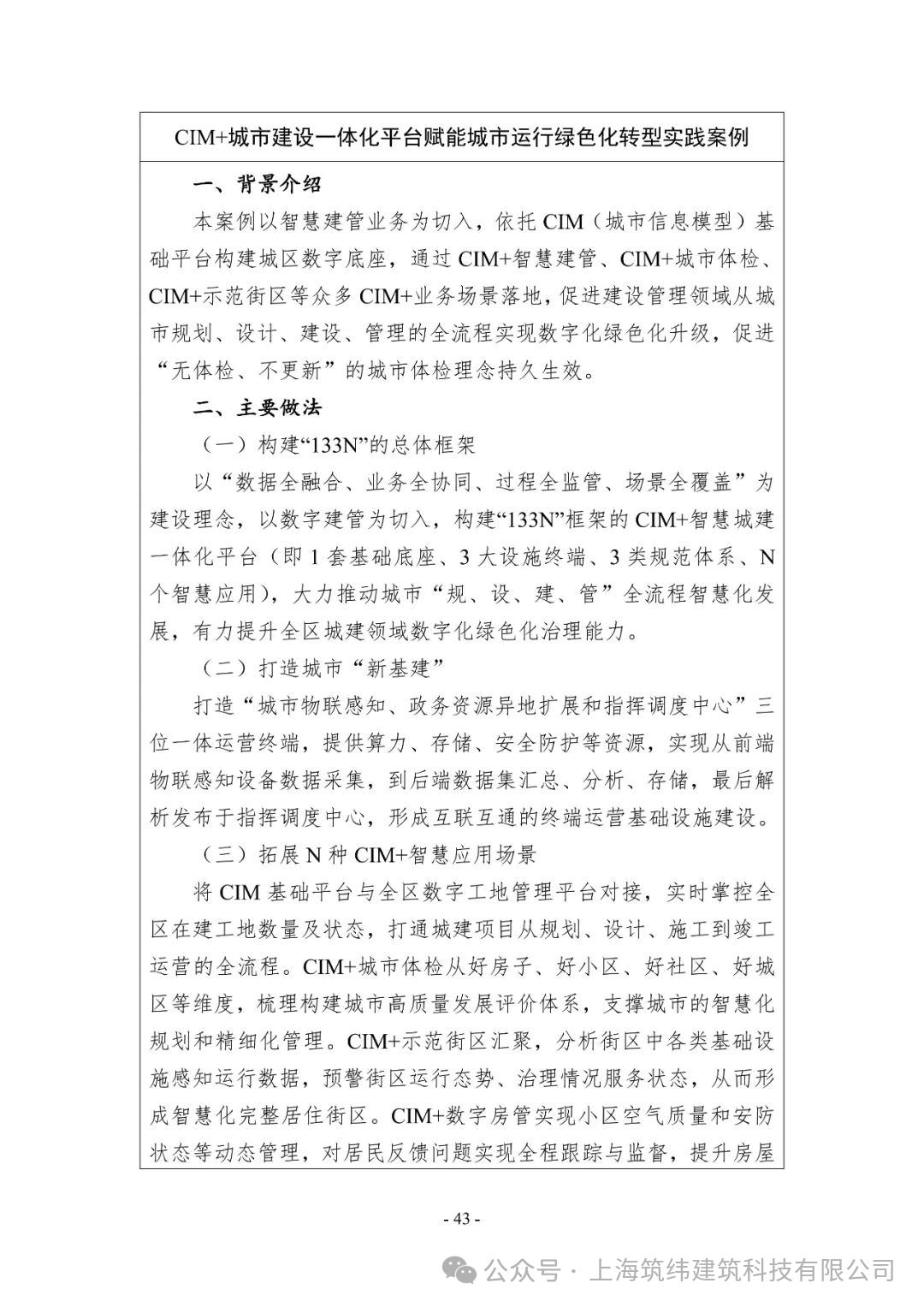
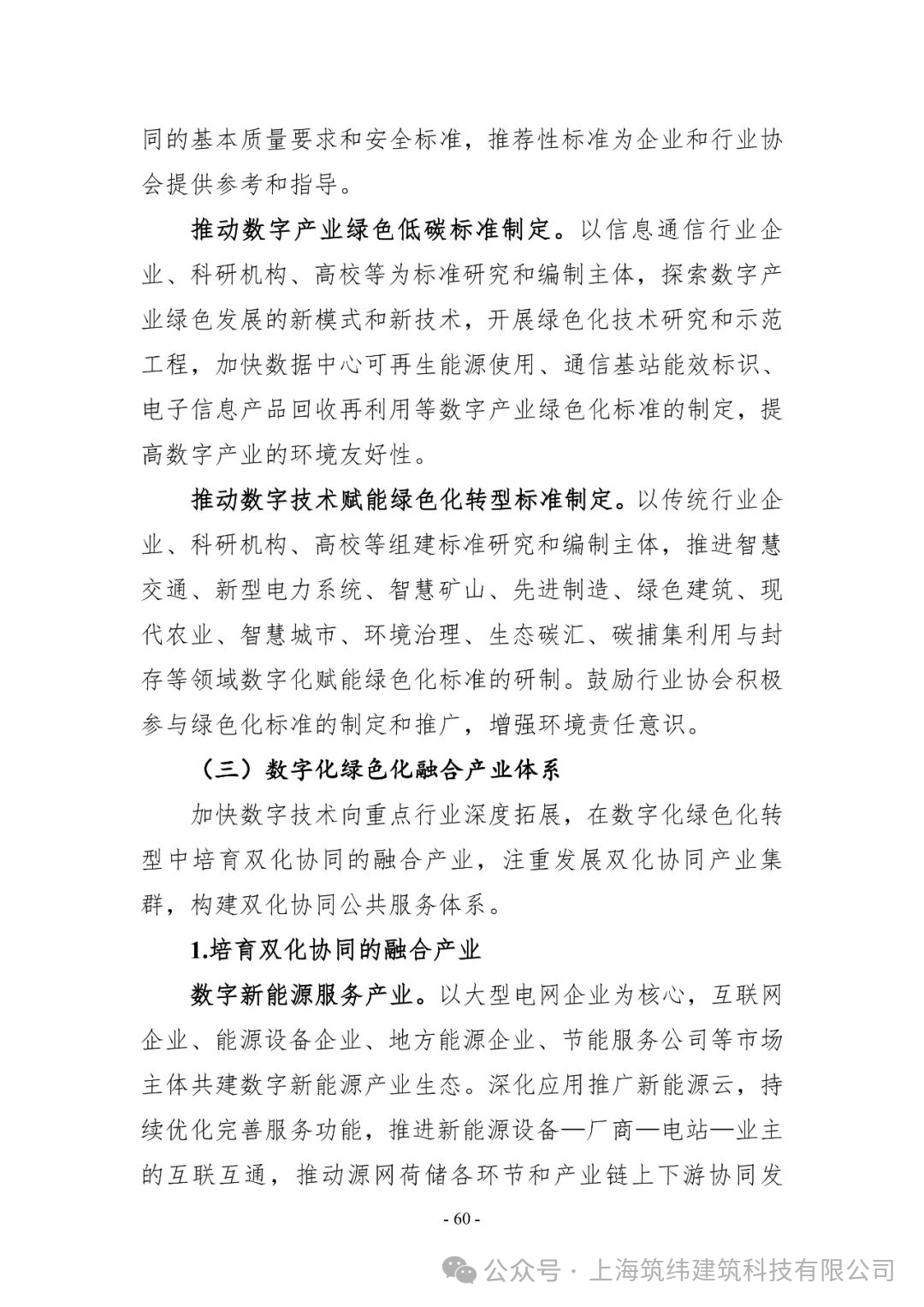
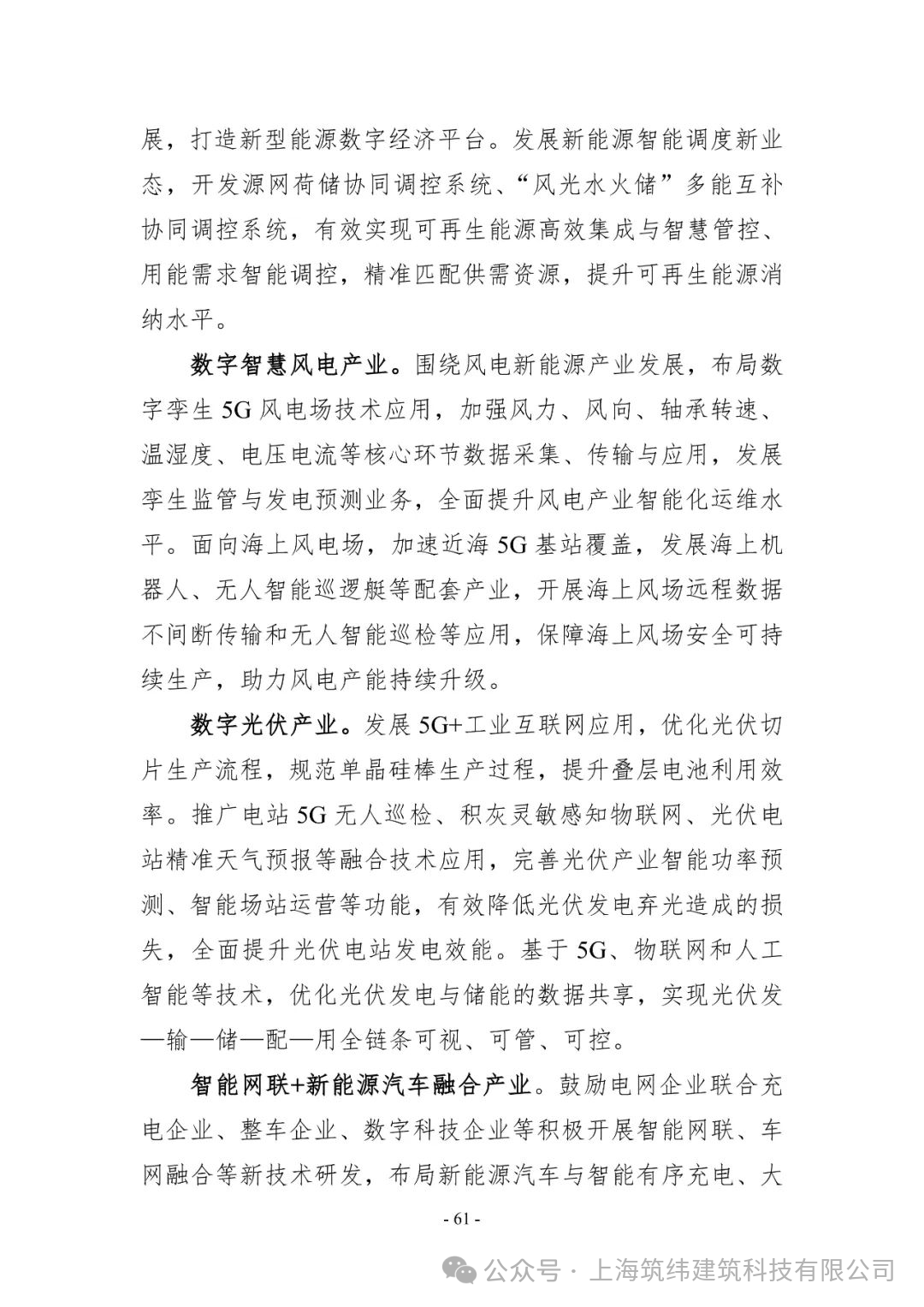
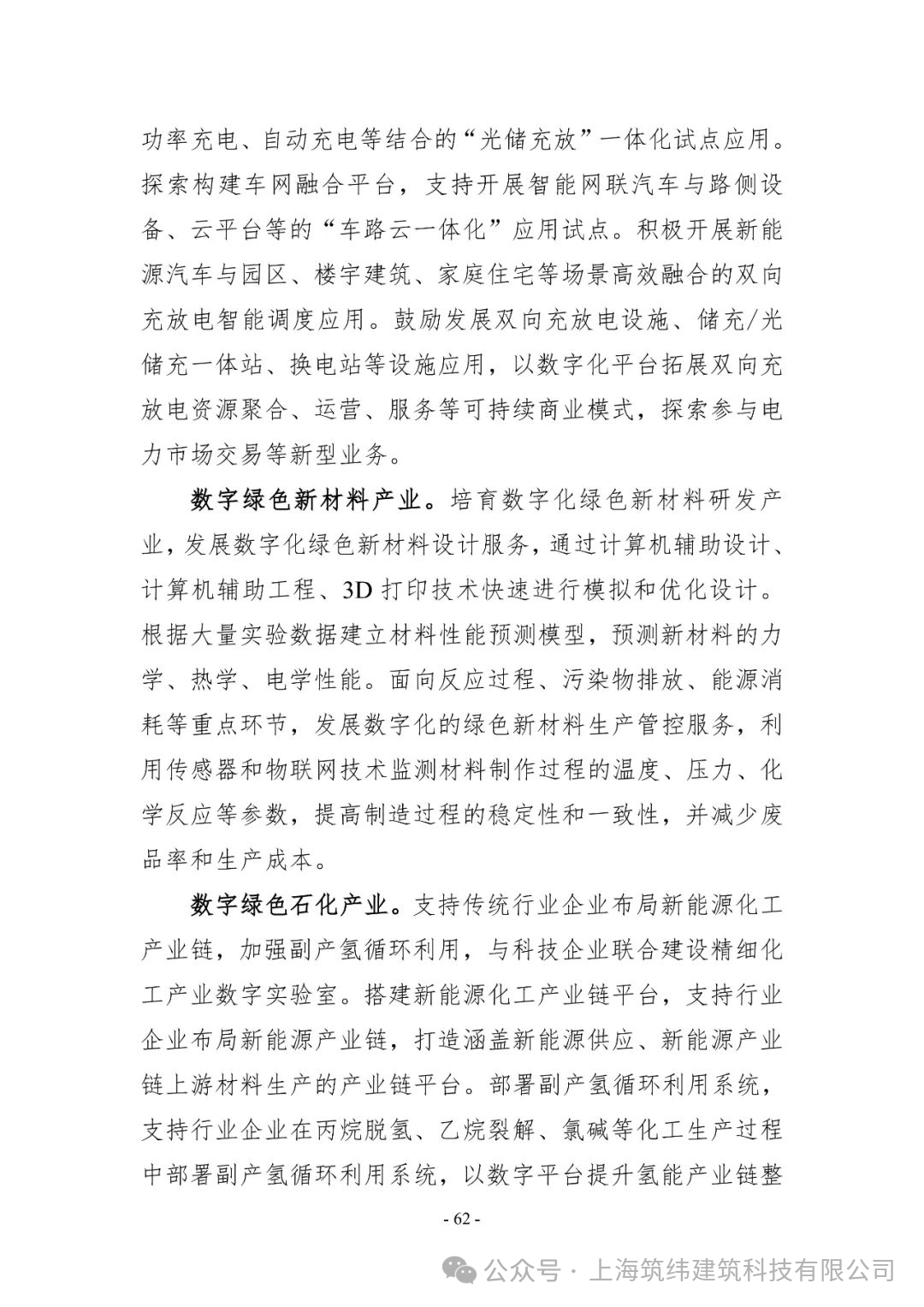
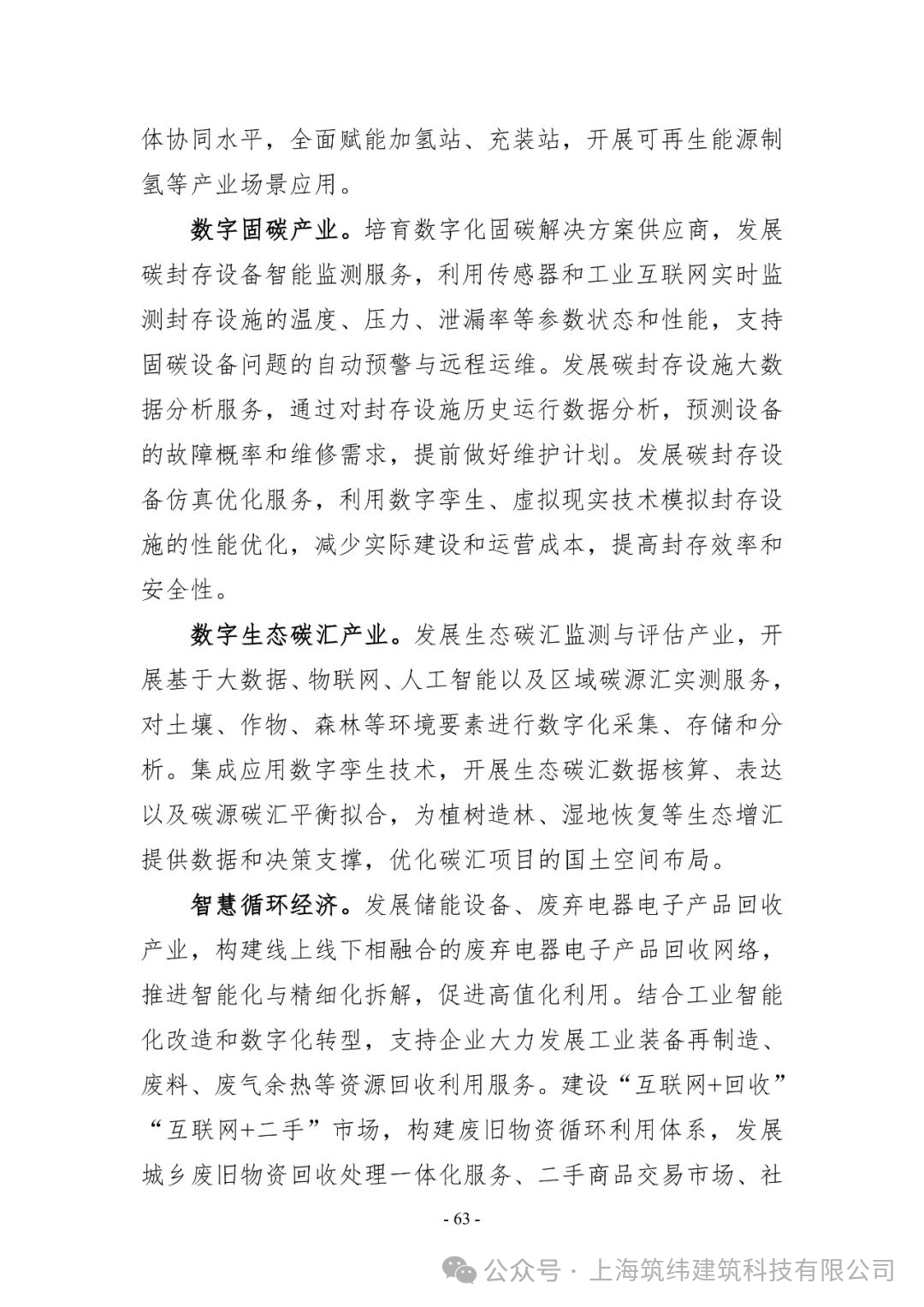
Document Text
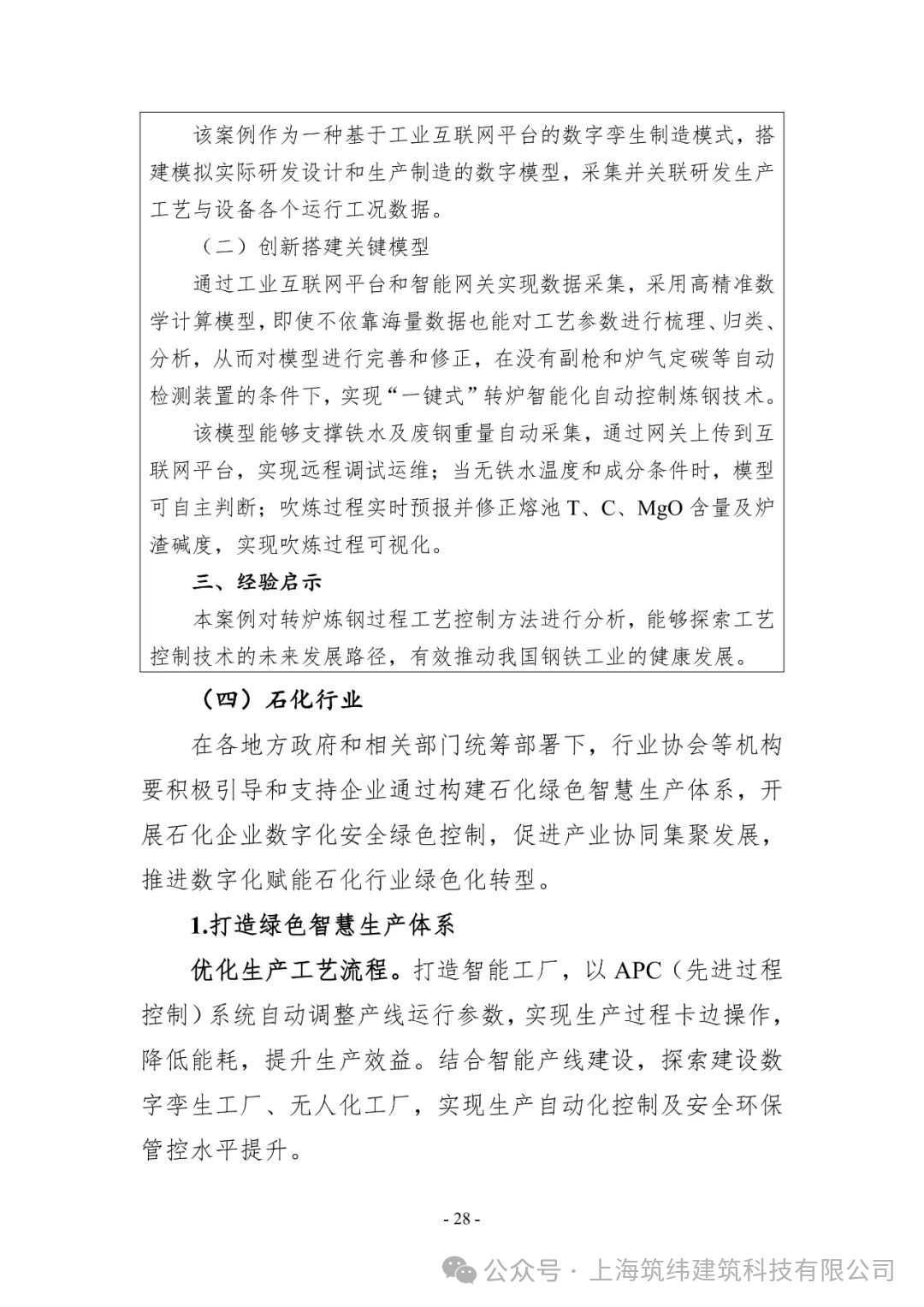
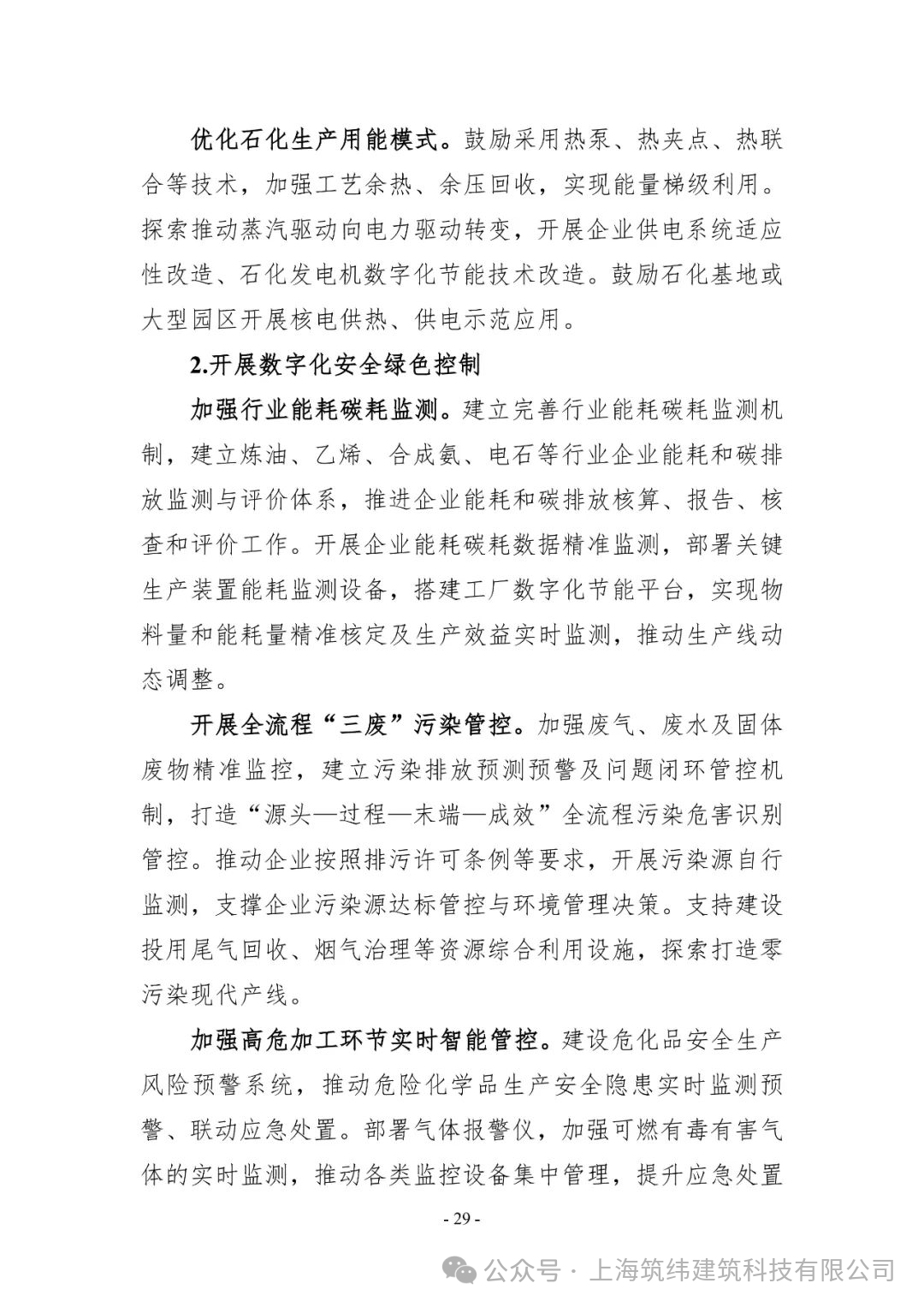
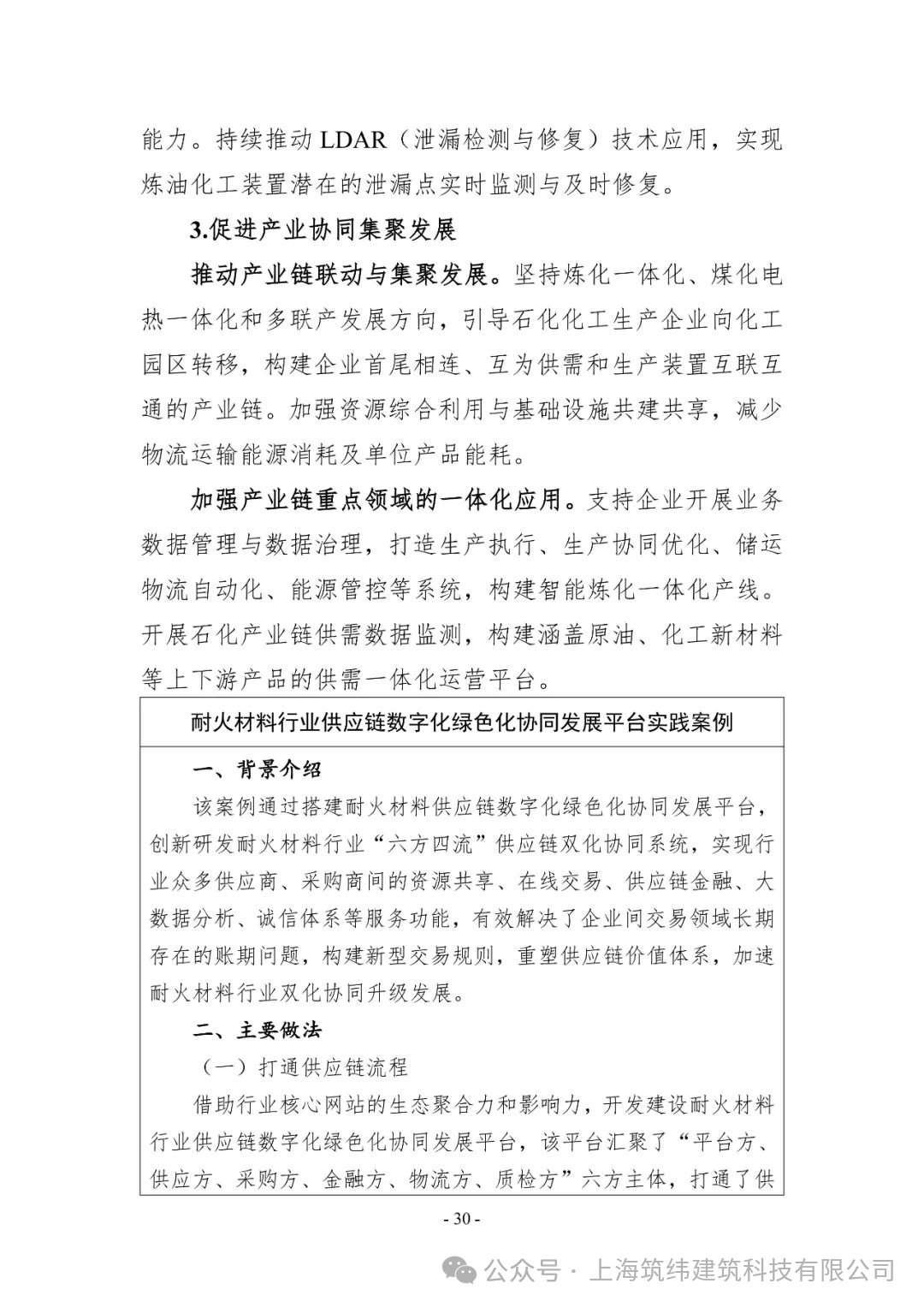
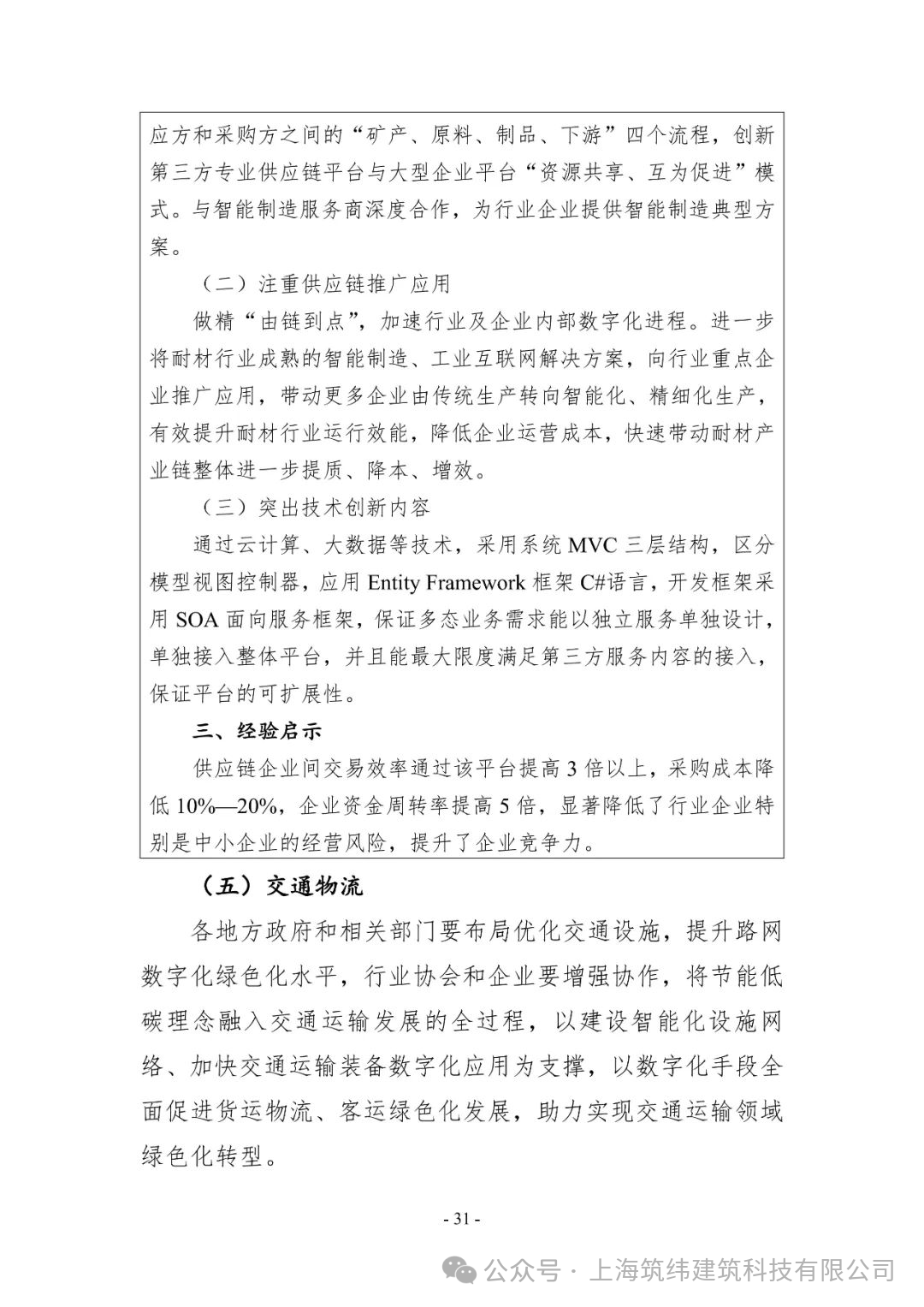
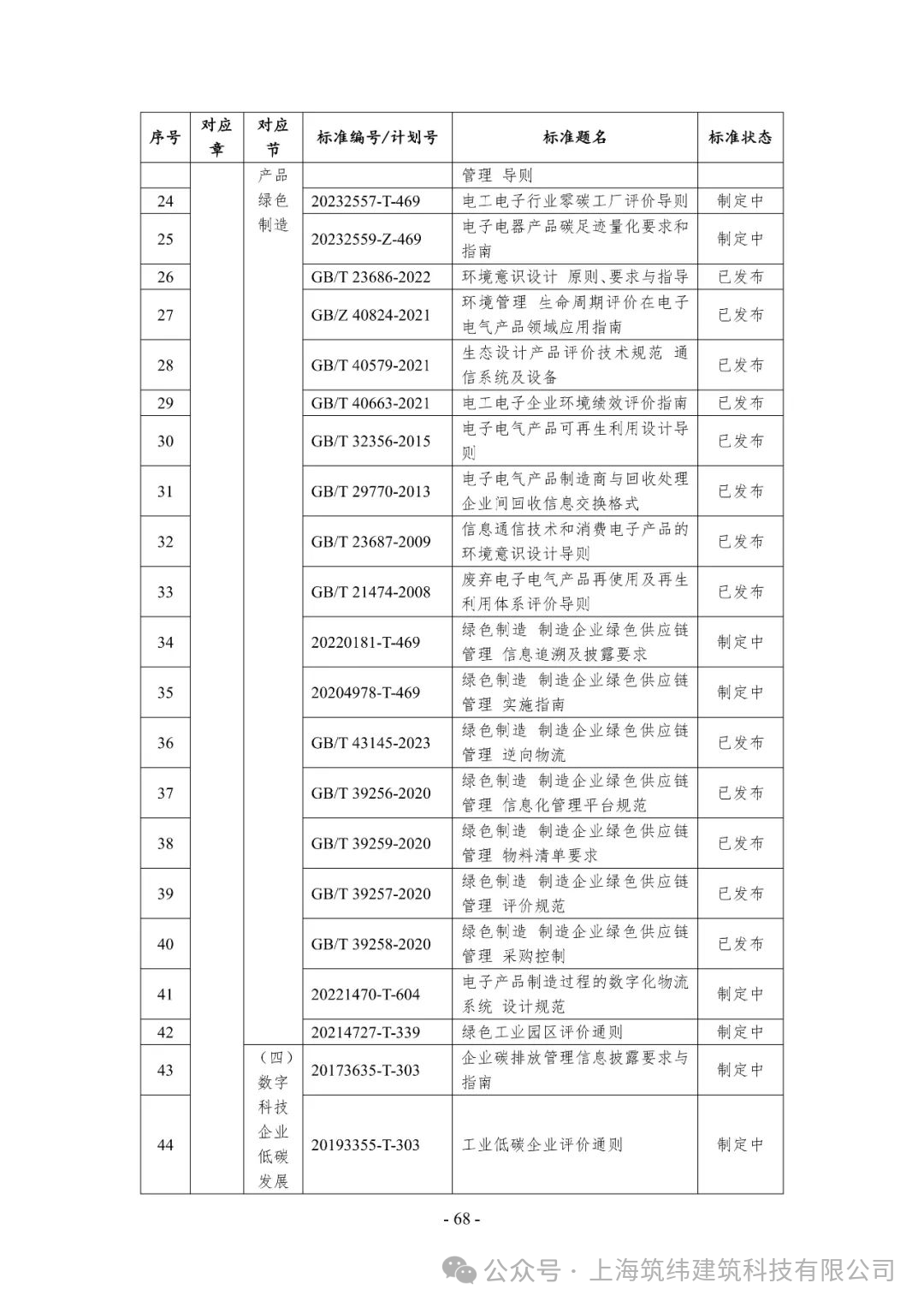
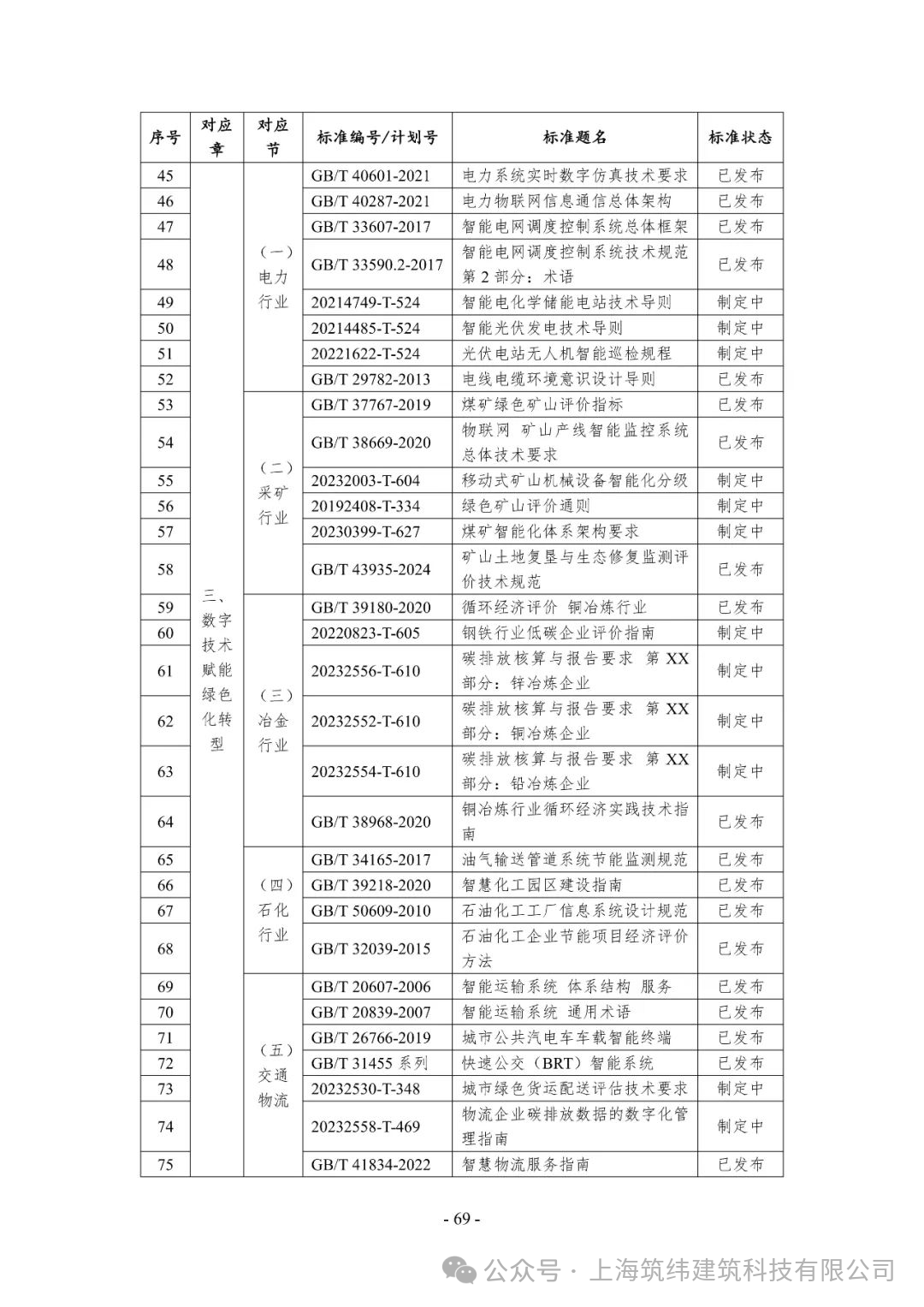
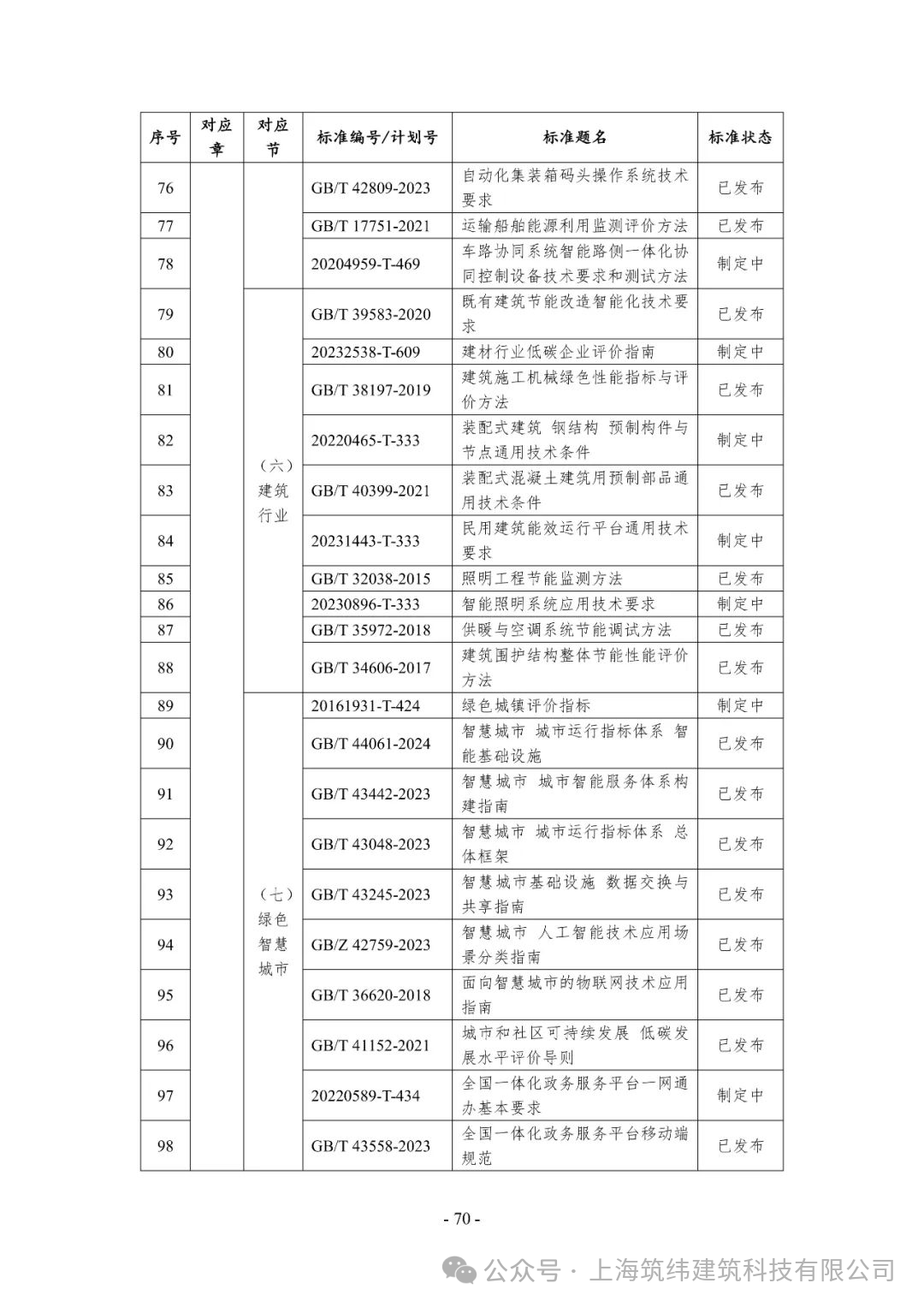
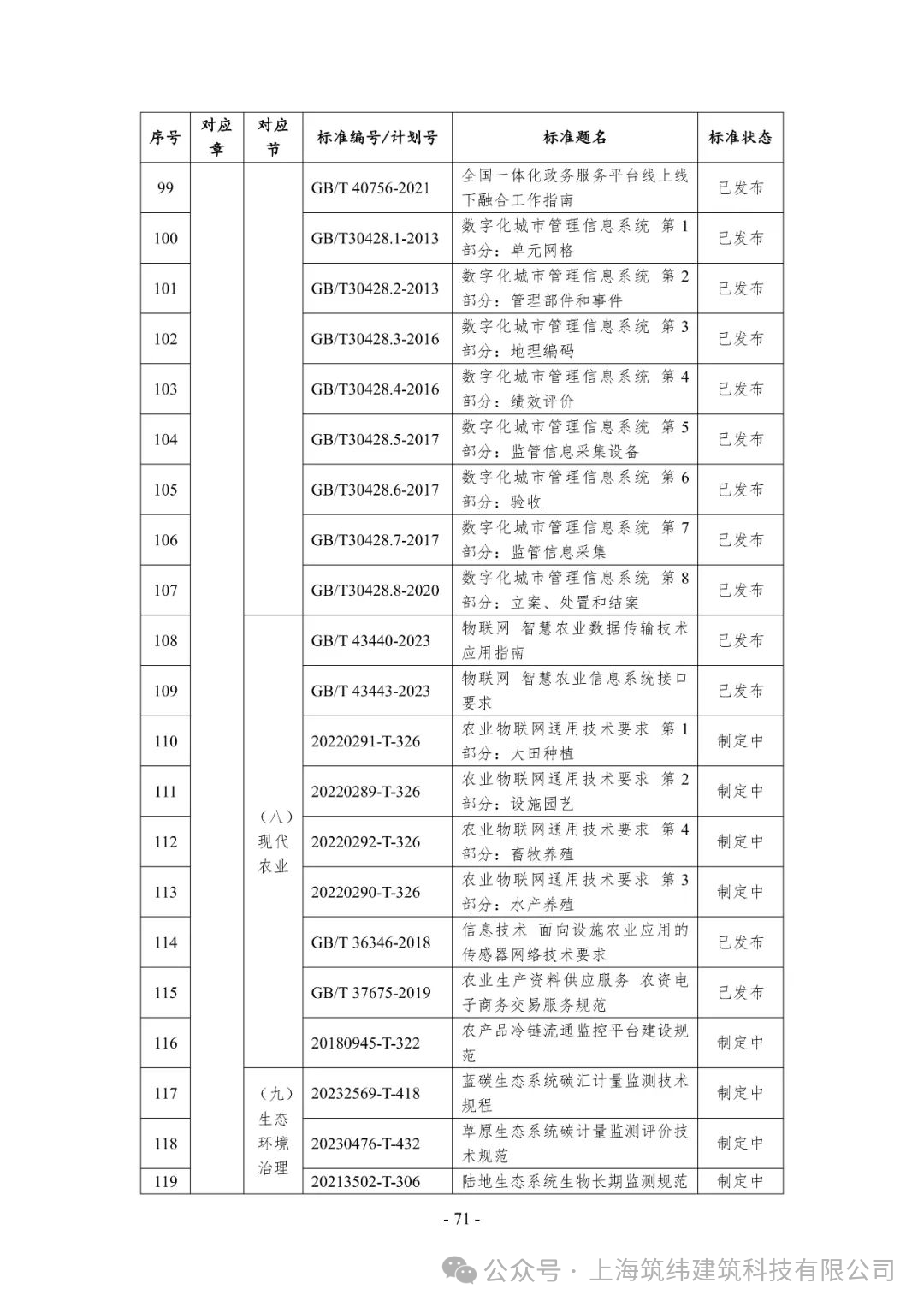
END
The views expressed are the author's own Copyright © Zhuwei Architectural Technology
Reproduction without authorization is prohibited
Please credit the source when reposting: Zhuwei Architectural Technology
Zhuwei Architectural Technology is a new-type technical services company specializing in integrated design optimization, BIM consulting and prefabricated construction design consulting. Our team brings together senior engineers from leading design institutes, former executives of real-estate companies, BIM engineers and prefabrication engineers, delivering integrated design optimization, refined drawing review, BIM consulting with MEP detailing, and prefabricated design services.
Design optimization consulting: Positioned as an extension and complement to the design management of real-estate developers, we focus on consulting and optimization for civil buildings. Across the whole process — or at key stages required by the client — we control the economy, rationality and safety of the design, eliminating unnecessary cost while measurably improving drawing quality, achieving "lower cost, higher efficiency".
BIM consulting: Through digital construction technology we help designers reduce errors and improve quality in the design phase, help contractors save cost and plan high-quality MEP installation in the construction phase, and extend BIM models into facility management for the operation phase — in collaboration with mainstream software vendors.
Prefabricated design consulting: Whole-process design on BIM platforms, using Revit and Tekla for PC detailing. Component geometry and reinforcement are linked parametrically — what you see is what you get. We deliver Industry 4.0-ready drawings with cut-length data for every rebar, and IoT-enabled support for production, storage, transport and installation of PC components.
Our expert team comes from leading design institutes, with deep technical grounding and extensive experience in dual-track design and optimization; its technical capability and control are industry-leading.
—— This article is auto-synced from the WeChat Official Account “Zhuwei Architectural Technology”. Read the original ——